

Prudence and the Art of Government
In the ceaseless flux of political life, where decisions carry profound weight and consequences ripple through societies, the virtue of prudence emerges as the indispensable guide for effective and ethical governance. Far from mere cautiousness or cunning, prudence, as understood through the annals of Western thought, is practical wisdom – the capacity to deliberate well about what is good and advantageous for human beings, and to act accordingly. This supporting article delves into how prudence bridges theoretical knowledge with decisive action, illuminating its crucial role in shaping the very fabric of government, from ancient city-states to modern nations.
The Enduring Call for Practical Wisdom
The concept of prudence, or phronesis as Aristotle termed it, stands as a cornerstone in the edifice of moral and political philosophy. It is the intellectual virtue that enables individuals, especially those entrusted with public office, to discern the appropriate means to achieve noble ends. Without prudence, even the best intentions can lead to disastrous outcomes, and profound knowledge can remain inert, failing to translate into beneficial action. It is the virtue that guides action, ensuring that decisions are not only morally sound but also practically effective, grounded in a clear-eyed assessment of reality and a thoughtful projection of consequences.
Prudence Across the Great Books
The profound significance of prudence in the art of government is a recurring theme woven throughout the Great Books of the Western World. Philosophers, theologians, and statesmen alike have grappled with its definition and application, recognizing its centrality to human flourishing and societal stability.
Aristotle's Phronesis: The Soul of Good Governance
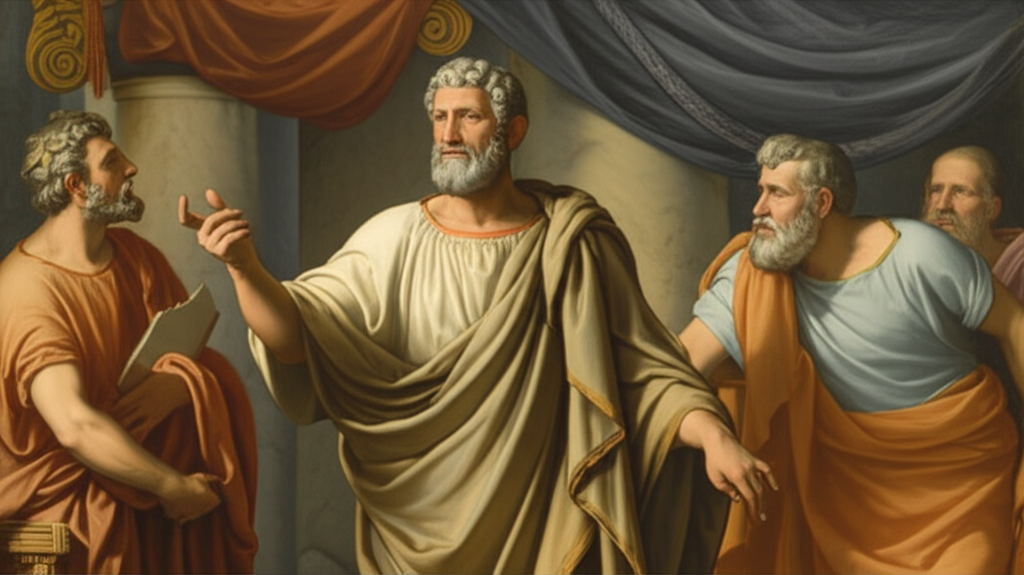
For Aristotle, particularly in his Nicomachean Ethics and Politics, prudence is the intellectual virtue par excellence for the statesman. He distinguished phronesis from sophia (theoretical wisdom, concerning eternal truths) and techne (technical skill). Prudence is not about knowing universal principles in isolation, but about applying them wisely to specific, often ambiguous, situations. A prudent leader possesses:
- Deliberative excellence: The ability to weigh alternatives carefully.
- A good eye for particulars: Understanding the unique circumstances of a situation.
- Foresight: Anticipating the future consequences of present actions.
- Experience: Learning from the past to inform present judgment.
Aristotle argued that without prudence, a state cannot achieve eudaimonia – human flourishing – because its leaders would lack the practical insight to guide citizens towards the good life.
Echoes in Roman and Medieval Thought
The Roman orator Cicero echoed these sentiments, emphasizing prudentia as essential for the statesman, linking it to justice and courage. In the medieval period, Thomas Aquinas, drawing heavily on Aristotle, elevated prudence to one of the four cardinal virtues, defining it as recta ratio agibilium – "right reason in action." For Aquinas, prudence was not merely a secular skill but a divine gift, necessary for guiding all other virtues towards their proper ends, especially in the complex realm of law and governance. Even Machiavelli, in The Prince, while often perceived as advocating for cunning, implicitly acknowledges a distorted form of practical wisdom (his virtù) required for a ruler to maintain power and stability, albeit often detached from traditional morality.
The Mechanism of Prudent Action in Government
Prudence is the operational mechanism by which abstract ideals are transformed into tangible policies and decisions. It is the bridge between what ought to be and what can be done.
Key Elements of Prudent Decision-Making in Governance:
| Element | Description | Example in Government |
|---|---|---|
| Deliberation | Thoughtful consideration of all available information, potential courses of action, and their implications. | A cabinet discussing various economic stimulus packages, weighing pros and cons. |
| Judgment | The capacity to select the most appropriate and effective course of action among alternatives. | A leader choosing a specific policy based on expert advice and public sentiment. |
| Execution | The timely and effective implementation of the chosen policy, adapting as necessary to unforeseen challenges. | Bureaucracies rolling out new regulations or infrastructure projects efficiently. |
| Experience | Drawing upon past successes and failures, both personal and historical, to inform present decisions. | Learning from previous recessions or diplomatic crises to formulate current responses. |
| Foresight | Anticipating the short-term and long-term consequences of actions, both intended and unintended. | Designing environmental policies with future generations in mind. |
This iterative process, guided by prudence, allows governments to navigate complex social, economic, and political landscapes with a greater likelihood of achieving beneficial outcomes. It requires a nuanced understanding of human nature, societal structures, and the often-unpredictable forces of history.
Navigating Modern Complexities with Ancient Wisdom
In an age of unprecedented information flow, rapid technological change, and global interconnectedness, the demands on governmental prudence are perhaps greater than ever. Leaders are confronted with:
- Information Overload: Distinguishing relevant data from noise.
- Short-termism: Political cycles often incentivize immediate gains over long-term sustainability.
- Ideological Polarization: The challenge of finding common ground and pragmatic solutions.
- Global Crises: Pandemics, climate change, and geopolitical tensions requiring coordinated, wise responses.
Despite these complexities, the core tenets of prudence remain profoundly relevant. It calls for leaders to resist impulsive reactions, to engage in deep reflection, to consult widely, and to prioritize the common good over narrow self-interest or partisan advantage. Prudence encourages a holistic view, understanding that seemingly isolated decisions often have far-reaching and interconnected consequences.
Cultivating Prudent Leadership
How then can we foster prudence in those who govern? It is not a quality easily acquired, demanding intellectual rigor, moral fortitude, and extensive experience.
- Education: A robust education in history, philosophy, and ethics, drawing from the wisdom of the Great Books, can provide a framework for understanding human nature and the recurring dilemmas of governance.
- Reflection and Deliberation: Creating spaces and processes for leaders to reflect deeply, engage in critical thinking, and deliberate with diverse perspectives.
- Humility: Recognizing the limits of one's own knowledge and being open to correction and new information.
- Moral Courage: The willingness to make difficult, unpopular decisions when prudence dictates they are necessary for the long-term good.
The Indispensable Virtue
In conclusion, prudence is not merely a desirable trait; it is an indispensable virtue for anyone aspiring to the art of government. It is the practical wisdom that transforms knowledge into effective action, guiding leaders through the labyrinthine challenges of public life towards the ultimate goal of human flourishing. As we continue to grapple with the complexities of the modern world, the ancient call for prudence resonates with renewed urgency, reminding us that truly effective governance is not just about power, but about the wise application of wisdom to the service of all.
📹 Related Video: ARISTOTLE ON: The Nicomachean Ethics
Video by: The School of Life
💡 Want different videos? Search YouTube for: ""Aristotle Nicomachean Ethics Prudence" or "Thomas Aquinas Cardinal Virtues Government""