

Prudence and the Art of Government: Navigating the Labyrinth of Statecraft
The art of governing is less a science of rigid formulas and more a delicate dance with uncertainty, a constant negotiation between ideals and realities. At the heart of this complex endeavor lies prudence, often overlooked in an era that champions immediate results and decisive, often rash, action. This article explores prudence not merely as caution, but as the quintessential practical wisdom necessary for effective government, drawing deeply from the philosophical wellsprings of the Great Books of the Western World. It is the guiding light that transforms mere policy into sagacious statecraft, ensuring that decisions are not only well-intentioned but also wise in their execution and consequences.
The Essence of Prudence: Practical Wisdom in Leadership
Prudence (phronesis in Greek) is, fundamentally, practical wisdom. It is the intellectual virtue that enables individuals, and by extension, leaders, to deliberate well about what is good and advantageous for themselves and others, particularly in matters that are open to choice and change. Unlike theoretical wisdom, which seeks universal truths, prudence is concerned with particulars – with applying general principles to specific, often unique, situations. For those tasked with the immense responsibility of government, prudence is the faculty that bridges the gap between abstract ideals and concrete action.
Aristotle, in his Nicomachean Ethics, eloquently describes prudence as "a true and reasoned state of capacity to act with regard to the things that are good or bad for man." It is not simply cleverness or cunning, but a moral virtue inherently linked to the good. A truly prudent leader does not merely achieve their ends; they achieve good ends through good means, understanding the long-term implications of their decisions.
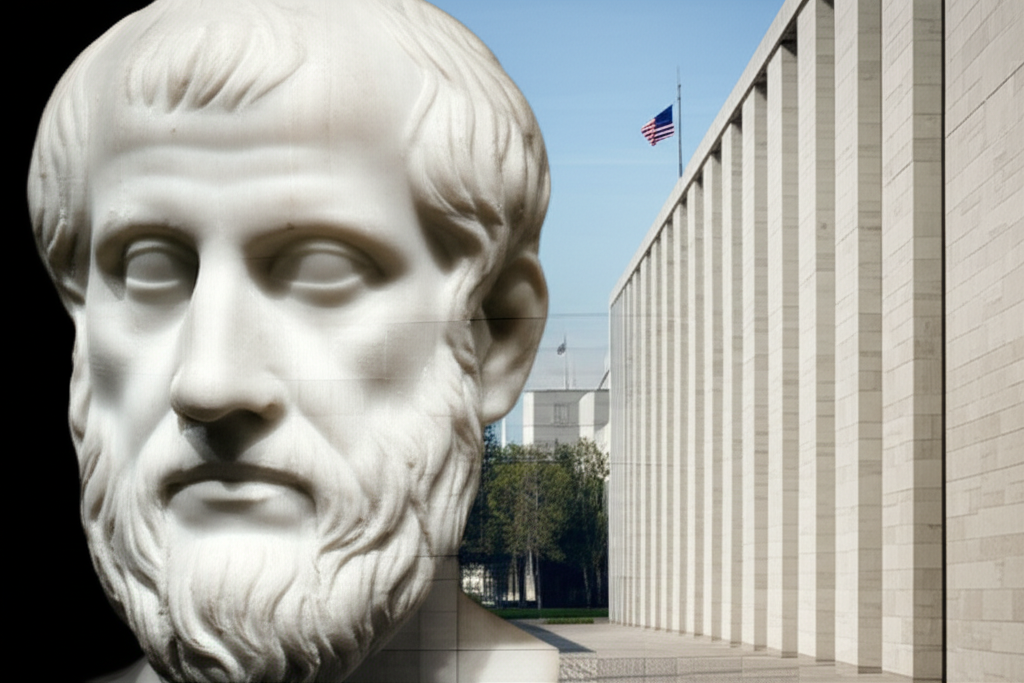
Prudence in the Classical Mirror: Lessons from the Ancients
The concept of prudence has resonated through the halls of political thought for millennia, finding profound expression in the Great Books of the Western World.
-
Plato's Republic: While Plato often emphasized the philosopher-king's pursuit of absolute truth and justice, the practical application of these ideals in the material world necessitates a form of prudence. The philosopher-king must possess the wisdom to discern the Good, but also the practical understanding to implement it within the imperfect confines of the polis, guiding citizens towards virtue through laws and education. This requires careful consideration of human nature and societal dynamics—a prudent approach.
-
Aristotle's Politics: Aristotle's work provides a more direct and extensive treatment of prudence as essential for good government. He saw the legislator and the statesman as needing prudence to craft laws that are suitable for the specific character of a people and to make decisions that promote the common good. Prudence, for Aristotle, is the virtue that allows a leader to navigate the complexities of political life, making sound judgments about policies, alliances, and reforms. It is the ability to deliberate well, not just about means, but about the right ends and how to achieve them effectively and ethically.
-
Machiavelli's The Prince (A Counterpoint): While often seen as advocating for a more ruthless pragmatism, Machiavelli's virtù for a ruler can be interpreted, in part, as a form of highly contextualized prudence. His prince must possess the wisdom to adapt to changing circumstances, to foresee dangers, and to take decisive action when necessary. However, Machiavelli's prudence often detaches itself from the moral good that Aristotle insisted upon, leading to a more amoral calculus of power. This contrast highlights the crucial distinction: true prudence, as understood by the ancients, is always oriented towards a morally justifiable good, not merely efficacy for its own sake.
The Pillars of Prudent Governance
For government to function effectively and justly, leaders must cultivate several key aspects of prudence:
- Deliberation (Euboulia): The capacity for sound judgment and careful consideration of all relevant factors, potential outcomes, and ethical implications before making a decision. This involves seeking diverse counsel, weighing evidence, and avoiding rash conclusions.
- Understanding (Synesis/Gnome): The ability to grasp the nuances of a situation, to comprehend the perspectives of different stakeholders, and to exercise sympathetic judgment, particularly in matters of justice and equity.
- Foresight (Providentia): The capacity to anticipate future consequences of present action. A prudent leader looks beyond immediate gains to consider the long-term impact on society, the economy, and future generations.
- Circumspection: The awareness of surrounding circumstances and potential obstacles. It means understanding the context in which decisions are made and how they might be perceived or resisted.
- Caution: Not paralysis, but a healthy skepticism and a disinclination to rush into action without adequate preparation or understanding of risks.
These elements combine to form a robust framework for decision-making that prioritizes stability, justice, and the common good.
Prudence in Action: A Modern Imperative
In today's fast-paced, interconnected world, the demand for prudent leadership is more acute than ever. Global crises, rapid technological advancements, and complex social issues require leaders who can:
- Synthesize vast amounts of information: Discern what is relevant and true amidst noise and misinformation.
- Balance competing interests: Find equitable solutions that address the needs of diverse populations.
- Act decisively yet thoughtfully: Respond to emergencies without sacrificing long-term strategic goals.
- Adapt to unforeseen challenges: Adjust policies and strategies as circumstances evolve, demonstrating intellectual flexibility.
The absence of prudence often manifests as shortsighted policies, reactive decision-making, and a lack of coherent long-term vision. Conversely, a government guided by prudence fosters trust, promotes stability, and cultivates a sense of shared purpose among its citizenry. It is the wisdom to know when to lead boldly and when to listen patiently, when to innovate and when to preserve, always with an eye toward the flourishing of the whole.
YouTube: "Aristotle on Practical Wisdom and Ethics"
YouTube: "Political Philosophy: The Role of Prudence in Governance"
📹 Related Video: What is Philosophy?
Video by: The School of Life
💡 Want different videos? Search YouTube for: "Prudence and the Art of Government philosophy"