

Prudence and the Art of Government: Navigating the Ship of State with Sagacity
Summary:
In the intricate dance of governance, abstract ideals alone are insufficient. This article explores the enduring philosophical concept of Prudence – often termed practical Wisdom – as the indispensable virtue for effective Government. Drawing from the Great Books of the Western World, we will argue that true statesmanship is not merely about possessing grand visions, but about the judicious application of knowledge to concrete situations, fostering Action that is both ethical and efficacious.
Introduction: The Guiding Star of Statecraft
From the ancient polis to the sprawling modern nation-state, the challenge of Government has remained fundamentally consistent: how to steer the collective toward prosperity, justice, and stability. While lofty principles and noble intentions are foundational, they often falter without a crucial mediating virtue. This virtue, as elucidated by thinkers across millennia, is Prudence – phronesis to the Greeks, prudentia to the Latins. It is the practical Wisdom that transforms theoretical understanding into effective Action, allowing leaders to navigate the treacherous waters of public life with foresight and discernment. For any serious student of statecraft, a deep dive into this cardinal virtue, as championed in the Great Books, reveals its timeless and indispensable nature.
Defining Prudence: More Than Mere Caution
To understand Prudence in the context of Government, we must first dispel common misconceptions. It is not simply timidity, hesitation, or self-preservation. As Aristotle meticulously details in his Nicomachean Ethics, phronesis is an intellectual virtue concerned with human Action, specifically with deliberation about what is good and beneficial for human beings. It is the "right reason in matters of action" (recta ratio agibilium), as later elaborated by Thomas Aquinas in his Summa Theologica.
- Aristotle's Phronesis: The ability to deliberate well about what is good and advantageous for oneself and for mankind, not in some particular respect, but for living well generally. It involves understanding particulars and universals, and applying general principles to specific, often ambiguous, situations. It is the intellectual virtue that enables one to make sound judgments about practical matters.
- Aquinas's Prudentia: Integrates intellectual and moral virtues. It is considered the "charioteer of the virtues," guiding all others by determining the right means to a good end. It requires a complex interplay of memory, understanding, foresight, circumspection, and caution.
Prudence in the Chambers of Power: Historical Perspectives
The Great Books offer a rich tapestry of perspectives on how Prudence manifests in leadership:
- Plato's Philosopher-Kings: In The Republic, Plato posits that the ideal ruler possesses not just knowledge of the Forms, but also the practical Wisdom to apply these ideals to the messy realities of the state. This requires Prudence to bridge the gap between abstract justice and concrete policy, ensuring that the ideal is not merely conceptual but achievable.
- Machiavelli's Virtù: While often seen as cynical, Machiavelli's The Prince implicitly champions a form of Prudence – albeit a morally ambiguous one – in his concept of virtù. A prince with virtù understands the political realities, adapts to changing fortunes, and takes decisive Action to maintain power and stability, even if it requires bending traditional moral rules. This is Prudence detached from classical ethical moorings, focused solely on political efficacy.
- Burke's Conservative Prudence: Edmund Burke, in Reflections on the Revolution in France, exemplifies a different facet of Prudence. He advocates for gradual reform over radical upheaval, emphasizing the Wisdom embedded in tradition and the dangers of abstract theorizing untethered from practical experience. His Prudence is characterized by caution, respect for historical continuity, and a deep understanding of the complex social fabric.
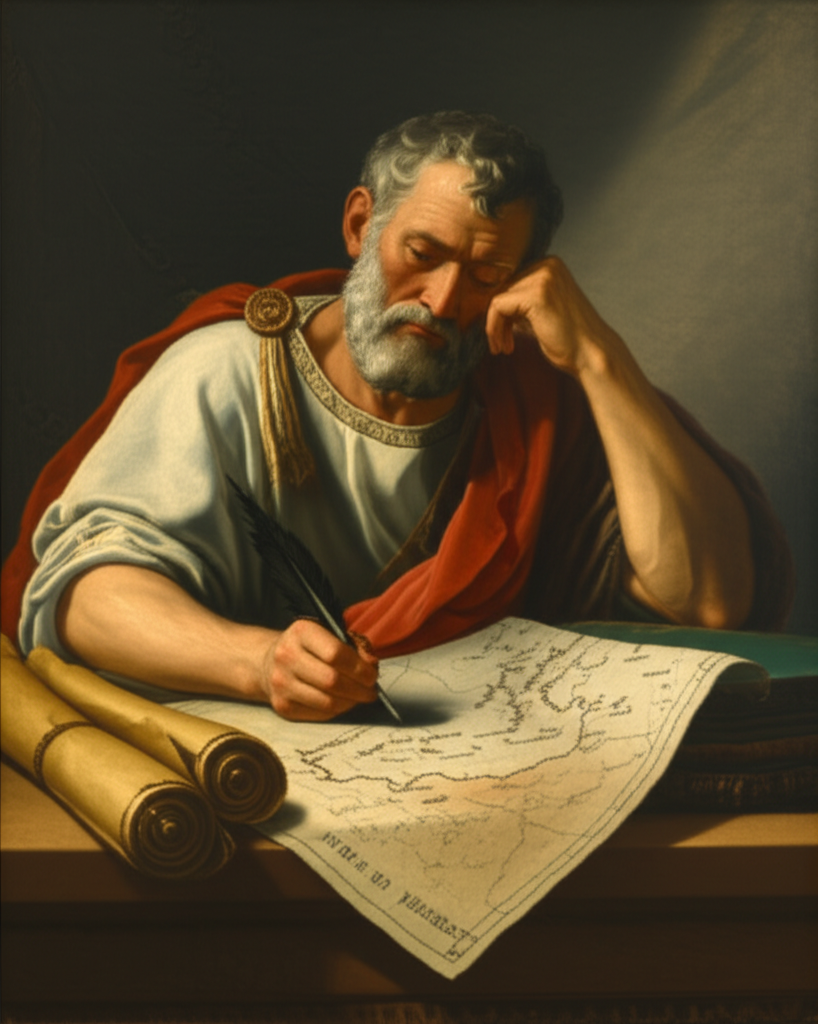
The Components of Prudent Governance
For a leader to exercise Prudence effectively, several key intellectual and moral capacities are essential. These are not merely passive traits but active faculties that inform every aspect of governmental Action.
- Foresight (Providentia): The ability to anticipate future consequences of current decisions. This involves understanding trends, potential reactions, and long-term impacts on the body politic.
- Circumspection (Circumspectio): The capacity to consider all relevant circumstances and factors surrounding a decision, recognizing the unique context and potential ripple effects of each situation.
- Caution (Cautio): Not fear, but a judicious awareness of potential obstacles and dangers, leading to careful planning, risk assessment, and contingency preparation.
- Docility (Docilitas): A willingness to learn from others, to listen to counsel from diverse perspectives, and to be open to new information, recognizing that no single individual possesses all Wisdom.
- Memory (Memoria): Drawing upon past experiences, both successes and failures, to inform present judgments and avoid repeating mistakes, learning from history's lessons.
- Reasoning (Ratio): The logical process of weighing options, evaluating evidence, and making sound judgments based on available information and ethical considerations.
Prudence as the Bridge Between Wisdom and Action
The true genius of Prudence lies in its capacity to serve as the vital link between theoretical Wisdom and practical Action. A leader might possess profound understanding of justice, economics, or human nature, but without Prudence, this knowledge remains inert. It is Prudence that dictates how and when to apply these insights effectively and appropriately.
Consider the following table illustrating this dynamic:
| Element of Governance | Without Prudence | With Prudence |
|---|---|---|
| Policy Formulation | Ideals without practical application; utopian schemes; unintended negative consequences. | Realistic, context-aware policies; balanced consideration of costs and benefits; adaptable and effective. |
| Crisis Management | Panic, overreaction, or paralysis; exacerbation of problems due to lack of foresight. | Calm, measured response; strategic planning; timely and effective intervention based on careful assessment. |
| Resource Allocation | Misplaced priorities; wasteful spending; inequitable distribution based on short-term gains. | Strategic investment; efficient use of public funds; equitable and sustainable distribution for long-term benefit. |
| Interpersonal Relations | Dogmatism; inability to compromise; alienating allies through rigid adherence to principle. | Diplomacy; negotiation; building consensus; fostering collaboration through understanding and flexibility. |
| Long-Term Planning | Short-sighted decisions; neglecting future generations; unsustainable practices. | Foresight; intergenerational equity; sustainable development; adaptability to inevitable change. |
Conclusion: The Enduring Imperative of Prudent Leadership
In an age of unprecedented complexity and rapid change, the call for Prudence in Government is more vital than ever. It is the virtue that allows leaders to transcend mere ideology or self-interest, guiding them toward decisions that genuinely serve the common good. From the sagacious deliberations of ancient statesmen to the intricate challenges of modern global governance, Prudence remains the essential compass for navigating the ship of state. It is the practical Wisdom that ensures that grand visions are translated into effective Action, securing not just stability, but a flourishing society for all. The Great Books, in their timeless exploration of human nature and political order, unequivocally affirm that the art of good Government is, at its heart, the art of Prudence.
📹 Related Video: ARISTOTLE ON: The Nicomachean Ethics
Video by: The School of Life
💡 Want different videos? Search YouTube for: ""Aristotle Nicomachean Ethics Prudence" or "Thomas Aquinas Prudence in Government""
📹 Related Video: ARISTOTLE ON: The Nicomachean Ethics
Video by: The School of Life
💡 Want different videos? Search YouTube for: ""Machiavelli The Prince Virtù Prudence" or "Edmund Burke Prudence Tradition""