

Prudence and the Art of Government: Steering the Ship of State with Practical Wisdom
The complex tapestry of governance, whether in ancient city-states or modern democracies, demands more than mere power or ambition. It calls for a cardinal virtue, often overlooked in our haste for immediate results: prudence. Far from being mere caution or timidity, prudence is the practical wisdom that guides action, illuminating the path from good intentions to effective outcomes. This article delves into the indispensable role of prudence in the art of government, drawing insights from the enduring wisdom contained within the Great Books of the Western World.
What is Prudence? A Classical Definition
At its core, prudence is the intellectual virtue that enables us to deliberate well about what is good for us and for others, and then to act accordingly. It is the bridge between universal moral principles and concrete, particular situations. Unlike theoretical wisdom, which seeks truth for its own sake, prudence is inherently practical, aimed at right action.
Aristotle, in his Nicomachean Ethics, identifies phronesis (often translated as practical wisdom or prudence) as a distinct intellectual virtue. He argues that it is the ability to deliberate well about what is good and advantageous for oneself and for others, not in some particular respect, but for living well generally. This involves:
- Deliberation: Careful consideration of means to an end.
- Judgment: Making sound decisions based on that deliberation.
- Execution: Acting effectively upon those judgments.
Thomas Aquinas, building upon Aristotle, further emphasized prudence as "right reason in action." It directs all other virtues, ensuring that courage is not recklessness, temperance is not apathy, and justice is not rigidity. Without prudence, even the noblest intentions can lead to disastrous consequences.
The Indispensable Role of Prudence in Governance
For those entrusted with the responsibility of governing, prudence is not merely a desirable trait; it is a fundamental requirement. The leader, the legislator, the judge – all must exercise prudence to navigate the intricate challenges of public life.
Prudent governance entails:
- Forethought and Foresight: Anticipating potential consequences of policies and decisions, looking beyond the immediate horizon.
- Sound Deliberation: Engaging in careful, unbiased analysis of facts, weighing different perspectives, and understanding the complex interplay of forces.
- Adaptability and Flexibility: Recognizing that circumstances change and being willing to adjust strategies without compromising core principles.
- Moral Discernment: Applying ethical principles to concrete policy choices, understanding the human impact of governmental decisions.
- Decisive Action: The ability to make timely and effective decisions once deliberation is complete, avoiding paralysis by analysis.
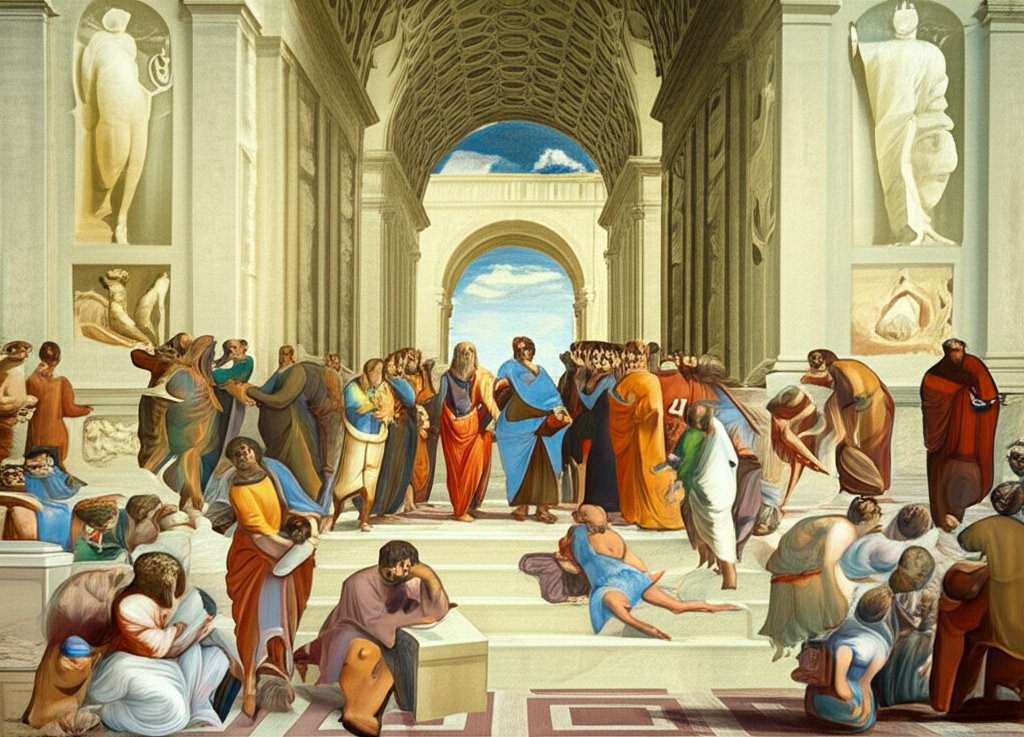
Prudence Through the Lens of the Great Books
The concept of prudent leadership resonates throughout the Great Books of the Western World, offering timeless lessons for the art of government.
| Author/Work | Key Contribution to Prudence in Government Plato's Republic: Envisions the "philosopher-king," whose rule is guided by ultimate wisdom and understanding of the Good. While not explicitly using "prudence," Plato's ideal ruler embodies practical reason in applying ideal forms to the imperfect reality of the state.
-
Aristotle's Politics: Explores various forms of government and the best constitution. Aristotle emphasizes the need for rulers to possess phronesis to make sound judgments concerning the public good and to maintain stability. He saw the prudent statesman as one who could discern the appropriate means to achieve the good life for the community.
-
Machiavelli's The Prince: While often seen as a cynical guide, Machiavelli's concept of virtù (prowess, skill, ability) for a ruler contains elements of prudence. A prince must be wise enough to adapt his action to circumstances, to know when to be a lion and when to be a fox, and to anticipate threats. His focus on maintaining power and the state's stability, while morally ambiguous, highlights a form of practical calculation essential for political survival, a dark mirror perhaps to true prudence.
-
Edmund Burke's Reflections on the Revolution in France: Burke champions a conservative prudence, advocating for gradual reform over radical upheaval. He emphasizes the accumulated wisdom of tradition and the dangers of abstract reason divorced from practical experience. His prudence is about respecting the complex, organic growth of society and making incremental adjustments rather than sudden, destructive changes.
Components of Prudent Political Action
For leaders to act prudently, they must cultivate specific habits and skills. These are not innate but developed through experience, reflection, and a commitment to the common good.
- Memoria (Memory): Learning from the past, understanding historical precedents, and remembering promises and past mistakes.
- Docilitas (Docility/Teachability): Openness to learning from others, including experts, citizens, and even opponents. It implies a humility to recognize one's own limitations.
- Solertia (Sagacity/Shrewdness): The ability to quickly grasp a situation, to see through deception, and to understand the underlying dynamics.
- Ratio (Reasoning): The capacity for logical thought, analysis, and the ability to connect causes and effects.
- Providentia (Foresight): The ability to anticipate future events and plan accordingly, a core aspect of proactive governance.
- Circumspectio (Circumspection): Taking into account all relevant circumstances and potential side effects of an action.
- Cautio (Caution): Guarding against obstacles and dangers, but not to the point of inaction.
These components highlight that prudence is a dynamic, active virtue, requiring constant engagement with reality.
The Contemporary Imperative for Prudence
In an age characterized by rapid change, complex global challenges, and a constant barrage of information, the need for prudent government is more pressing than ever. Leaders are faced with decisions of immense consequence—from climate change and economic instability to technological disruption and social fragmentation. Without the guiding hand of prudence, short-sighted policies, impulsive action, and a lack of foresight can jeopardize the well-being of entire populations.
Cultivating prudence in leaders and citizens alike is a vital task for any society aiming for enduring stability, justice, and prosperity. It reminds us that true wisdom in action is the bedrock upon which lasting government is built.
📹 Related Video: ARISTOTLE ON: The Nicomachean Ethics
Video by: The School of Life
💡 Want different videos? Search YouTube for: "Aristotle Nicomachean Ethics Prudence"
📹 Related Video: PLATO ON: The Allegory of the Cave
Video by: The School of Life
💡 Want different videos? Search YouTube for: "Machiavelli The Prince Analysis"