

The allure of glimpsing tomorrow has captivated humanity since the dawn of consciousness. Prophecy, in its myriad forms, stands as a testament to our perennial quest for meaning, control, and understanding in a world governed by the relentless march of Time. This article delves into the profound philosophical implications of foreknowledge, exploring its deep roots in Religion, its challenging relationship with free will, and the epistemological quandaries it poses for the very nature of Knowledge. We will navigate the intricate landscape where divine revelation meets human reason, drawing insights from the enduring wisdom of the Great Books of the Western World.
The Veiled Horizon: Prophecy and the Knowledge of the Future
From ancient oracles whispering enigmatic truths to sacred texts foretelling grand cosmic designs, the phenomenon of prophecy has exerted an undeniable pull on the human spirit. It promises a peek beyond the veil of the present, offering a unique form of insight that transcends ordinary perception. But what does it truly mean to know the future? And what are the philosophical repercussions of such a claim on our understanding of existence, agency, and truth?
1. The Primal Allure of Foreknowledge
The desire to anticipate what lies ahead is deeply ingrained in the human psyche. Whether driven by a need for security, a yearning for guidance, or a simple curiosity about destiny, the quest for foreknowledge speaks to our fundamental anxiety about the unknown. Prophecy, distinct from mere prediction based on observable patterns, often claims a source beyond the empirical – a divine inspiration, a mystical insight, or a direct revelation. This distinction elevates it from a scientific projection to a profound philosophical and theological claim.
2. Prophecy Across Civilizations and Faiths
The presence of prophecy is a near-universal constant across human cultures and religions. It serves not only as a source of comfort or warning but also as a cornerstone for theological frameworks and ethical imperatives.
- Biblical Prophecy: In Abrahamic traditions, prophets like Isaiah, Jeremiah, and Daniel serve as conduits for divine will, delivering messages of judgment, salvation, and future events. Their pronouncements often carry moral weight, calling communities to repentance or reaffirming covenants.
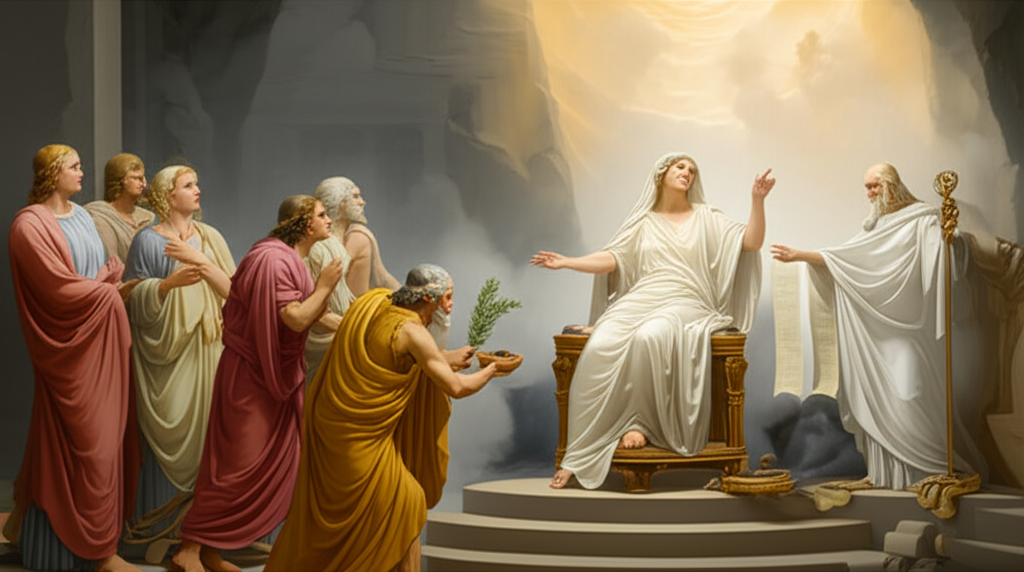
- Greek Oracles: The Oracle of Delphi, with its enigmatic Sibyls, offered cryptic insights that demanded careful interpretation, influencing political decisions and personal destinies across the Hellenic world. These prophecies often hinted at a predetermined fate.
- Seers and Diviners: Across indigenous cultures and ancient empires, various forms of divination—from augury to necromancy—sought to interpret signs and omens to glimpse impending events, reflecting a widespread belief in the interconnectedness of past, present, and future.
These diverse manifestations highlight prophecy's role in shaping worldviews and providing a framework for understanding human experience within a larger cosmic or divine plan.
3. The Paradox of Time and Free Will
Perhaps the most profound philosophical challenge posed by prophecy lies in its intricate relationship with Time and human free will. If the future is indeed knowable, does this imply it is predetermined?
- Divine Omniscience and Human Agency: Philosophers from St. Augustine to Thomas Aquinas grappled with the apparent tension between God's perfect foreknowledge (knowing all future events) and humanity's freedom to choose. Augustine, in The City of God, argued that God's knowledge does not cause events but rather perceives them in an eternal present, much like memory perceives the past. God sees our choices as they will occur, without compelling them.
- The Nature of Time: Does prophecy imply a linear, fixed future, or a more fluid, multi-faceted temporal reality? The concept of chronos (sequential time) often clashes with the idea of kairos (opportune time), suggesting that while some events may be fated, the timing and response can still be subject to human will. If one "knows" their future, does that knowledge itself alter the path to that future? This recursive loop presents a fascinating philosophical dilemma.
4. Epistemological Quandaries: Is Prophecy Knowledge?
The very definition of knowledge is put to the test when considering prophetic claims. For something to be considered knowledge, it typically requires justification, truth, and belief. But how can a future event, by definition un-actualized, be truly "known" in the present?
- Verification and Falsification: Unlike empirical predictions that can be tested against future observations, genuine prophecy often lacks a clear, immediate means of verification. Its truth can only be confirmed post hoc, if at all, leading to questions about its epistemological validity.
- Intuition vs. Revelation: Is prophetic insight a heightened form of intuition, a unique cognitive ability, or a direct transmission from a divine source? If it is revelation, how do we differentiate authentic divine knowledge from mere delusion or clever guesswork?
- The Problem of Interpretation: Prophecies are frequently delivered in symbolic, allegorical, or ambiguous language, requiring interpretation that can be subjective and prone to error. This interpretive layer further complicates the claim to objective knowledge.
5. The Philosophical Lens: From Ancient Greece to Modernity
The Great Books of the Western World offer a rich tapestry of thought on foreknowledge and destiny.
| Philosopher | Stance on Foreknowledge/Prophecy (Implied) | Core Idea |
|---|---|---|
| Plato | Inspired insights, connection to higher, immutable truths (Forms). | Rational Forms, Mimesis, inspired madness. |
| Aristotle | Focus on causality and potentiality; future is not fully determined. | Actuality & Potentiality, First Mover. |
| St. Augustine | Divine foreknowledge is compatible with human free will; God's eternal present. | City of God, Divine Providence. |
| St. Aquinas | God's knowledge is of all things simultaneously, encompassing all time. | Divine Simplicity, Summa Theologica. |
| Spinoza | All events are necessary consequences of the divine nature; strict determinism. | Substance Monism, Ethics. |
| Kant | Limits of human reason; future events are beyond phenomenal experience. | Transcendental Idealism, Categories of Understanding. |
From Plato's discussion of inspired madness and the connection to eternal Forms, to Aristotle's emphasis on potentiality and the undetermined nature of future singulars, ancient philosophy laid the groundwork. Later, Christian thinkers like Augustine and Aquinas painstakingly reconciled divine omniscience with human moral responsibility, often positing God's existence outside of temporal succession. In the modern era, figures like Spinoza posited a radical determinism, suggesting that all events are necessary, while Kant questioned the very possibility of human reason grasping such transcendent knowledge.
6. The Enduring Quest: Meaning in the Unseen
Regardless of whether one accepts its literal truth, prophecy serves a profound function in human experience. It addresses our deep-seated need for narrative, order, and purpose. It offers solace in times of uncertainty, a warning against hubris, and a framework for understanding our place in the grand scheme of existence. The philosophical inquiry into prophecy is not merely an academic exercise; it is an exploration of the very boundaries of human Knowledge, the nature of Time, the role of Religion in our lives, and the enduring mystery of our future.
📹 Related Video: What is Philosophy?
Video by: The School of Life
💡 Want different videos? Search YouTube for: ""Philosophy of Time and Free Will""
📹 Related Video: What is Philosophy?
Video by: The School of Life
💡 Want different videos? Search YouTube for: ""Augustine on Divine Foreknowledge""