

Greetings, fellow travelers on the intellectual journey! Today, we delve into one of humanity's most persistent and perplexing fascinations: the ability to peer beyond the veil of the present and glimpse what is to come. Prophecy, a concept deeply woven into the fabric of human history, religion, and philosophy, challenges our very understanding of Time and the nature of Knowledge itself. Is the future a fixed entity, merely awaiting our arrival, or a tapestry continually woven by choice and chance? Let us explore the profound implications of this age-old question, drawing insights from the titans of thought found within the Great Books of the Western World.
The Enigma of Tomorrow: Prophecy and the Fabric of Time
At its heart, the philosophical inquiry into prophecy is an exploration of the limits of human knowledge and the true nature of Time. For millennia, cultures across the globe have revered individuals believed to possess the gift of foresight, whether through divine inspiration, mystical insight, or a profound understanding of cosmic patterns. But what exactly is this "foresight"? Is it a form of empirical prediction, akin to meteorology, or something entirely different, a direct reception of truths from a higher realm? The Great Books offer a rich tapestry of perspectives, forcing us to confront not just the possibility of knowing the future, but what such knowledge would imply for free will, destiny, and the very structure of reality.
Ancient Echoes: Prophecy in Classical Thought
The philosophical roots of discussing prophecy stretch deep into antiquity, particularly within the classical Greek tradition.
Plato's Forms and Divine Inspiration
For Plato, as explored in works like the Republic and the Timaeus, true knowledge concerns the eternal and unchanging Forms, not the fleeting phenomena of the material world. Yet, he also acknowledged a different kind of insight, often associated with divine madness or inspiration, which could grant glimpses of truth beyond rational apprehension. Oracles, like the famous Oracle of Delphi, were central to Greek religion and political life, embodying a form of prophecy where divine utterance bypassed normal human reason. While not always framed as direct future-telling, these pronouncements often guided future actions, implying a form of knowledge about unfolding events. Plato's cosmology, with its cyclical Time and the soul's recollection of eternal truths, provides a framework where certain knowledge might be accessible to those attuned to the divine order.
Aristotle and Future Contingents: The Sea-Battle Argument
Perhaps no classical thinker grappled more directly with the philosophical problem of future knowledge than Aristotle. In his seminal work, On Interpretation, he famously introduces the "sea-battle argument." If it is true now that a sea-battle will take place tomorrow, then it must necessarily take place. And if it is false now that a sea-battle will take place tomorrow, then it must necessarily not take place. This seems to imply that all future events are already determined, negating human free will.
Aristotle's solution was nuanced: propositions about future contingent events (those that may or may not happen) are neither true nor false now. Their truth value is indeterminate until the event occurs. This distinction is crucial for understanding how prophecy might operate without completely undermining human agency. If the future is not yet fully actualized, then knowledge of it, particularly infallible knowledge, becomes problematic.
Key Philosophical Problems of Prophecy:
- Determinism vs. Free Will: If the future is known, is it fixed? Do we have genuine choice?
- The Nature of Time: Is Time linear, cyclical, or an illusion? How does its structure allow for future knowledge?
- Epistemological Basis: What kind of knowledge is prophetic? Is it rational, empirical, intuitive, or divine?
- Verification: How can prophetic claims be verified, especially concerning distant future events?
Divine Foreknowledge: The Intersection of Religion and Knowledge
With the rise of Abrahamic religions, the concept of prophecy took on a profound theological significance, intertwining with the attributes of an omniscient God.
Augustine's Timeless God
Saint Augustine, in his Confessions and City of God, tackles the profound implications of God's foreknowledge. If God knows everything that will happen, including all human choices, how can humans truly be free and morally responsible? Augustine's brilliant solution lies in his understanding of Time. For God, Time is not a linear progression from past to present to future. God exists outside of Time, in an eternal present. Thus, God's "foreknowledge" is not a prior knowledge of future events, but rather an eternal knowledge of all events as they truly are, without sequence. This reconciles divine omniscience with human free will, as God knows what we will freely choose, not what we are predetermined to choose.
Aquinas and the Reconciliation of Free Will
Thomas Aquinas, building upon Augustine and Aristotle in his Summa Theologica, further refines this understanding. He distinguishes between God's simple knowledge of vision (knowing all things as they are present to Him) and His knowledge of approbation (His will concerning what He knows). For Aquinas, God's knowledge does not cause future events in a deterministic sense; rather, it comprehends them in their true nature, including their contingency or necessity. Prophetic knowledge, then, is seen as a participation in God's eternal knowledge, a divine illumination granted to certain individuals to reveal aspects of this eternal truth within the temporal realm.
The Nature of Prophetic Knowledge: More Than Mere Prediction
It's crucial to distinguish prophecy from mere prediction. Prediction, as we understand it scientifically, relies on observable patterns, statistical probabilities, and causal chains. Weather forecasting, economic modeling, or even personal expectations are forms of prediction. Prophecy, particularly in its philosophical and religious contexts, claims to transcend these empirical methods. It often involves:
- Divine Revelation: A direct communication from a divine source.
- Intuitive Insight: A non-rational grasp of truth, often described as a sudden understanding.
- Symbolic Language: Prophetic messages are frequently couched in metaphors, parables, and visions, requiring interpretation rather than literal understanding.
This makes prophetic knowledge distinct from scientific knowledge. Its validity often rests on faith, consistency with sacred texts, or the subsequent unfolding of events, rather than immediate empirical verification.
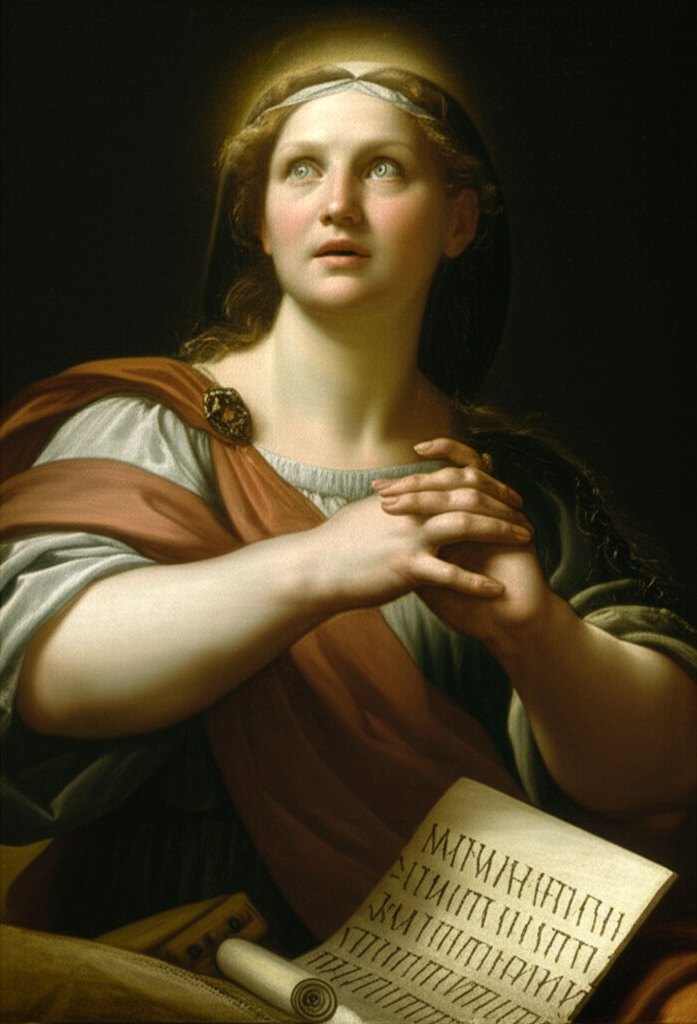
Prophecy, Determinism, and Human Agency
The tension between prophecy and free will remains one of philosophy's most enduring debates. If a prophet genuinely knows a future event, does that event have to happen? If so, what becomes of human choice, moral responsibility, and the very concept of ethical deliberation? This question forces us to reconsider:
- The nature of necessity: Is it logical necessity, physical necessity, or theological necessity?
- The role of counterfactuals: Could things have been otherwise?
- The purpose of prophecy: Is it merely to inform, or also to warn, to guide, or to inspire change? If the future is fixed, a warning seems futile.
Philosophers throughout the Great Books have wrestled with these implications, seeking to reconcile the apparent paradoxes. Some, like Spinoza, embraced a form of determinism where all events are necessarily entailed by prior causes. Others, following Augustine and Aquinas, found ways to preserve human freedom even in the face of divine omniscience, by redefining the nature of Time and Knowledge from a divine perspective.
The Enduring Allure: Why Prophecy Persists
Despite the profound philosophical challenges, the concept of prophecy persists across cultures and throughout history. Its enduring appeal stems from several deep-seated human desires:
- A desire for certainty: In a world fraught with uncertainty, the promise of knowing what lies ahead offers comfort and a sense of control.
- Guidance and meaning: Prophecy often provides a narrative framework for understanding historical events and gives direction to individual and collective lives, especially within religious contexts.
- Validation of belief systems: Fulfilled prophecy serves as powerful evidence for the divine inspiration or truth of a particular religion or worldview.
- Hope and warning: Prophetic messages can offer hope for a better future or serve as dire warnings, motivating moral and societal change.
Conclusion: The Unfolding Mystery of the Future
The philosophical journey through prophecy and the knowledge of the future, as illuminated by the Great Books of the Western World, reveals a complex interplay of Time, religion, and epistemology. From Aristotle's logical quandaries about future contingents to Augustine's eternal present of God, thinkers have grappled with how any knowledge of what is yet to be can exist without collapsing human freedom into rigid determinism.
Ultimately, prophecy remains a profound mystery, challenging the very limits of our understanding. It forces us to confront our place in the cosmos, the nature of divine power, and the enduring question of whether our path is truly our own to forge or merely a predetermined script awaiting its performance. As we continue to navigate an ever-unfolding present, the echoes of ancient prophets and the philosophical questions they raise continue to resonate, inviting us to ponder the elusive nature of tomorrow.
YouTube Video Suggestions:
-
📹 Related Video: ARISTOTLE ON: The Nicomachean Ethics
Video by: The School of Life
💡 Want different videos? Search YouTube for: "Aristotle's Sea Battle Argument explained"
-
📹 Related Video: KANT ON: What is Enlightenment?
Video by: The School of Life
💡 Want different videos? Search YouTube for: "Augustine on Time and Eternity"