

Plato's concept of education is not simply about imparting knowledge or mastering skills. Instead, it is a deeply transformative process, meant to shape a person's very soul, preparing them not just for personal success but for the profound responsibility of leadership. Unlike today’s education systems, which often prioritize technical skills or job readiness, Plato’s vision centered on the development of character, critical thinking, and the pursuit of truth. The philosopher-king, as Plato describes, must undergo an education that is so rigorous, so complete, that they emerge not only knowledgeable but also wise and just.
This vision invites us to reconsider what we value in education today. Can our current systems cultivate leaders with both the moral and intellectual depth that Plato envisioned? This week, let’s reflect on how we might embed Plato’s ideals into modern learning. What would our world look like if education prioritized the formation of philosopher-kings? And if you’re intrigued by the idea of re-imagining education in this way, planksip.org offers a community for those who, like Plato, believe in nurturing a higher vision of learning and leadership.
From the Archives of Ancient Greece: Featuring Dr. Michael Sugrue
Dr. Michael Sugrue, a prominent scholar on ancient philosophy, delves into Plato’s emphasis on education as the cornerstone of virtuous leadership. Sugrue explains that Plato’s Republic doesn’t merely propose an ideal form of government but rather sketches the path to create leaders of unmatched character through intellectual and moral development. Sugrue emphasizes how Plato saw the philosopher-king’s education as beginning from a young age, with exercises in music and gymnastics to cultivate balance between body and mind. This is not so different from modern ideas of holistic education, where emotional intelligence, ethics, and physical health complement intellectual achievement.
Sugrue’s analysis brings home the point that education, for Plato, is about preparing the soul to confront reality’s deepest questions and challenges. As young leaders progress, they’re trained in dialectics, mathematics, and metaphysics to hone their reasoning abilities, until they eventually reach the realm of the Good—a concept that embodies the highest truth and beauty. Such an educational journey emphasizes growth in virtue, not merely intellectual aptitude. For readers interested in this kind of transformational approach, planksip.org hosts discussions on how ancient wisdom, like Plato’s, can be re-imagined in today’s educational landscape.
Insights from the Dialogues: Quoting Plato
In Republic (473d-480a), Plato illustrates the ascent of the philosopher-king from darkness to light, a journey marked by the gradual acquisition of wisdom. This transformation requires more than just knowledge; it demands an unrelenting commitment to self-reflection, virtue, and the quest for truth. The philosopher-king is one who not only grasps complex truths but also possesses the moral clarity to act justly. Plato compares this to ascending from a dark cave into the sunlight—a metaphor for moving from ignorance to enlightenment, which demands courage and resilience.
Imagine this ascent in modern terms. Picture a leader today who begins in the corporate world, maybe with the same ambition for success as anyone else. However, as they advance, they become more introspective, drawn to deeper questions about justice, purpose, and the good of the society they serve. Through mentorship, self-discipline, and relentless questioning of their own values, they evolve, shedding self-centered motives and growing into someone dedicated to others’ well-being. This transformation embodies Plato’s philosopher-king—one who rules not for personal gain but for the higher good. Would such a leader inspire confidence in today’s world? Reflecting on Plato’s model, we’re invited to imagine leadership beyond profit or power—a vision we delve into on planksip.org.
Chance and Fate: Exploring Ancient Games
In ancient Greece, games like knucklebones and dice were more than simple diversions; they mirrored life’s unpredictability, including the uncertainties of leadership. These games involved both skill and luck, underscoring the idea that while a person may work hard to be virtuous, certain elements remain beyond their control. The philosopher-king’s path to enlightenment is similarly unpredictable, combining rigorous training with moments of revelation that seem almost like gifts of fortune. As Plato might suggest, both fate and virtue play a part in shaping true leaders.
Explore the Mystical World of Astraguli: Ancient Games of Chance with Cultural Significance.
Consider the idea of fate in our own lives. A leader might receive the best education and prepare diligently, yet certain circumstances—a random encounter or a particular life event—often determine their ultimate path. The ancient Greeks would interpret such moments as fateful, or even divine. At planksip.org, we explore these ideas through discussions on ancient wisdom and the role of chance in shaping character. By engaging with these ideas, we come closer to Plato’s ideal of balancing fate with wisdom in the pursuit of leadership.
Virtues Revisited: Practical Lessons for Today
This week, our focus is on prudence—the virtue of making sound judgments, balancing action with foresight. In today’s fast-paced world, prudence is as relevant as ever, yet it often takes a back seat to ambition or speed. Plato’s philosopher-king embodies prudence, reflecting on their decisions carefully and always with the well-being of others in mind. Imagine a CEO who, rather than rushing to expand or increase profits, thoughtfully considers the environmental and societal impacts of each move. Such a person may forgo immediate gains for the sake of sustainable growth and social responsibility—a modern embodiment of the philosopher-king’s prudence.
Plato believed prudence is what allows a leader to hold their values steady, no matter the temptations of power or praise. Prudence, therefore, is not about caution or reluctance but the courage to act rightly, even when it’s unpopular. At planksip.org, we are exploring how ancient virtues like prudence remain crucial to ethical leadership today. Join us in this exploration, and discover ways to apply these timeless principles to everyday choices and long-term aspirations.
Engage with Us: Reader’s Corner
How do you view the connection between education and leadership in your life or community? Are today’s educational systems capable of shaping future leaders with the character, wisdom, and prudence that Plato describes? We invite you to share your thoughts on planksip.org, where a lively community discusses how these philosophical ideals can transform modern life. Selected responses will be featured in next week’s newsletter, as we continue to explore how ancient wisdom can inspire new perspectives.
Closing Reflection: Socrates’ Enduring Legacy
Socrates famously stated that “the unexamined life is not worth living,” a principle that underpins Plato’s philosophy of education. Education, for Socrates, was not a means to an end but an ongoing commitment to truth, humility, and self-awareness. His influence endures in the idea that learning should transform, not merely inform. As we reflect on Plato’s ideal of the philosopher-king, let us also consider how we can apply these lessons in our daily lives. Engaging with the ideas of Plato and Socrates at planksip.org, we can explore together how self-examination can guide us to live with wisdom, integrity, and purpose.
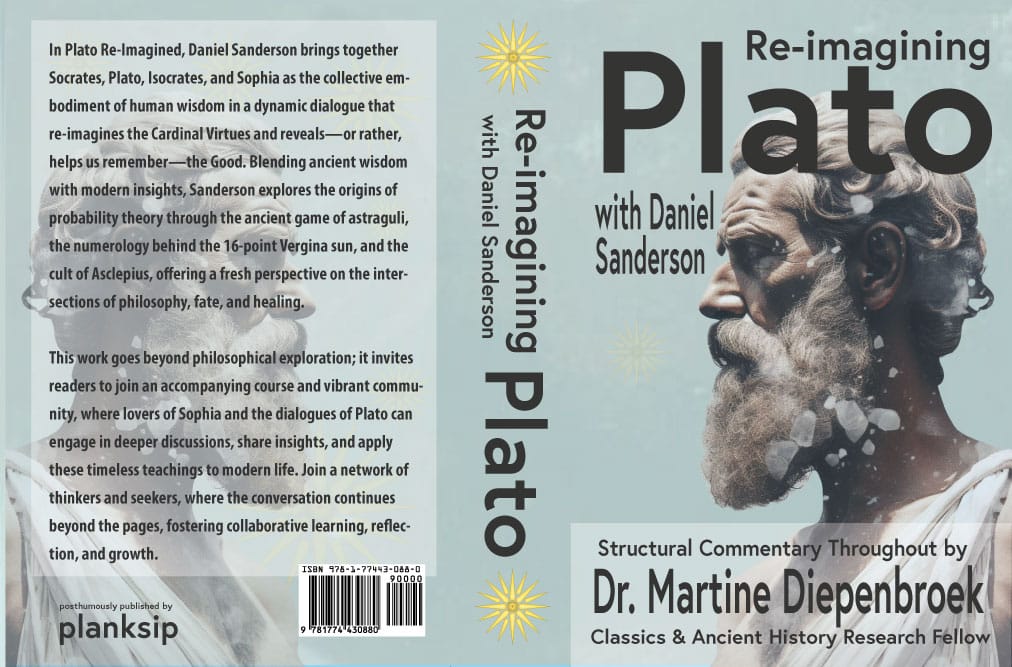
Plato Re-Imagined
This course offers 32 comprehensive lectures exploring most of Plato's dialogues. These lectures guide students toward a consilient understanding of the divine—a concept that harmonizes knowledge across disciplines and resonates with secular and religious leaders. As a bonus, Lecture #33 focuses on consilience, demonstrating how different fields of knowledge can converge to form a unified understanding.


