

The concept of relativism, the idea that truth is subjective and varies from person to person, is not new. It was famously encapsulated by Protagoras’ statement, “Man is the measure of all things.” Plato saw this not merely as a philosophical proposition but as a challenge to the pursuit of objective understanding. In our increasingly diverse world, the notion of “personal truth” often conflicts with the need for common standards. This week, we explore how Plato, through Socrates, addresses this very tension in Theaetetus and what it means for our search for truth today.
This dialogue remains relevant as we navigate a society where subjective interpretations of reality sometimes threaten the credibility of science, justice, and ethics. Plato’s insistence on a shared reality reminds us that while experiences are subjective, truth remains the guiding star that societies must strive toward. Today, we face the same philosophical dilemma in matters like media bias, public discourse, and even personal relationships.
But what does it mean to reject relativism? How can we respect individual perspectives while still acknowledging the existence of universal truths? Plato’s approach offers us a valuable lesson in balancing empathy with reason, inviting us to imagine what it means to pursue truth not in isolation, but as part of a shared human experience.
From the Archives of Ancient Greece: Featuring Dr. Michael Sugrue
Dr. Sugrue’s analysis of Plato’s critique of relativism highlights how Socrates’ approach in Theaetetus subtly dismantles Protagoras’ position. By drawing attention to logical contradictions, Socrates demonstrates that if all perspectives are equally valid, then even the statement that “all perspectives are equally valid” must admit the possibility of being false. Dr. Sugrue likens this to the modern paradox of infinite tolerance, which ultimately leads to the acceptance of intolerance itself—a contradiction that undermines the very premise of relativism.
Sugrue connects this with present-day issues, such as the “post-truth” phenomenon, where emotional appeal and social consensus often replace rigorous examination of facts. His lectures emphasize that while acknowledging different perspectives is crucial, it should not come at the cost of abandoning the search for coherent, objective standards. Drawing on this, we’re reminded that respecting others’ beliefs does not imply discarding our commitment to discerning truth from opinion.
We invite readers to explore Dr. Sugrue’s work on planksip.org, where these ancient lessons are reimagined for contemporary discussions. In rethinking what it means to pursue truth, we find ourselves participating in a grand dialogue that stretches from the ancient world into our modern age. The personification of Plato becomes not just an intellectual exercise, but an ideal worth aspiring to in our own efforts to understand the world.
Insights from the Dialogues: Quoting Plato
In Theaetetus (152a-160e), Socrates challenges Protagoras’ assertion by leading Theaetetus through a series of questions that expose the inherent contradictions of relativism. Socrates suggests that if all beliefs are equally true, then the belief that relativism is false must also be true—a paradox that threatens to collapse the entire argument. This kind of reasoning exemplifies Plato’s dialectical method, where exposing inconsistencies becomes the key to seeking knowledge.
Imagine a situation where two individuals interpret a scientific phenomenon in completely different ways—one based on empirical evidence and the other on personal conviction. Socrates’ critique reminds us that while multiple perspectives may exist, not all are equally supported by reason and evidence. As Plato implies through Socrates, the search for truth requires rigorous inquiry and consistency, not merely the assertion of one’s viewpoint.
This section of Theaetetus also touches on our own biases. How often do we encounter claims that defy reason but are accepted because they feel true to someone? Reflecting on these passages, we’re encouraged to engage critically with information, question contradictions, and strive for coherence in our understanding—key aspects of living a life aligned with philosophical inquiry.
Chance and Fate: Exploring Ancient Games
Ancient games like knucklebones (astragali) were not just pastimes; they were metaphors for the unpredictability of life and fate. Players would toss the small bones and interpret their landing, a mix of luck and skill determining the outcome. In this week’s context, these games offer a parallel to the tension between subjective opinion and objective truth. Just as skilled players recognize patterns within seemingly random throws, Plato urges us to discern truth amid the chaos of conflicting perspectives.
The metaphor extends further: in astragali, some throws are considered winning combinations, like the “Venus throw,” while others are outright losses. This echoes Plato’s argument against relativism—while interpretations may vary, not all are equally valid or “winning.” Just as ancient players honed their skills to improve their chances, we too must refine our reasoning to approach truth with clarity.
Explore the Mystical World of Astraguli: Ancient Games of Chance with Cultural Significance.
In today’s world, social media often serves as our modern “astragali,” where the randomness of opinions can obscure the pursuit of genuine understanding. However, by approaching these platforms with a discerning eye, we can strive to find patterns of reason and evidence amid the noise, just as Socrates sought consistency in argumentation.
Virtues Revisited: Practical Lessons for Today
This week, we revisit the virtue of prudence, which plays a central role in navigating the complexities of subjective interpretations and objective truths. Prudence involves the careful weighing of evidence, the recognition of contradictions, and the commitment to reason. In Plato’s view, it’s not enough to have courage or justice; without prudence, these virtues can easily become misguided or misapplied.
Consider how prudence operates in our daily lives. Whether in resolving conflicts, making decisions, or engaging in discussions, prudence allows us to sift through varying perspectives without succumbing to relativism. It encourages us to respect others’ views while still holding firm to the pursuit of a shared truth—an essential skill in a world where “my truth” often replaces “the truth.”
If you’re interested in exploring the role of prudence in ancient and modern contexts, visit planksip.org to join the conversation. By engaging with these timeless virtues, we not only reflect on their ancient roots but also consider their application to the challenges of our own time. Let Plato’s personification inspire your journey toward a more reflective and virtuous life.
Engage with Us: Reader’s Corner
Relativism is a hot topic in today’s discussions, from politics to science and even personal identity. Have you encountered situations where navigating “personal truth” has clashed with objective standards? How did you handle it? Or perhaps you have thoughts on how the balance between respecting different viewpoints and upholding truth can be maintained in today’s world? Share your reflections, and we may feature your insights in an upcoming edition.
Closing Reflection: Socrates’ Enduring Legacy
Through Theaetetus, Plato presents Socrates as the archetype of a seeker of truth—a philosopher who values the clarity and coherence of ideas over the comfort of unchallenged opinions. His questioning remains a powerful tool for exposing contradictions and testing beliefs, reminding us that philosophy’s true goal is not to assert our subjective truths, but to seek an understanding that transcends them.
As you ponder this week’s theme, consider Socrates’ commitment to examining every idea, even his own, in the light of reason. This legacy is not just an intellectual exercise, but an invitation to live a life where the pursuit of truth and the practice of virtue go hand in hand.
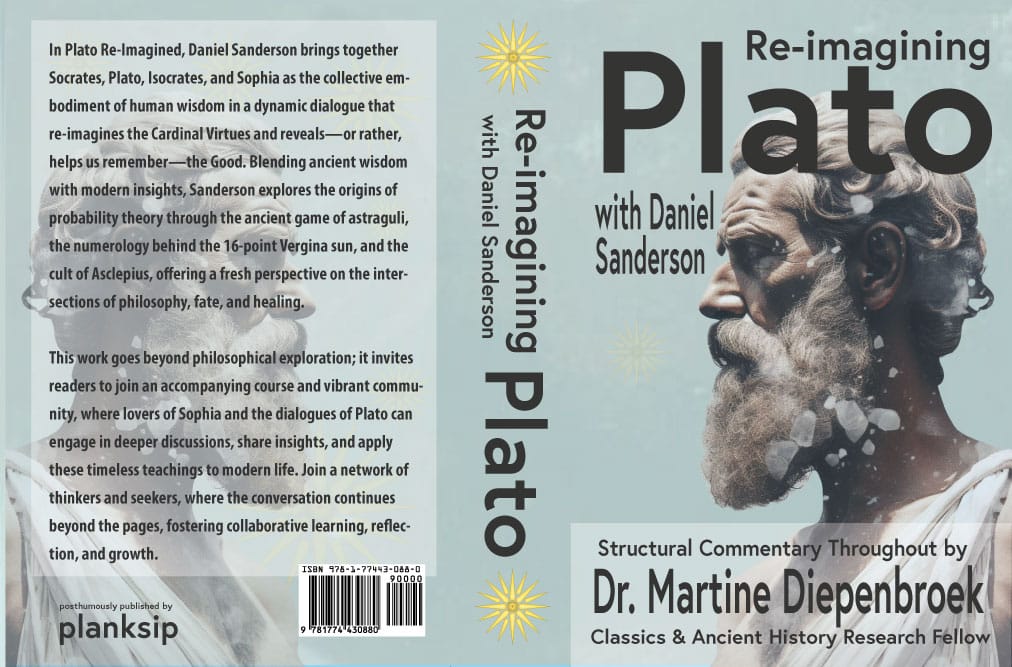
Plato Re-Imagined
This course offers 32 comprehensive lectures exploring most of Plato's dialogues. These lectures guide students toward a consilient understanding of the divine—a concept that harmonizes knowledge across disciplines and resonates with secular and religious leaders. As a bonus, Lecture #33 focuses on consilience, demonstrating how different fields of knowledge can converge to form a unified understanding.


