

As we mark Episode 50 of Plato Re-Imagined, it’s fitting to delve into one of the most thought-provoking and controversial aspects of Plato’s political philosophy—his critique of democracy. Although democracy is often hailed as the ideal form of government today, Plato offered a more nuanced and cautionary view. His critique wasn’t simply an aristocratic disdain for the masses, but rather a deep philosophical concern about the implications of governance by unchecked freedom and desire. He feared that without the guiding hand of wisdom and justice, democracies risked devolving into tyranny—a slippery slope that could be all too familiar in the contemporary world.
For Plato, a society governed primarily by the desires of its citizens, without a foundation of rational principles, is like a ship with an unskilled captain at the helm. He explores this analogy in The Republic, presenting a scenario in which the ship’s crew usurps the captain and navigates aimlessly based on majority whims. Imagine a government where every passing passion and trend can sway policies without regard for the greater good. Plato’s critique invites us to reflect on how modern democracies can safeguard themselves from the influence of unchecked desires.
Plato’s observations hold particular relevance today. As we grapple with political polarization, misinformation, and populist movements, his words serve as a reminder to balance liberty with reason. But rather than advocating for abandoning democratic principles, Plato encourages us to ask: How can we ensure that our freedoms are guided by wisdom and virtue? This philosophical challenge offers fertile ground for reflection in our modern age.
From the Archives of Ancient Greece: Featuring Dr. Michael Sugrue
In this week’s archival feature, Dr. Michael Sugrue analyzes Plato’s famous critique of democracy in The Republic, specifically focusing on his observations in Book VIII (562a-564a). Sugrue masterfully connects Plato’s concerns to modern dilemmas, suggesting that democracy’s greatest strength—its celebration of freedom—can also be its greatest weakness if left unmoderated. Drawing on Plato’s allegories and analogies, Sugrue explains how the pursuit of unchecked freedom can lead to an erosion of moral and societal order.
To illustrate this, Dr. Sugrue highlights Plato’s depiction of the democratic soul, which indulges in all desires equally without prioritizing what is good. Plato compares this to a city governed by passions rather than reason, where each citizen’s whims dictate the law. Sugrue argues that this lack of rational oversight can lead to chaos, as the pursuit of equality and freedom at all costs often overlooks the need for wisdom and prudence in leadership.
This analysis is particularly relevant in the context of modern debates over populism and political polarization. When emotional appeals and popular trends dominate political discourse, how do we ensure that decisions are based on long-term principles rather than short-term gains? Dr. Sugrue’s reflections offer a valuable lens through which we can examine the state of our democracies today. His insights encourage us to engage critically with the enduring question: What is the balance between freedom and virtue in a just society?
Insights from the Dialogues: Quoting Plato
In The Republic, Plato famously critiques democracy as a system prone to excess and instability (562a-564a). He likens the democratic city to a chaotic festival where all desires and impulses are celebrated equally, without distinction between what is just and what is unjust. According to Plato, this unchecked freedom paves the way for the rise of demagogues—leaders who appeal to base desires rather than higher reasoning—eventually leading to the establishment of tyranny. His analogy of the ship of state, where an unqualified crew overthrows the knowledgeable captain, serves as a powerful metaphor for the perils of democracy without wise leadership.
Plato’s argument doesn’t reject democracy outright; rather, it challenges us to think about the conditions necessary for democratic governance to be successful. Is it enough to allow all voices to be heard, or should there be a guiding principle of wisdom and justice to steer the collective? This question remains central to our understanding of governance, making Plato’s critique an essential topic for reflection in the modern world.
By revisiting these passages, we’re not merely engaging with abstract political philosophy but grappling with real-world issues that impact our societies today. Readers are encouraged to explore these passages and reflect on their relevance. Join the discussion at planksip.org, where we’re re-imagining Plato in the context of contemporary dilemmas. How do you interpret these insights in light of current political challenges? We welcome your perspectives and invite you to share them in our Reader’s Corner.
Chance and Fate: Exploring Ancient Games
In ancient Greece, games of chance like dice and knucklebones were more than mere pastimes; they symbolized the intersection of fate and human agency. Democratic decision-making, in Plato’s eyes, often resembled these games, where outcomes depended on the roll of the dice or the luck of the draw. In contrast to carefully calculated strategies, these games represented the unpredictable nature of fate—a concept Plato often found unsettling when applied to the governance of a city.
Imagine a society where each political decision is a throw of the dice, and leaders are chosen based on the whims of fortune. This metaphor aptly captures Plato’s critique of democratic governance, where the desires and passions of the majority can outweigh rational deliberation. Games like knucklebones served as symbols of fate and fortune in the ancient world, reminding participants of the precarious balance between choice and chance. Just as the outcome of a game could hinge on a single throw, so too could the fate of a democratic society rest on impulsive decisions.
Explore the Mystical World of Astraguli: Ancient Games of Chance with Cultural Significance.
Reflecting on these ancient games encourages us to think critically about the role of fortune in our lives and political systems. How do we strike a balance between allowing freedom and ensuring that wise decisions prevail? By exploring these metaphors, we gain a deeper appreciation for the complexity of democratic governance and the importance of prudence in leadership. Join the conversation at planksip.org to delve further into these ancient symbols and their relevance to today’s political landscape.
Virtues Revisited: Practical Lessons for Today
This week’s virtue is prudence, the ability to discern the appropriate course of action in the face of competing desires and impulses. For Plato, prudence was not merely a personal virtue but a guiding principle for society as a whole. A prudent leader, in Plato’s view, must possess the wisdom to prioritize what is good for the community over what is momentarily popular or appealing. In a democracy, where freedom of choice is paramount, prudence ensures that decisions are rooted in reason and justice rather than fleeting passions.
Prudence in leadership can be seen as an antidote to the excesses Plato feared in democratic societies. By cultivating this virtue, citizens and leaders alike can navigate the complexities of freedom and avoid the pitfalls of impulsive decisions. Today, we can draw on this ancient wisdom to inform our understanding of governance, ethics, and personal responsibility.
Readers are invited to reflect on the role of prudence in their own lives and communities. How do you prioritize reason over impulse when making decisions? Share your thoughts and experiences in our Reader’s Corner, and let’s explore how this ancient virtue can guide us in the modern world.
Engage with Us: Reader’s Corner
We believe that meaningful dialogue and reflection are key to understanding and applying ancient wisdom in contemporary contexts. That’s why we encourage you to join the conversation at planksip.org, where the personification of Plato becomes an ideal worth imagining. What are your thoughts on Plato’s critique of democracy? Do you see parallels between his concerns and the challenges facing modern democracies? Share your reflections and questions in our Reader’s Corner, and we’ll feature selected responses in next week’s newsletter.
By participating in this dialogue, you’re not only engaging with ancient ideas but also contributing to a living tradition of philosophical inquiry. Let’s continue to explore, question, and reflect together.
Closing Reflection: Socrates’ Enduring Legacy
As we contemplate Plato’s critique of democracy, it’s worth remembering Socrates’ commitment to questioning and examining the status quo. Socrates’ relentless pursuit of truth through dialogue reminds us that a just society is not built on unchallenged beliefs but on continuous reflection and discourse. In the face of political uncertainty and social change, Socrates’ legacy encourages us to seek wisdom, even when it challenges popular opinions or entrenched norms.
Socrates’ unwavering dedication to the examined life remains a powerful reminder that democracy’s strength lies not only in freedom but in thoughtful dialogue. As we continue our journey through Plato Re-Imagined, let’s keep this legacy at the forefront of our reflections.
Thank you for joining us for Episode 50. We look forward to exploring more of Plato’s wisdom with you in the weeks to come. Stay curious, stay reflective, and keep engaging with the personification of Plato on planksip.org.
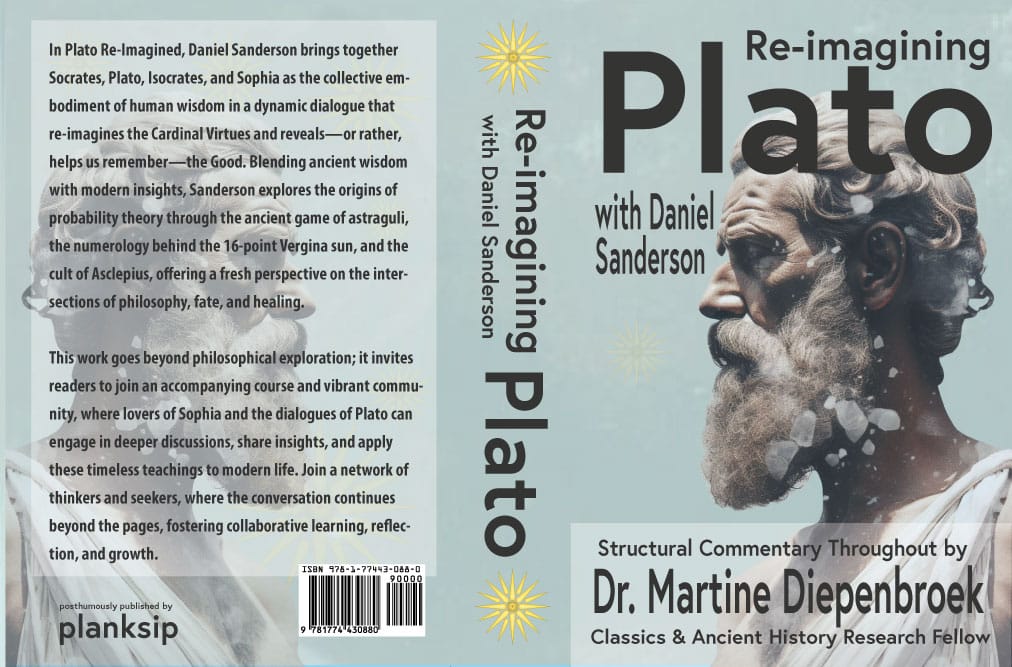
Plato Re-Imagined
This course offers 32 comprehensive lectures exploring most of Plato's dialogues. These lectures guide students toward a consilient understanding of the divine—a concept that harmonizes knowledge across disciplines and resonates with secular and religious leaders. As a bonus, Lecture #33 focuses on consilience, demonstrating how different fields of knowledge can converge to form a unified understanding.


