

Philosophy: The Enduring Pursuit of Wisdom in a World of Knowledge
Philosophy, at its ancient heart, is not merely the accumulation of facts or the mastery of a specific domain of knowledge, but rather a profound and persistent pursuit of wisdom. It is a discipline that challenges us to move beyond superficial understanding, to question fundamental assumptions, and to seek a comprehensive grasp of Being itself, ultimately aiming for a richer, more meaningful engagement with existence.
The Etymological Roots: A Love Affair with Sophia
The very word "philosophy" whispers its intention. Deriving from the ancient Greek philo (love of) and sophia (wisdom), it literally translates to "the love of wisdom." This isn't a casual affection, but a deep, abiding yearning, a recognition that true understanding is not easily possessed but must be continually sought. As Socrates famously declared, "I know that I know nothing," embodying the philosophical humility that is the first step on the path to wisdom. It is this humble admission of ignorance, a hallmark of many thinkers in the Great Books of the Western World, that propels the philosopher forward, not to gather more facts, but to discern deeper truths.
Beyond Mere Knowledge: The Ascent to Wisdom
While knowledge is undeniably a crucial component of the philosophical journey, it is distinct from wisdom. Knowledge can be thought of as the acquisition and assimilation of information, the understanding of specific subjects, or the mastery of particular skills. We can know countless facts, scientific principles, or historical events. However, wisdom transcends this.
- Knowledge (Episteme): The understanding of particulars, specific truths, and how things work. It answers "what?" and "how?"
- Wisdom (Sophia/Phronesis): The profound insight into the fundamental nature of reality, the interconnectedness of things, and the highest good. It answers "why?" and "what for?"
Aristotle, a towering figure in the Great Books, meticulously differentiated between theoretical wisdom (sophia)—the contemplation of eternal truths and first principles—and practical wisdom (phronesis)—the ability to deliberate well about what is good and advantageous for human life. Both forms illustrate that wisdom isn't just about knowing that something is true, but understanding its significance, its value, and its implications for Being and living well.
The Quest for Understanding Being
At the zenith of wisdom's pursuit lies the profound endeavor to understand Being. This isn't merely about understanding a being, or many beings, but the very nature of existence itself – why there is something rather than nothing, what constitutes reality, and what it means to be human. From Plato's exploration of the Forms, which represent ultimate realities, to the intricate metaphysical arguments of Aquinas, the Great Books consistently reveal philosophy's deep-seated commitment to grasping these ultimate questions.
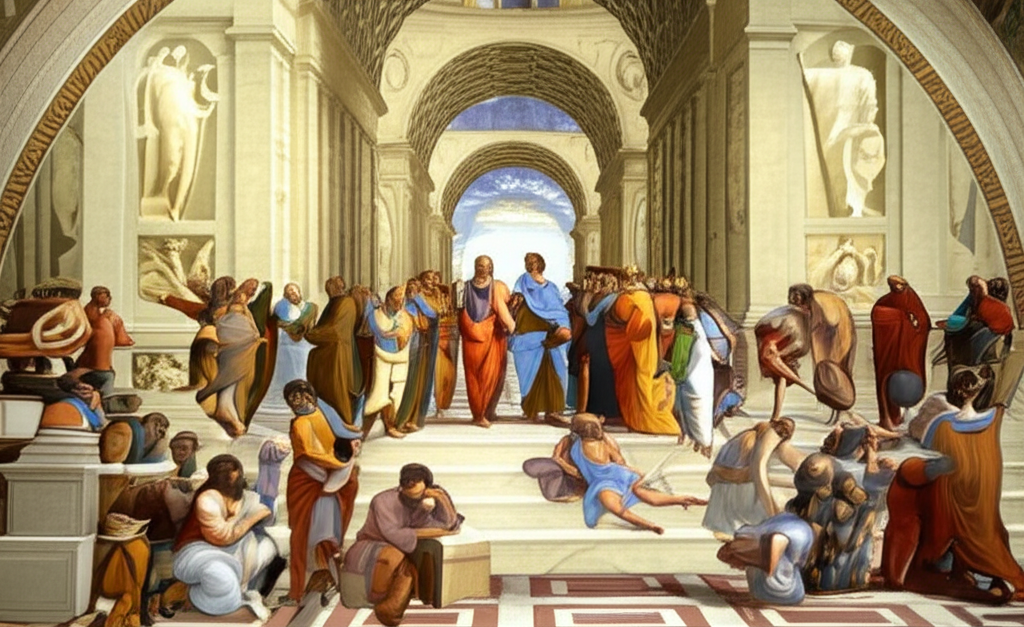
This quest for Being compels us to examine:
- Ontology: The study of existence, what is real, and the categories of being.
- Metaphysics: The exploration of first principles and fundamental truths about reality, transcending empirical observation.
- Human Nature: What defines us, our purpose, our ethical responsibilities.
True wisdom, therefore, isn't complete without a deep engagement with these existential inquiries, seeking to illuminate the very fabric of our reality and our place within it.
Cultivating Wisdom: A Lifelong Journey
The pursuit of wisdom is not a solitary sprint but a continuous marathon, requiring dedication, introspection, and an openness to challenge one's own preconceptions. It is a process that involves both rigorous intellectual discipline and profound personal reflection.
Here are some philosophical practices that cultivate wisdom:
- Socratic Dialogue: Engaging in critical questioning and open discussion to expose inconsistencies and deepen understanding.
- Critical Thinking: Analyzing arguments, identifying biases, and evaluating evidence with a discerning mind.
- Contemplation: Setting aside time for deep thought, meditation on fundamental questions, and self-examination.
- Ethical Reflection: Deliberating on moral dilemmas and striving to live a virtuous life, integrating knowledge with action.
- Engagement with Diverse Perspectives: Reading widely, especially the foundational texts found in the Great Books, to understand the vast spectrum of human thought.
The Enduring Relevance of Wisdom's Pursuit
In our age of information overload, where knowledge is abundant and easily accessible, the pursuit of wisdom is more vital than ever. It provides the framework to contextualize information, to discern truth from falsehood, and to make meaningful choices in an increasingly complex world. Philosophy, as this pursuit, offers not just answers, but the tools to ask better questions, to live more thoughtfully, and to understand our fundamental Being with greater clarity and purpose. It reminds us that while facts change, the fundamental human yearning for meaning and understanding remains constant.
📹 Related Video: What is Philosophy?
Video by: The School of Life
💡 Want different videos? Search YouTube for: ""What is Philosophy? The Love of Wisdom Explained""
📹 Related Video: PLATO ON: The Allegory of the Cave
Video by: The School of Life
💡 Want different videos? Search YouTube for: ""Plato's Allegory of the Cave and the Pursuit of Truth""