

Philosophy as the Pursuit of Wisdom: An Enduring Quest
Philosophy, at its heart, is not merely an academic discipline but a profound and lifelong journey towards wisdom. Derived from the Greek philosophia, meaning "love of wisdom," it is an active engagement with fundamental questions concerning existence, knowledge, values, reason, mind, and language. This pursuit transcends the mere accumulation of knowledge, striving instead for a deeper understanding of Being and how to live a flourishing life, a quest beautifully chronicled and continually re-examined within the pages of the Great Books of the Western World.
The Enduring Quest for Sophia
From its very origins, philosophy has been distinguished by its unique approach to understanding the world. Unlike mythology or religious dogma, which often provide ready-made answers, philosophy thrives on questioning, critical examination, and reasoned argument. This isn't just about collecting facts; it's about discerning meaning, evaluating perspectives, and constructing coherent frameworks for comprehending reality.
The ancients, particularly the Greeks, understood this distinction keenly. Socrates, famously declaring, "I know that I know nothing," exemplified the humility and intellectual honesty that are foundational to the pursuit of wisdom. His relentless questioning, known as the Socratic method, aimed not to impart knowledge but to expose ignorance and guide individuals toward self-discovery and a more profound understanding of truth.
From Knowledge to Wisdom: A Crucial Distinction
While knowledge is undoubtedly a component of wisdom, it is not wisdom itself. We can accumulate vast amounts of information, understand complex theories, and master intricate skills, yet still lack wisdom.
Knowledge vs. Wisdom: A Comparative Look
| Aspect | Knowledge | Wisdom |
|---|---|---|
| Nature | Acquisition of facts, theories, information | Application of knowledge, deep understanding |
| Focus | "What is?" "How does it work?" | "Why should I?" "What is good?" "What is Being?" |
| Outcome | Understanding, skill | Insight, judgment, ethical living |
| Source | Learning, study, experience | Reflection, experience, critical thought, moral insight |
| Goal | Information, proficiency | Flourishing, meaning, right action |
Knowledge gives us the tools; wisdom tells us how and when to use them, and for what purpose. It involves discerning the deeper implications of our actions, understanding the interconnectedness of things, and grappling with the nature of Being itself. Plato, in his Republic, envisioned the philosopher king as someone who possessed not just knowledge of governance, but the wisdom to grasp the Forms of Justice and the Good, thereby leading society toward its highest potential. Aristotle further refined this, distinguishing between theoretical wisdom (sophia)—understanding eternal truths—and practical wisdom (phronesis)—the ability to deliberate well about what is good and advantageous for oneself and for human Being generally.
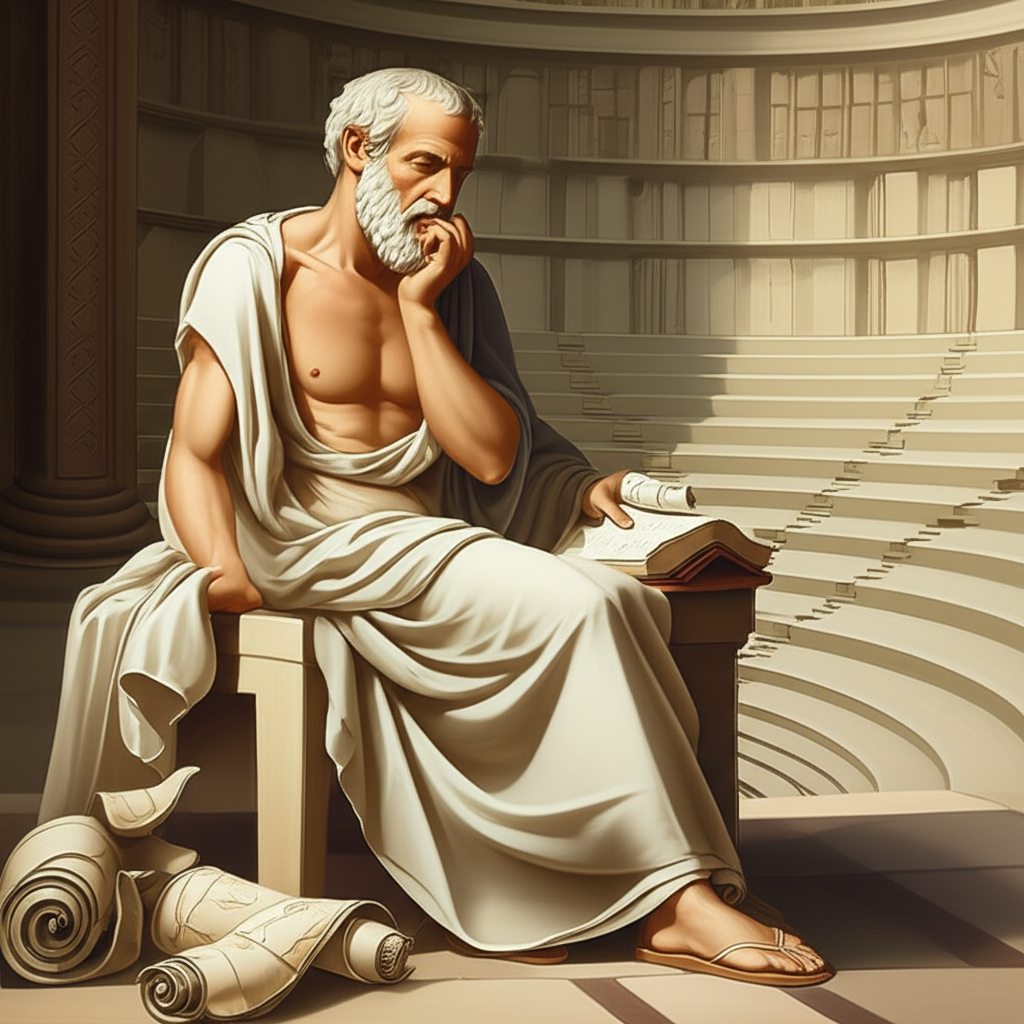
The Great Books and the Cultivation of Wisdom
The Great Books of the Western World serve as an invaluable compass in this pursuit. They are not merely historical relics but living conversations with the greatest minds who have grappled with the very questions that define human existence. Engaging with these texts is a direct path to cultivating wisdom:
- Plato's Republic: Challenges us to consider the ideal state, the nature of justice, and the philosopher's ascent from the shadows of ignorance to the light of truth. It directly addresses the pursuit of ultimate Being and its implications for individual and societal good.
- Aristotle's Nicomachean Ethics: Offers a systematic exploration of human flourishing (eudaimonia), virtue, and the development of character. It provides a blueprint for practical wisdom, guiding us in making sound moral judgments in everyday life.
- Marcus Aurelius's Meditations: A profound testament to Stoic wisdom, offering reflections on self-mastery, resilience, and finding tranquility amidst life's challenges. It speaks directly to the individual's inner Being and their relationship with the cosmos.
- Descartes' Meditations on First Philosophy: Ignites the modern philosophical quest for certainty, questioning the nature of reality and our capacity for knowledge, pushing us to re-evaluate our foundational beliefs about Being and consciousness.
These works, among countless others, invite us into a dialogue across centuries, sharpening our critical faculties and expanding our understanding of the human condition and the nature of Being.
Wisdom and the Nature of Being
A significant dimension of philosophical wisdom lies in its engagement with the concept of Being. Metaphysics, the branch of philosophy that explores the fundamental nature of reality, asks: What is it to exist? What is the ultimate substance of the universe? Is there a purpose to existence?
Understanding Being is not an abstract exercise disconnected from life; it profoundly shapes our worldview and values. When philosophers like Parmenides or Heidegger delve into the nature of Being, they are not just theorizing; they are seeking the bedrock upon which all knowledge and action rest. This quest for fundamental understanding is a cornerstone of wisdom, providing a context for our existence and guiding our ethical choices.
The Practicality of Philosophical Wisdom
Far from being an ivory tower pursuit, philosophical wisdom has immense practical value. It equips us with:
- Ethical Frameworks: Guiding principles for moral decision-making, helping us navigate complex dilemmas.
- Critical Thinking Skills: The ability to analyze arguments, identify fallacies, and form well-reasoned conclusions.
- Self-Awareness: A deeper understanding of our own biases, motivations, and values, leading to personal growth.
- Resilience: The capacity to confront life's uncertainties and adversities with equanimity and purpose, informed by a broader perspective on Being.
The wisdom gained through philosophical inquiry allows us to live more thoughtfully, ethically, and meaningfully, transforming knowledge into insight that informs every aspect of our lives.
Embracing the Journey: A Lifelong Pursuit
The pursuit of wisdom is never truly complete. It is a continuous process of learning, questioning, reflecting, and adapting. The greatest philosophers, those whose ideas resonate through the Great Books, understood that wisdom is not a fixed destination but a dynamic journey. It requires intellectual humility, a willingness to challenge one's own assumptions, and an open-minded engagement with diverse perspectives.
By embracing philosophy, we commit ourselves to a richer, more examined life—a life dedicated to understanding ourselves, our world, and the profound nature of Being that underpins it all.
YouTube Video Suggestions:
-
📹 Related Video: SOCRATES ON: The Unexamined Life
Video by: The School of Life
💡 Want different videos? Search YouTube for: ""Socrates Wisdom vs Knowledge Great Books""
2. ## 📹 Related Video: PLATO ON: The Allegory of the Cave
Video by: The School of Life
💡 Want different videos? Search YouTube for: ""Plato Aristotle Wisdom Ethics Explained""