

Philosophy: The Enduring Pursuit of Wisdom
Philosophy, at its core, is not merely an academic discipline but a profound and timeless quest for understanding the fundamental nature of existence. Derived from the Greek philosophia, meaning "love of wisdom," it is a journey that transcends the accumulation of mere facts, aiming instead for a deeper insight into Being, purpose, and the human condition. This article explores how philosophy serves as this relentless pursuit, distinguishing wisdom from knowledge, and highlighting the invaluable role of classical thought in this enduring endeavor.
The Etymology of an Enduring Quest
The very word "philosophy" contains its essence. Philo (love) and sophia (wisdom) combine to describe an ardent affection for, and a dedicated striving towards, wisdom. This isn't a passive appreciation but an active engagement—a continuous questioning, an examination of assumptions, and a persistent search for truth that permeates all aspects of life. From the Socratic method to the grand systematic inquiries of Aristotle, the philosophical tradition has always emphasized wisdom as the ultimate goal, not just intellectual prowess.
Wisdom vs. Knowledge: A Critical Distinction
While often conflated, wisdom and knowledge are distinct, though interconnected, concepts central to the philosophical pursuit.
-
Knowledge can be understood as the accumulation of facts, information, and skills acquired through experience or education. It answers the "what" and "how" questions. One might know the laws of physics, the dates of historical events, or how to operate complex machinery. It is quantifiable and often specialized.
-
Wisdom, conversely, is the ability to apply knowledge effectively, to discern what is true and right, and to make sound judgments. It answers the "why" and "should" questions, involving insight, understanding of consequences, and a deeper grasp of values and meaning. A wise person understands the implications of the laws of physics, the lessons of history, or the ethical considerations of technology.
Consider the following comparison:
| Feature | Knowledge | Wisdom |
|---|---|---|
| Nature | Information, facts, skills | Insight, judgment, understanding |
| Focus | What, How | Why, Should |
| Scope | Specific, specialized | Holistic, contextual |
| Acquisition | Learning, experience | Reflection, experience, critical thinking, empathy |
| Outcome | Competence, informed understanding | Prudence, meaningful action, good life |
Philosophy strives to bridge the gap between knowing about the world and understanding how to live in it wisely.
The Role of Being in Philosophical Wisdom
The pursuit of wisdom inevitably leads to fundamental questions about Being—the nature of existence itself. What does it mean to be? What is reality? What is the essence of things? These are not trivial questions but the very bedrock of philosophical inquiry.
Ancient Greek philosophers, particularly Parmenides and Plato, wrestled extensively with the concept of Being. For them, true wisdom involved grasping the unchanging, eternal aspects of reality, often contrasted with the fleeting, sensory world. To understand Being is to understand the underlying principles that govern existence, leading to a profound perspective on human life, morality, and purpose.
The journey through metaphysics, epistemology, and ethics—all branches of philosophy—is ultimately a quest to understand Being in its various manifestations, from the existence of the cosmos to the nature of human consciousness. This understanding informs our choices, shapes our values, and ultimately contributes to a well-lived, wise life.
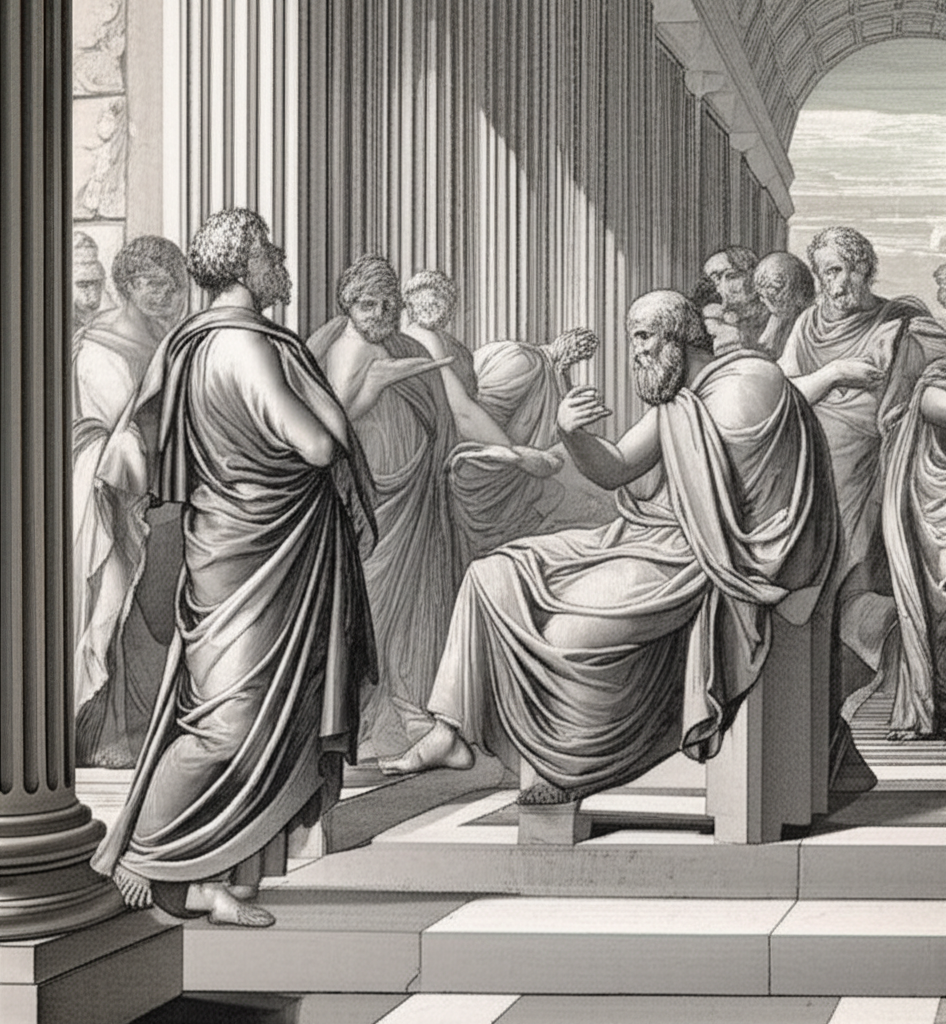
The Great Books as Beacons of Wisdom
The enduring wisdom sought through philosophy is richly preserved within the Great Books of the Western World. These monumental works, spanning millennia, offer direct access to the minds of history's greatest thinkers. From Plato's Republic, which explores justice and the ideal state, to Aristotle's Nicomachean Ethics, a profound treatise on virtue and happiness, these texts are not mere historical artifacts but living wellsprings of philosophical insight.
Engaging with these works allows us to:
- Witness the evolution of thought: Observe how ideas about Being, knowledge, and ethics have been debated and refined across generations.
- Encounter diverse perspectives: Grapple with arguments from figures like St. Augustine on faith and reason, or Kant on moral duty.
- Develop critical thinking: Learn to analyze complex arguments, identify underlying assumptions, and formulate coherent responses.
- Gain timeless wisdom: Discover principles and insights that remain relevant to contemporary challenges in society and personal life.
These books serve as a testament to humanity's continuous striving for wisdom, offering guidance and challenge to all who embark on this profound journey.
Conclusion: An Ongoing Invitation
Philosophy, as the pursuit of wisdom, is an ongoing invitation to live a life of thoughtful inquiry and deeper understanding. It encourages us to move beyond superficial knowledge, to question the nature of Being, and to cultivate a discerning mind that seeks not just answers, but profound insight. In a world awash with information, the philosophical pursuit of wisdom remains more vital than ever, offering a compass for navigating complexity and living a more meaningful existence.
📹 Related Video: What is Philosophy?
Video by: The School of Life
💡 Want different videos? Search YouTube for: ""What is Wisdom Philosophy""
📹 Related Video: ARISTOTLE ON: The Nicomachean Ethics
Video by: The School of Life
💡 Want different videos? Search YouTube for: ""Great Books of the Western World Explained""