

The Dynamic Dance: Oppositional Forces in Nature
In the grand tapestry of existence, few truths resonate as profoundly as the omnipresent role of opposition. Far from being mere impediments, these counteracting forces are the very engines of change, the foundational principle upon which nature constructs its intricate and ever-evolving reality. From the cosmic dance of celestial bodies to the microscopic interactions within a single cell, the interplay of opposites is not a flaw in the design but the very essence of its dynamism, driving all creation and decay, growth and transformation. This article delves into the philosophical underpinnings of this fundamental concept, exploring how resistance and counter-balance are not just present, but necessary for the world as we know it.
The Heraclitean Flux: War as the Father of All Things
Ancient philosophy, particularly through the enigmatic fragments of Heraclitus of Ephesus, offers us an early glimpse into this profound insight. For Heraclitus, the universe was in a state of perpetual flux, a continuous river into which one could never step twice. Central to this ever-changing reality was the idea that opposition was not merely a feature, but the governing principle. He famously declared, "War is the father of all things, and king of all; and some he has shown forth as gods and others as men, and some he has made slaves and others free."
This "war" is not necessarily literal conflict, but the ceaseless tension and struggle between opposing forces—hot and cold, wet and dry, up and down, day and night. It is this very tension that generates and sustains the cosmos. Without the friction, the push and pull, there would be stagnation, not the vibrant, evolving nature we observe. The unity of opposites, as Heraclitus understood it, means that these seemingly disparate elements are intrinsically linked, each defining and giving meaning to the other. Light cannot exist without shadow, nor silence without sound.
Balance and Equilibrium: Nature's Intricate Design
Beyond the fiery pronouncements of Heraclitus, the concept of oppositional forces finds expression in the intricate mechanisms of natural equilibrium. Consider the delicate balance within ecosystems: predator and prey, competition and cooperation, growth and decomposition. Each element, through its interaction with its opposite, contributes to the overall stability and resilience of the system.
- Predator-Prey Dynamics: A classic example where the rise of a prey population leads to an increase in predators, which in turn reduces the prey, causing the predator population to decline, allowing the prey to recover. This cyclical change is driven by the opposing forces of consumption and survival.
- Geological Processes: Tectonic plates push against each other, creating mountains; erosion then wears them down. Volcanic forces build land, while weathering breaks it apart. These slow, immense oppositional forces sculpt the Earth's surface over millennia.
- Biological Homeostasis: Within living organisms, complex regulatory systems constantly work to maintain internal stability against external fluctuations. Body temperature, pH levels, and blood sugar are all kept within narrow ranges through the constant interplay of opposing physiological mechanisms.
These examples illustrate a fundamental principle: that stability in nature is not static, but rather a dynamic equilibrium achieved through the continuous reconciliation of oppositional forces.
The Dialectical Drive: Opposition as a Catalyst for Evolution
The philosophical lineage of opposition as a driver of change continues through thinkers like Georg Wilhelm Friedrich Hegel, who articulated the concept of the dialectic. While often applied to history and ideas, the dialectical principle—thesis, antithesis, synthesis—can be seen as an abstract model for the evolutionary processes observed in nature.
| Phase | Description | Natural Analogy
- Initial State (Thesis): Imagine a stable ecological community, perhaps a forest.
- Challenge (Antithesis): A sudden environmental shift occurs, perhaps a prolonged drought or the arrival of an invasive species, creating disequilibrium and stress. This is the challenge to the existing order.
- Resolution (Synthesis): The community adapts. Some species may die off, others thrive under the new conditions, or new symbiotic relationships form. The ecosystem reorganizes into a new, albeit potentially different, stable state. This new state is a product of the tension and struggle, a higher-order organization that incorporates the lessons of the opposition.
This cyclical process of challenge and adaptation, driven by inherent opposition, is a core mechanism of evolution and biological diversification. It shows that change is not random but often directed by the need to resolve internal and external conflicts.
The Principle of Growth Through Resistance
The recurring motif across these philosophical and natural observations is that opposition is not merely a force of destruction but a principle of growth and strengthening. A muscle only grows stronger when it encounters resistance. A tree develops a robust root system and trunk by withstanding the opposing forces of wind and gravity.
Consider the very act of cognition: our understanding deepens when we confront opposing viewpoints, when our established beliefs are challenged by new information or different perspectives. This intellectual friction is what sparks insight and leads to a more nuanced comprehension.
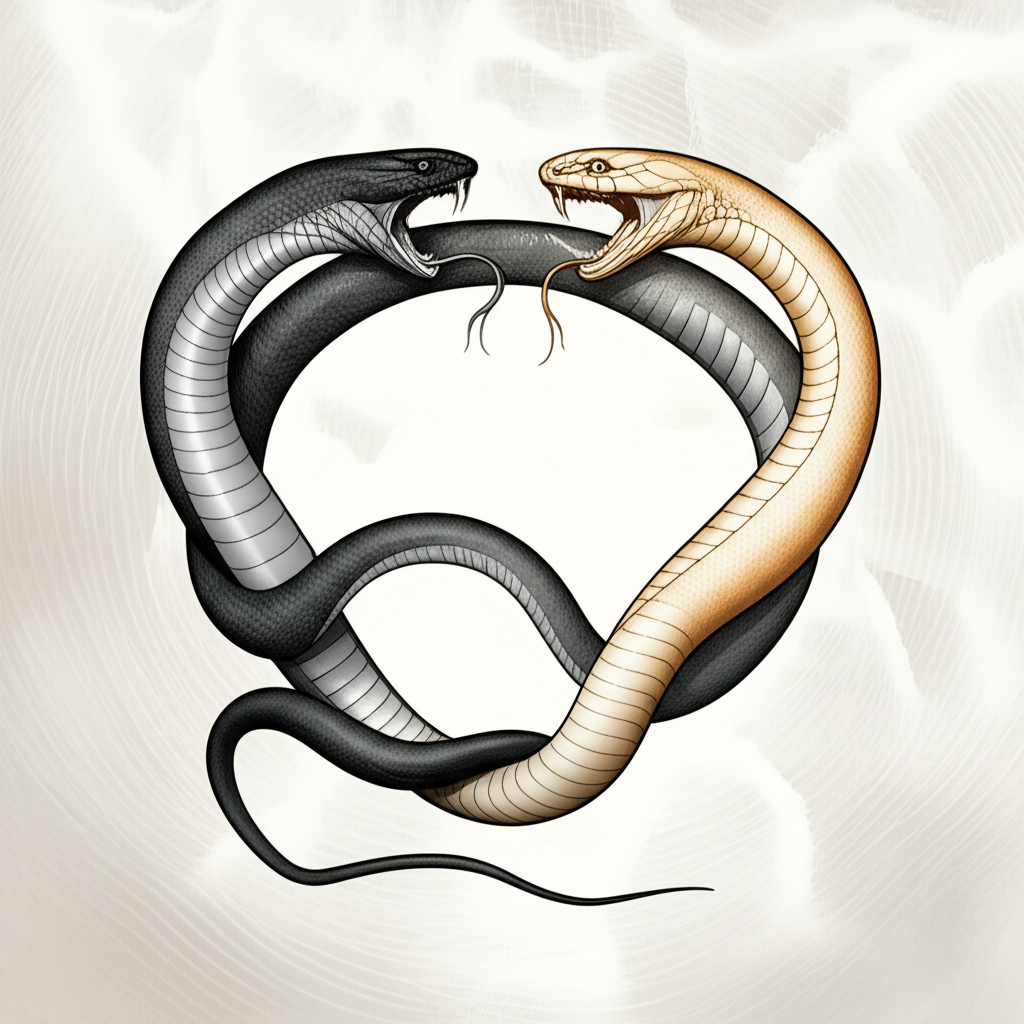
Conclusion: Embracing the Dynamic Tension
To truly grasp the essence of nature is to understand and appreciate its inherent reliance on oppositional forces. It is the ceaseless push and pull, the creative tension between what is and what could be, that fuels all change and underpins every fundamental principle of existence. From the smallest particle to the largest galaxy, the world is a testament to the dynamic dance of opposites, a symphony of resistance and resolution that orchestrates the continuous unfolding of reality. Rather than fearing conflict or difference, perhaps we are called to recognize in these oppositions the very source of vitality, evolution, and enduring meaning.
YouTube Video Suggestions:
-
📹 Related Video: ARISTOTLE ON: The Nicomachean Ethics
Video by: The School of Life
💡 Want different videos? Search YouTube for: "Heraclitus Flux and Unity of Opposites Explained"
2. ## 📹 Related Video: What is Philosophy?
Video by: The School of Life
💡 Want different videos? Search YouTube for: "Hegel Dialectic Explained Philosophy Nature"