

Oligarchy and the Suppression of Liberty: A Perennial Philosophical Struggle
The delicate balance between power and freedom has captivated philosophers for millennia. Among the various forms of Government, Oligarchy stands as a particularly insidious threat to Liberty, representing rule by a select few, typically the wealthy, whose primary aim is self-preservation and the augmentation of their own power and resources. This article delves into the philosophical underpinnings of oligarchical rule, drawing insights from the Great Books of the Western World to illuminate how such a system systematically erodes the fundamental freedoms essential for a flourishing society. From the manipulation of Law to the control of public discourse, oligarchy presents a stark contrast to the ideals of justice and individual autonomy.
The Nature of Oligarchy: Rule by the Few, For the Few
At its core, Oligarchy is defined not merely by the number of rulers, but by their character and objectives. As Aristotle meticulously details in his Politics, an oligarchy is a Government where "the rich rule and are possessed of the Government." Unlike an aristocracy, which theoretically aims for rule by the best for the common good, an oligarchy is inherently self-serving. Its defining characteristic is the pursuit of wealth and power for the ruling class, often at the expense of the wider populace.
The transition to oligarchy, as Plato describes in The Republic, often arises from a timocracy, where the love of honor gives way to the love of money. This shift marks a profound corruption of the political ideal, moving from a system that might prioritize civic virtue to one that prioritizes property and material gain.
Key Characteristics of Oligarchical Rule
- Rule by Wealth: The primary qualification for participation in Government is property ownership or significant wealth.
- Self-Serving Legislation: Laws are crafted to protect and enhance the interests of the wealthy elite.
- Limited Participation: Access to political power is restricted, often through high property qualifications or exclusionary practices.
- Suppression of Dissent: Any challenge to the established order is met with resistance, often through legal or economic means.
- Economic Inequality: The system inherently fosters and perpetuates vast disparities in wealth and opportunity.
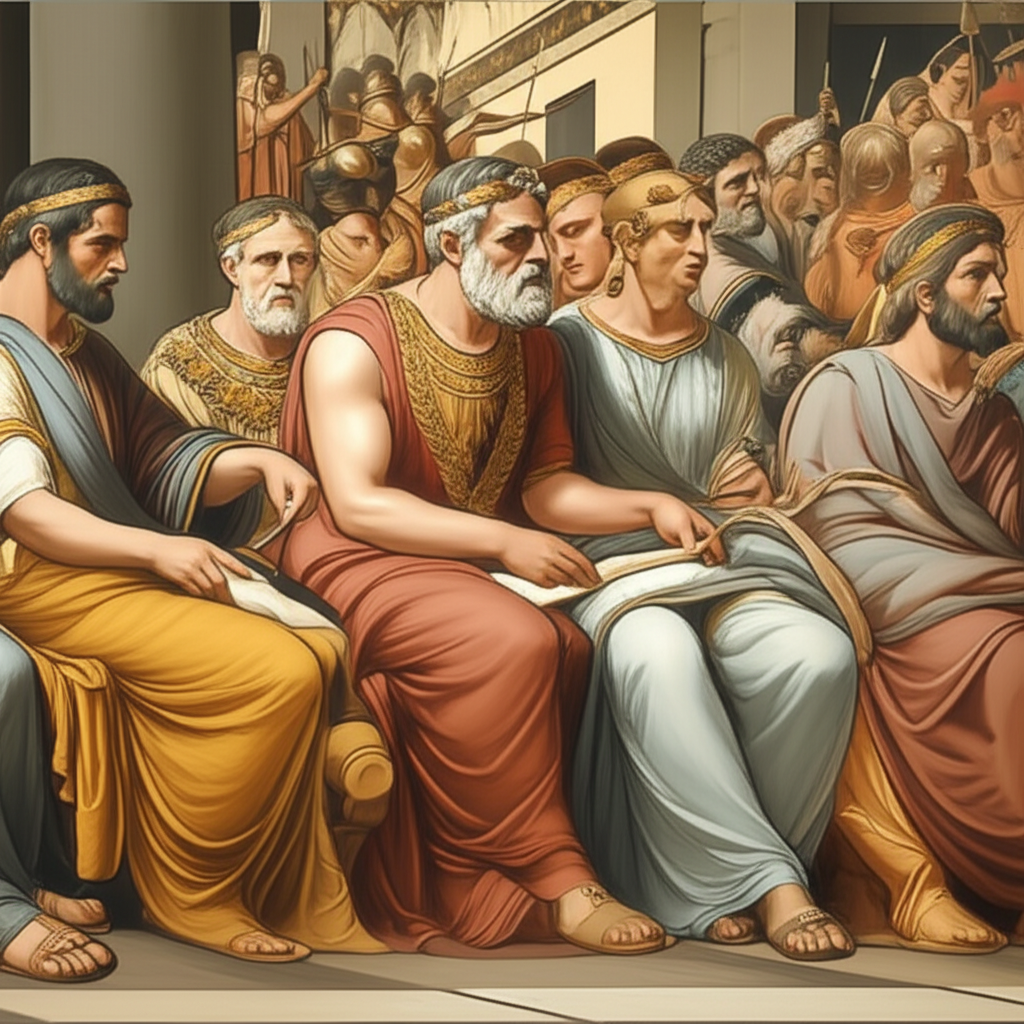
The Erosion of Liberty Under Oligarchical Government
The very essence of Oligarchy runs contrary to the principles of Liberty. Where Liberty implies freedom from arbitrary control, the ability to participate in one's own Government, and the right to pursue one's own good within a just framework, oligarchy systematically dismantles these tenets.
Mechanisms of Suppression: How Oligarchy Undermines Freedom
| Mechanism | Description
| Legal Framework: Oligarchies often maintain the facade of Law and order, but the Law itself is often structured to favor the ruling class. This can manifest in tax codes, property Laws, or regulatory frameworks that disproportionately benefit the wealthy. Access to justice can also be restricted, making it difficult for ordinary citizens to challenge the powerful.
| Economic Control: Economic Liberty is curtailed through monopolies, restricted market access, and policies that concentrate wealth. Opportunities for social mobility are limited, trapping individuals in cycles of poverty or debt, thereby diminishing their capacity for independent action and political voice.
| Information and Education: Control over information and education is crucial for maintaining oligarchical power. By shaping narratives, controlling media, and influencing educational curricula, the ruling elite can limit critical thinking and suppress alternative viewpoints, making it harder for citizens to recognize or articulate their lack of Liberty.
| Suppression of Political Voice: While not always outright totalitarian, oligarchies typically limit genuine political participation. This can involve gerrymandering, restrictive voting Laws, or simply making the cost of political engagement (time, money, influence) prohibitively high for most citizens. Public discourse might be tolerated, but effective political action is often stifled.
| Erosion of Public Trust: The inherent self-interest of an oligarchical Government leads to a pervasive lack of trust in institutions. When Laws are seen as serving only the powerful, and justice is perceived as biased, the moral fabric of society begins to unravel, further weakening the collective will to demand Liberty.
The historical record, from the decline of the Roman Republic to various European city-states, provides ample evidence of how unchecked concentrations of wealth inevitably lead to a Government that prioritizes private gain over public welfare, thereby stifling the dynamism and freedom of its people.
Philosophical Responses to Oligarchical Rule
Philosophers throughout history have grappled with the dangers of Oligarchy. John Locke, in his Two Treatises of Government, argues for a Government founded on the consent of the governed and the protection of natural rights, including Liberty and property. An oligarchy, by its very nature, violates this social contract by failing to protect the rights of all citizens equally.
Jean-Jacques Rousseau, in The Social Contract, emphasizes the general will as the legitimate basis for Law and Government. An oligarchical system, driven by the particular interests of a few, directly contradicts this principle, establishing Laws that serve a faction rather than the collective good. The suppression of individual Liberty in such a system is not merely an unfortunate byproduct, but a deliberate mechanism to maintain the status quo.
Vigilance as the Price of Liberty
The lessons from the Great Books of the Western World are clear: the temptation of Oligarchy is a constant threat to human Liberty. The concentration of wealth and power into the hands of a few, whether through deliberate design or gradual accretion, inevitably leads to a Government that prioritizes its own perpetuation over the flourishing of its citizens.
Maintaining Liberty requires eternal vigilance. It demands a citizenry that is educated, engaged, and willing to hold its Government accountable. It necessitates robust legal frameworks that genuinely protect the rights of all, not just the privileged. And crucially, it requires a philosophical commitment to the idea that true justice and prosperity can only be achieved when Liberty is a universal right, not a privilege bestowed by the powerful.
YouTube: "Aristotle Politics Oligarchy Explained"
YouTube: "John Locke Natural Rights and Government"
📹 Related Video: What is Philosophy?
Video by: The School of Life
💡 Want different videos? Search YouTube for: "Oligarchy and the Suppression of Liberty philosophy"