

Oligarchy and the Concentration of Wealth: An Enduring Philosophical Dilemma
The specter of oligarchy – rule by the few – has haunted political philosophy since antiquity, inextricably linked to the concentration of wealth and the corrupting influence of power. This article delves into the classical understanding of oligarchy, drawing primarily from the wisdom enshrined in the Great Books of the Western World, to illuminate how the accumulation of riches by a select few inevitably shapes the nature of government, often to the detriment of the common good. We will explore the mechanisms through which wealth translates into political power and the profound philosophical implications of such a societal structure.
The Classical Conception of Oligarchy: Wealth as the Criterion for Rule
From the earliest philosophical inquiries into political systems, thinkers grappled with the definition and dangers of oligarchy. Unlike aristocracy, which theoretically entails rule by the "best" – whether by virtue, wisdom, or nobility – oligarchy is characterized by a singular, defining criterion for leadership: wealth.
-
Aristotle's Insight: In his seminal work, Politics, Aristotle provides perhaps the most direct and enduring definition. He states, "The true forms of government are kingship, aristocracy, and constitutional government, and the perversions of these are tyranny, oligarchy, and democracy." For Aristotle, an oligarchy is a form of government where "those who are wealthy rule, and rule for their own advantage, not for the common good." The number of rulers is incidental; what matters is their financial status. He observed that states become oligarchic when the rich define citizenship and participation solely by property qualifications, effectively excluding the poor from political life.
-
Plato's Republic and the Descent into Oligarchy: Plato, in his Republic, outlines a cyclical degeneration of states, where the timocracy (rule by honor) gives way to oligarchy. He describes this transition as driven by the insatiable desire for wealth. As citizens become more focused on accumulation, property qualifications replace merit, and the love of money supplants the love of honor or virtue. This leads to a society divided into two distinct classes: the very rich and the very poor, living in perpetual tension.
Key Characteristics of Oligarchy:
| Feature | Description | Philosophical Basis (Great Books) |
|---|---|---|
| Wealth Qualification | Only the wealthy are eligible to rule or participate in governance. | Aristotle's Politics: defining citizenship by property. |
| Rule for Self-Interest | The primary aim of the rulers is to protect and increase their own wealth and the wealth of their class. | Aristotle's Politics: oligarchy as a "perversion" ruling for the rich, not the common good. |
| Social Division | Society is sharply divided between the rich and the poor, fostering discord and instability. | Plato's Republic: the "two cities" within one state (rich and poor). |
| Erosion of Virtue | The pursuit of material gain overshadows civic virtue, justice, and the pursuit of excellence. | Plato's Republic: the decline from virtue-based rule to wealth-based rule. |
The Mechanics of Power: How Wealth Concentrates Political Influence
The concentration of wealth is not merely an economic phenomenon; it is a profound political one. When economic resources become highly centralized, they invariably translate into disproportionate political power, allowing the wealthy few to shape the government and its policies in their favor.
-
Influence on Law and Policy: Oligarchs can exert influence through various channels:
- Lobbying: Direct advocacy to legislators and policymakers to promote specific interests.
- Campaign Finance: Funding political campaigns, creating an implicit obligation or access for elected officials.
- Media Control: Ownership or influence over media outlets to shape public discourse and opinion.
- Think Tanks and Foundations: Funding research and policy recommendations that align with their interests, often presented as objective scholarship.
-
Reinforcement of Economic Structures: The power gained through wealth is often used to create and maintain economic systems that further concentrate wealth. This can manifest in policies that:
- Reduce taxes on capital and high incomes.
- Deregulate industries, benefiting large corporations.
- Create barriers to entry for new competitors.
- Privatize public services, creating new avenues for profit.
This self-perpetuating cycle ensures that economic dominance begets political dominance, which in turn solidifies economic dominance, making it exceedingly difficult for the broader populace to challenge the established order.
Philosophical Implications and Modern Resonance
The ancient philosophers were acutely aware of the instability and injustice inherent in oligarchic systems. Both Plato and Aristotle argued that such regimes are inherently prone to internal strife due to the vast disparities and resentment between the rich and the poor. An oligarchy, by its very nature, sacrifices the common good for the private interests of a few, leading to a state that is perpetually at war with itself.
- Justice and Inequality: The concentration of wealth under an oligarchy raises fundamental questions about distributive justice. Is it just for a society's resources and opportunities to be controlled by a small minority, while the majority struggles? Philosophers throughout history, from Locke to Rousseau and beyond, have debated the legitimate basis for property and the role of the state in mitigating extreme inequality.
- The Common Good vs. Private Interest: At the heart of the critique of oligarchy is the conflict between the pursuit of private gain and the advancement of the common good. A healthy government, according to classical thought, should aim to foster the well-being of all its citizens, not just a select few. When power is wielded primarily for private advantage, the very purpose of political association is corrupted.
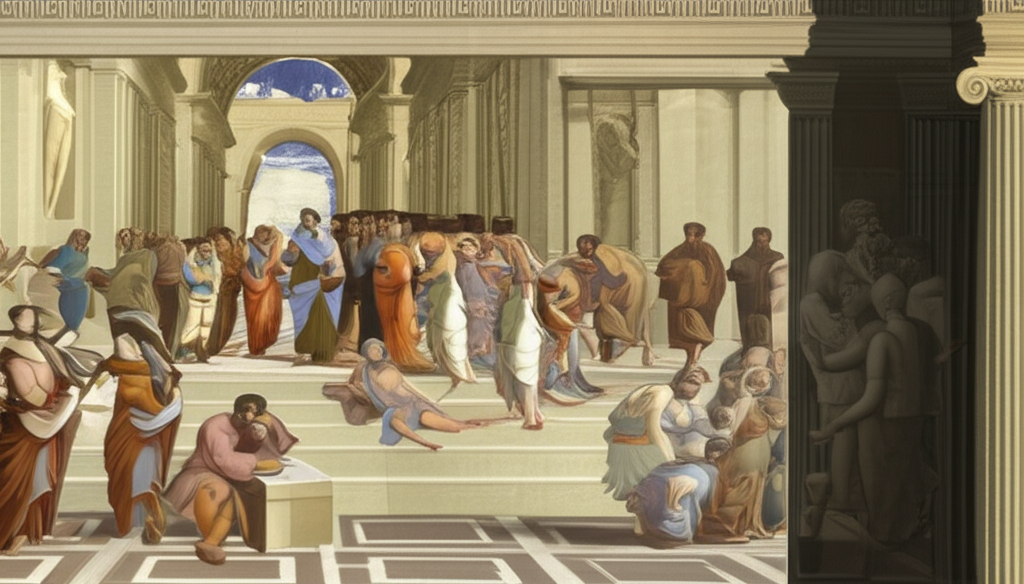
The insights from the Great Books remain remarkably pertinent. While modern democracies ostensibly aim for rule by the many, the ongoing debates about campaign finance, corporate lobbying, and the growing wealth gap echo the ancient concerns about the corrupting influence of concentrated wealth and the potential for democratic forms to mask oligarchic realities. Understanding these classical critiques provides a vital framework for analyzing contemporary challenges to genuinely representative government.
Conclusion: The Enduring Challenge of Wealth and Power
The philosophical examination of oligarchy reveals a timeless truth: the concentration of wealth poses a fundamental challenge to the principles of justice, equality, and good government. From Plato's lament over the decline of the ideal state to Aristotle's pragmatic analysis of political forms, the Great Books of the Western World consistently underscore the dangers when power becomes synonymous with riches. As we navigate the complexities of modern societies, these ancient insights serve as a potent reminder that vigilance is required to ensure that the pursuit of private gain does not overshadow the imperative of the common good, thereby preserving the integrity of our political institutions against the ever-present shadow of oligarchic influence.
YouTube Video Suggestions:
-
📹 Related Video: PLATO ON: The Allegory of the Cave
Video by: The School of Life
💡 Want different videos? Search YouTube for: ""Plato's Republic Oligarchy Explained" - Look for videos that break down Plato's concept of the decline of states and the characteristics of oligarchic rule."
-
📹 Related Video: ARISTOTLE ON: The Nicomachean Ethics
Video by: The School of Life
💡 Want different videos? Search YouTube for: ""Aristotle Politics Wealth and Government" - Search for discussions on Aristotle's classification of governments, specifically his definition and critique of oligarchy based on wealth."