

The Golden Chains: Oligarchy and the Concentration of Wealth
From the ancient polis to contemporary nation-states, the specter of oligarchy – rule by the wealthy few – has haunted political thought. This article explores how the concentration of wealth inevitably translates into political power, examining classical philosophical critiques from the Great Books of the Western World that illuminate the enduring dangers this form of government poses to justice and societal well-being. We delve into how the pursuit of riches, when unchecked, can corrupt the very foundations of governance, turning the public sphere into a private domain for the privileged.
Defining Oligarchy: A Classical Perspective
The concept of oligarchy is deeply rooted in the foundational texts of Western political philosophy, particularly in the works of Plato and Aristotle. Far from being a mere historical curiosity, their analyses offer timeless insights into the dynamics of wealth, power, and government.
Plato's Critique in The Republic
Plato, in his seminal work The Republic, meticulously outlines the degeneration of ideal forms of government. He posits oligarchy as the third corrupted form of state, following timocracy. For Plato, the transition to oligarchy occurs when the love of honor (characteristic of timocracy) gives way to an insatiable desire for wealth.
- The Primacy of Wealth: In an oligarchic state, the primary qualification for holding office is property ownership. Plato notes that "the rich rule and the poor man has no share in the government."
- The "Two Cities": This pursuit of wealth inevitably divides the city into "two cities: one of the poor, the other of the rich, dwelling in the same place and always conspiring against one another." This fundamental division undermines social cohesion and justice.
- The Oligarchic Man: Plato describes the oligarchic individual as one who prioritizes money above all else, suppressing other desires and virtues. This internal imbalance mirrors the imbalance within the state, where profit is valued over the common good.
Aristotle's Empiricism in Politics
Aristotle, with his more empirical approach in Politics, provides a nuanced and detailed examination of oligarchy. He categorizes it as a "perversion" of aristocracy, where the rulers govern for their own benefit rather than the common good.
- Rule by the Rich: Aristotle unequivocally states that "wherever men rule by reason of their wealth, whether they be few or many, that is an oligarchy." The defining characteristic is not the number of rulers, but the source of their authority – their riches.
- Varieties of Oligarchy: He identifies different types, from those with high property qualifications where many participate, to those where inherited wealth grants absolute power to a tiny, self-perpetuating elite.
- Instability and Injustice: Like Plato, Aristotle recognizes the inherent instability of oligarchies, often leading to popular uprisings or the rise of tyranny, as the many (the poor) resent the rule of the few (the rich). The pursuit of private gain at the expense of public welfare breeds discontent and injustice.
The Nexus of Wealth and Power: Mechanisms of Control
The concentration of wealth does not merely exist alongside power; it actively shapes and often dictates the exercise of government. The philosophical insights from the Great Books reveal several enduring mechanisms through which wealth translates into political influence.
Mechanisms of Oligarchic Control:
- Legal Frameworks: Oligarchies often craft laws that favor the accumulation and protection of wealth for the ruling class, such as preferential tax policies, relaxed regulations, or the privatization of public assets.
- Influence over Policy: Through donations, lobbying, and control of media, the wealthy can sway public opinion and policy decisions, ensuring outcomes beneficial to their interests.
- Control of Resources: By dominating key industries or resources, the oligarchs can exert economic leverage over the populace, making dissent costly and compliance necessary.
- Limited Political Participation: Historical oligarchies often restricted voting rights or office-holding to those meeting specific property qualifications, directly linking wealth to political participation. While less overt today, indirect mechanisms can achieve similar results.
- Patronage and Clientelism: The wealthy can build networks of loyalty and dependence by providing jobs, favors, or financial support, thereby securing political allegiance.
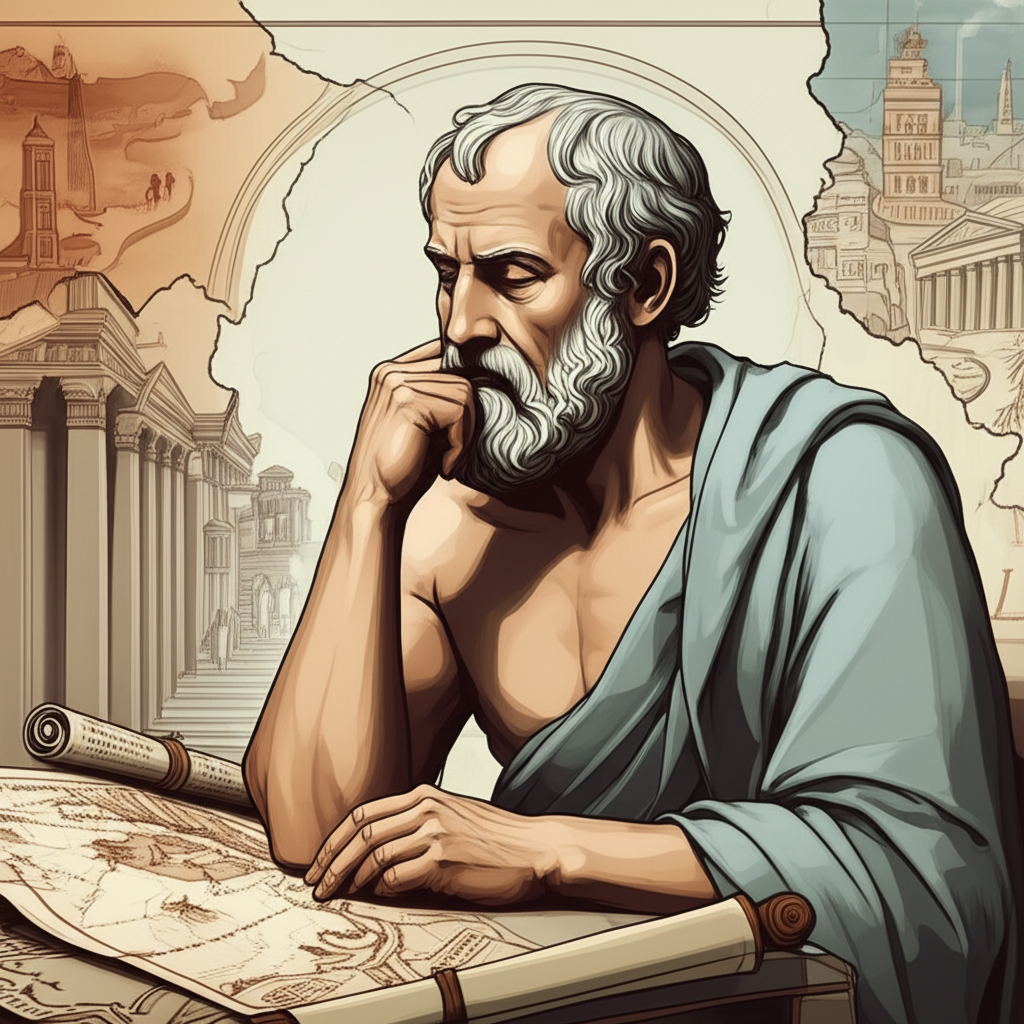
Philosophical Critiques: The Erosion of Justice and Virtue
Both Plato and Aristotle saw oligarchy not just as a flawed form of government, but as a moral failing that corrupts the state and its citizens. The unfettered pursuit of wealth leads to a decline in civic virtue and the erosion of justice.
- The Neglect of the Common Good: When wealth becomes the sole criterion for leadership, the government inevitably serves the interests of the few rather than the many. This leads to policies that exacerbate inequality, neglect public services, and undermine the collective welfare.
- Internal Strife and Instability: As Aristotle observed, a state divided by extreme wealth inequality is inherently unstable. The resentment of the poor against the rich, and the fear of the rich towards the poor, creates a perpetual state of tension, often leading to revolutions or civil unrest.
- Corruption of Character: Plato argued that the oligarchic individual, driven by avarice, becomes narrow-minded and unjust. This individual corruption is mirrored in the state, where honesty, courage, and wisdom are sacrificed at the altar of profit.
- The Cycle of Degeneration: The classical philosophers posited that oligarchy often leads to further degeneration, either into a chaotic democracy (where the poor revolt and gain control, often without proper governance structures) or into tyranny (where a single strongman exploits the division to seize absolute power).
Enduring Questions: Modern Echoes of Ancient Concerns
The philosophical inquiries into oligarchy from the Great Books of the Western World remain remarkably pertinent today. While explicit property qualifications for voting or holding office are largely gone, the question of how concentrated wealth influences government and political power continues to be a central concern for democratic societies.
The discussions initiated by Plato and Aristotle compel us to ask:
- To what extent does economic inequality undermine political equality?
- How can a government genuinely represent the interests of all its citizens when significant wealth is concentrated in the hands of a few?
- What are the ethical responsibilities of the wealthy within a just society?
- How can societies prevent the pursuit of private gain from eclipsing the common good?
These are not merely academic questions; they are fundamental challenges to the ideals of justice, fairness, and stable governance that philosophers have grappled with for millennia. The wisdom gleaned from the ancients serves as a potent reminder that the health of a government is inextricably linked to the distribution of wealth and the ethical principles guiding its accumulation and use.
YouTube Video Suggestions:
-
📹 Related Video: PLATO ON: The Allegory of the Cave
Video by: The School of Life
💡 Want different videos? Search YouTube for: "Plato's Republic Oligarchy explained"
-
📹 Related Video: ARISTOTLE ON: The Nicomachean Ethics
Video by: The School of Life
💡 Want different videos? Search YouTube for: "Aristotle Politics wealth inequality government"