

The Enduring Shadow of Oligarchy: When Wealth Becomes Power
From the ancient polis to the modern nation-state, the specter of oligarchy has haunted political thought. At its core, oligarchy represents a government ruled by a select few, typically distinguished by their wealth, lineage, or military strength. This article delves into the philosophical underpinnings of oligarchy, examining how the concentration of wealth inevitably leads to the concentration of power, drawing insights from the timeless wisdom preserved in the Great Books of the Western World. We will explore the mechanisms by which this phenomenon unfolds and its profound implications for justice, equality, and the very fabric of society.
The Classical Understanding of Oligarchy: A Rule of Riches
The concept of oligarchy is not new; it was meticulously dissected by the ancient Greek philosophers. Both Plato and Aristotle, whose works are cornerstones of the Great Books, dedicated significant attention to classifying and critiquing various forms of government.
- Plato's Republic (Book VIII): Plato describes oligarchy as a state that arises from the degeneration of a timocracy (rule of honor). He posits that when individuals begin to value wealth above all else, they hoard it, leading to a society divided into "two cities: one of the rich, the other of the poor." In such a state, the rich, by virtue of their property qualifications, seize power, effectively disenfranchising the majority. The ruling principle becomes avarice, and the state is characterized by extreme inequality and internal discord.
- Aristotle's Politics (Book III & IV): Aristotle offers a more nuanced but equally critical view. He defines oligarchy not merely as the rule of the few, but specifically as the rule of the wealthy few. For Aristotle, the defining characteristic is the aim of the rulers: to serve their own financial interests rather than the common good. He identifies several types of oligarchy, ranging from those based on high property qualifications to those where offices are hereditary and power is absolute. He saw the concentration of wealth as the primary driver, leading to a system where economic status dictates political participation.
These classical analyses underscore a fundamental philosophical truth: where wealth becomes the ultimate measure of worth, it invariably translates into political power, shaping laws, institutions, and societal values to protect and expand that wealth.
The Mechanics of Concentration: Wealth, Influence, and Control
The path from concentrated wealth to concentrated power is not accidental; it follows discernible patterns.
Mechanisms of Oligarchic Control:
- Economic Leverage: Those with substantial wealth can control industries, create jobs, and influence markets. This economic leverage grants them significant influence over the lives of ordinary citizens and the overall health of the economy.
- Political Patronage and Lobbying: Concentrated wealth allows for direct and indirect influence on the government. This can manifest through campaign donations, funding of political parties, intensive lobbying efforts, and even the direct appointment of individuals to key positions.
- Media and Information Control: Owning or significantly influencing media outlets provides a powerful tool for shaping public opinion, setting agendas, and controlling narratives, thereby reinforcing the existing power structure.
- Legal and Regulatory Influence: Oligarchs can fund legal challenges, influence legislative processes, and shape regulatory frameworks to protect their assets, minimize taxes, and create an environment conducive to further wealth accumulation.
- Social Networks and Elite Cohesion: The wealthy often form tightly knit social and professional networks, creating an echo chamber of shared interests and consolidating their collective influence over various sectors of society.
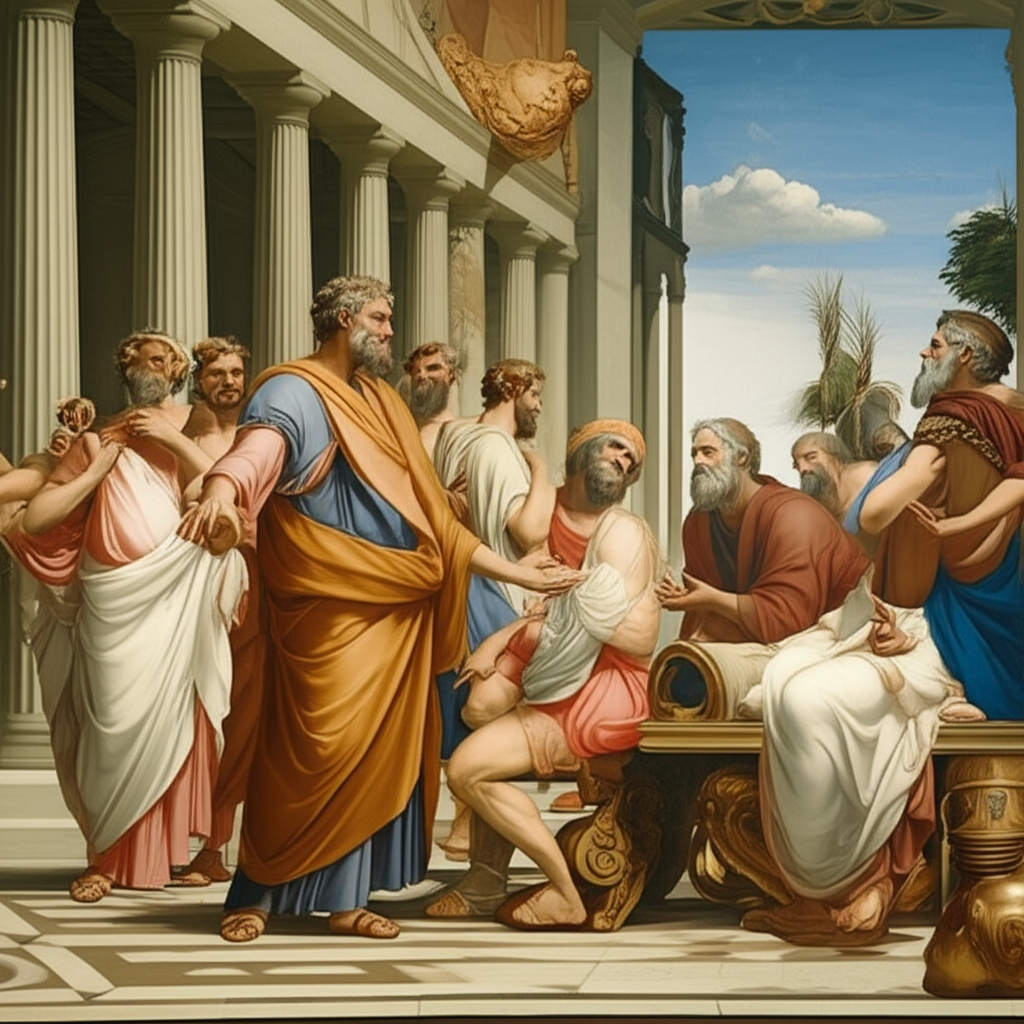
The Philosophical Implications of Concentrated Wealth and Power
The rise of an oligarchy carries profound philosophical consequences for the ideal of a just society.
- Erosion of Justice and Fairness: When power serves the interests of the wealthy few, the concept of universal justice is undermined. Laws and policies may be crafted to benefit the elite, leading to systemic inequalities and a lack of recourse for the less privileged.
- Diminishment of Citizen Participation: In an oligarchic system, the voice of the ordinary citizen is marginalized. Political participation may become a mere formality, as real decisions are made by an insulated elite. This can lead to civic apathy and disillusionment.
- Social Instability and Division: As Aristotle warned, extreme disparities in wealth and power create deep societal divisions. The resentment of the impoverished majority against the opulent minority can lead to unrest, rebellion, and the eventual collapse or radical transformation of the government.
- Corruption of Virtue: Both Plato and Aristotle believed that the pursuit of wealth as an end in itself corrupts the soul and the state. An oligarchic society, driven by avarice, struggles to cultivate virtues like civic duty, moderation, and altruism, which are essential for a flourishing community.
📹 Related Video: PLATO ON: The Allegory of the Cave
Video by: The School of Life
💡 Want different videos? Search YouTube for: ""Plato's Republic Oligarchy Explained" or "Aristotle Politics Wealth and Government""
Conclusion: The Perennial Challenge
The relationship between wealth and power remains one of the most persistent challenges to establishing and maintaining a just government. The insights gleaned from the Great Books of the Western World remind us that the tendency for concentrated wealth to morph into entrenched power is not a modern anomaly but a timeless human phenomenon. Understanding this dynamic is crucial for any society striving to prevent the creeping influence of oligarchy and instead foster a more equitable distribution of both prosperity and influence among its citizens. The philosophical task, then, is to continuously scrutinize the structures that allow wealth to accumulate unchecked and to design institutions that genuinely serve the common good, rather than the narrow interests of a powerful few.