

Oligarchy and the Concentration of Wealth: A Philosophical Inquiry
The persistent specter of oligarchy – rule by the few – has haunted political philosophy since antiquity. At its core, oligarchy is inextricably linked to the concentration of wealth, where economic prosperity becomes the primary determinant of political power. This article delves into the philosophical underpinnings of this dangerous nexus, exploring how the accumulation of vast riches by a select few can corrupt the very fabric of government, distort justice, and undermine the common good. From ancient Greek critiques to modern observations, the relationship between wealth, power, and the nature of governance remains a critical subject for philosophical reflection.
The Philosophical Roots of Oligarchy: Ancient Insights
The concept of oligarchy is not a modern invention; its dangers were meticulously dissected by the great thinkers whose works form the bedrock of the "Great Books of the Western World." Both Plato and Aristotle, observing the city-states of their time, recognized and warned against the perils of such a system.
Plato's Critique in The Republic
Plato, in his seminal work The Republic, outlines a progression of declining governmental forms, with oligarchy following timocracy. For Plato, the transition to oligarchy occurs when the love of honour (characteristic of timocracy) gives way to the love of money. He describes the oligarchic state as one "founded upon a valuation of property, in which the rich have the offices and the poor have not." This creates a society divided into "two cities, one of the poor and one of the rich, dwelling together, and always plotting against one another." The excessive pursuit of wealth leads to a weakening of virtue and a focus on material gain above all else, inevitably leading to societal discord.
Aristotle's Analysis in Politics
Aristotle provides an even more detailed and empirical analysis in his Politics. He defines oligarchy not merely as rule by the few, but specifically as rule by the wealthy few, distinguished from aristocracy (rule by the virtuous few). Aristotle notes that in an oligarchy, "the rich are rulers and the poor are subjects." He identifies several forms of oligarchy, ranging from those where property qualifications are high but accessible, to more extreme versions where offices are hereditary and power is absolute.
Aristotle's key insights include:
- The criterion of wealth: For Aristotle, the defining characteristic of oligarchy is that wealth, not merit or the general good, is the basis for holding office.
- Factionalism: Oligarchies are inherently unstable due to the inherent conflict between the rich and the poor, often leading to revolution.
- Perversion of justice: The laws in an oligarchy are designed to benefit the wealthy, further entrenching their power and neglecting the needs of the majority.
Mechanisms of Wealth Concentration and Power Consolidation
The path to oligarchy is often paved by mechanisms that allow for the disproportionate accumulation of wealth, which then translates into political leverage.
Economic Systems and Accumulation
Historically, various economic structures have facilitated wealth concentration:
- Inheritance: The passing down of vast fortunes across generations creates entrenched economic elites.
- Control of vital resources: Ownership or control over essential industries (e.g., land, minerals, energy, technology) provides immense economic leverage.
- Exploitative labor practices: Systems that depress wages or limit worker power contribute to capital accumulation for owners.
- Financialization: Complex financial instruments and markets can concentrate wealth in the hands of those who understand and manipulate them.
Translating Wealth into Political Power
Once wealth is concentrated, it can be systematically converted into political power through several avenues:
| Mechanism of Power Consolidation | Description |
|---|---|
| Lobbying and Campaign Finance | Direct financial contributions to political campaigns, parties, and lobbying efforts to influence legislation and policy in favor of economic interests. |
| Media Ownership and Influence | Control over media outlets shapes public discourse and narratives, framing issues to benefit the wealthy and powerful. |
| Revolving Door Syndrome | Movement of individuals between high-level government positions and lucrative private sector roles, creating networks of influence and shared interests. |
| Think Tanks and Academia | Funding research and institutions that produce policy recommendations and intellectual justifications for specific economic and political agendas. |
| Legal Frameworks | Influencing the creation and interpretation of laws (e.g., tax codes, regulations) to protect and expand accumulated wealth. |
The Interplay of Wealth and Power in Government
The insidious nature of oligarchy lies in how it distorts the very purpose of government. Instead of serving the broader public interest, the governmental apparatus becomes a tool for maintaining and expanding the wealth and power of the ruling few.
Erosion of Democratic Principles
When wealth dictates political outcomes, the principle of "one person, one vote" is undermined. The voices of ordinary citizens can be drowned out by the financial might of special interests. This leads to a decline in political participation and trust, as citizens perceive their government as unresponsive to their needs.
Policy Capture and Regulatory Arbitrage
Oligarchs often engage in "policy capture," where specific industries or wealthy individuals exert undue influence over regulatory bodies and legislative processes. This can result in:
- Favorable tax policies: Lower taxes on capital gains or inherited wealth, and loopholes that allow the ultra-rich to avoid their fair share.
- Deregulation: Loosening of environmental, labor, or financial regulations that might impede corporate profits.
- Subsidies and bailouts: Public funds directed towards private enterprises deemed "too big to fail" or politically connected.
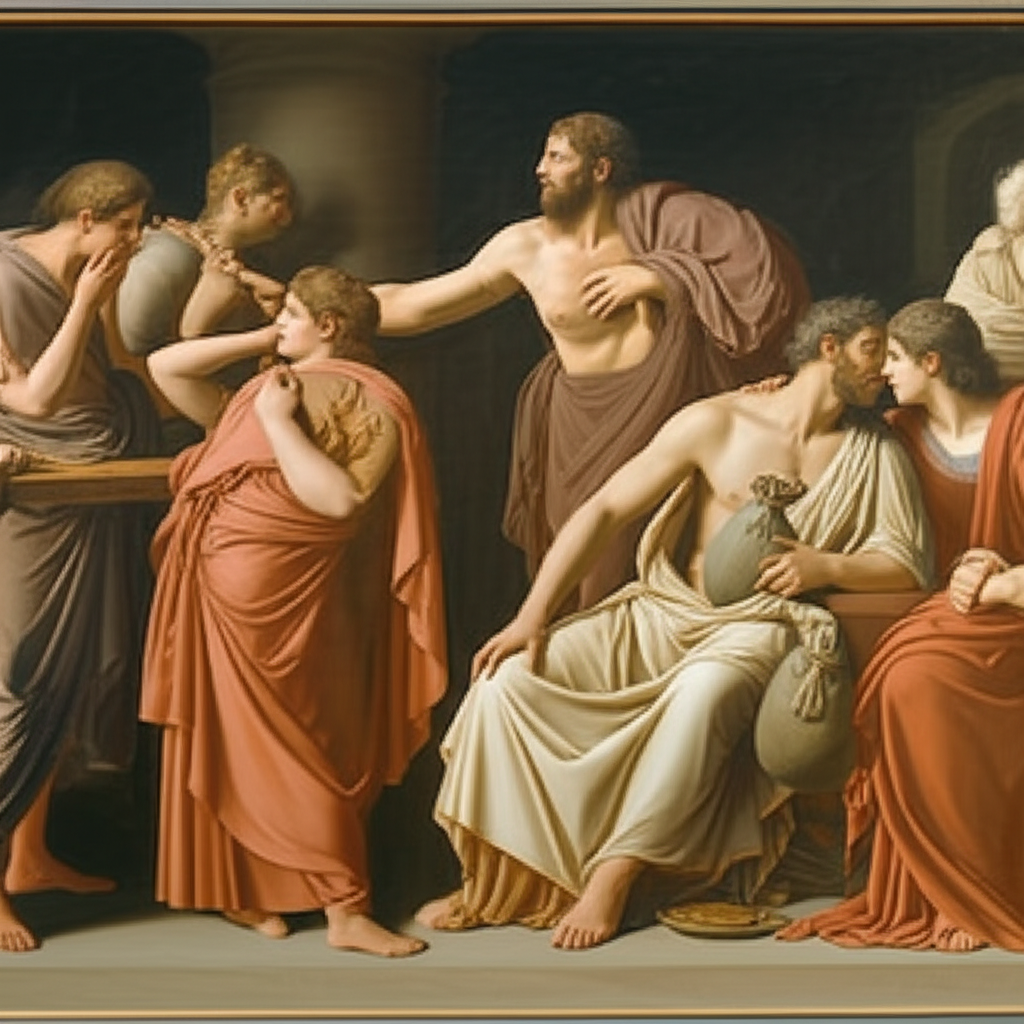
Consequences of Oligarchic Rule
The long-term consequences of entrenched oligarchy are dire, affecting social cohesion, economic justice, and political stability.
Widening Inequality
Perhaps the most direct consequence is the exacerbation of economic inequality. As wealth flows upwards and power consolidates, the gap between the rich and the poor widens, leading to social stratification and limited opportunities for upward mobility.
Social Instability and Unrest
Aristotle warned that extreme inequality breeds resentment and revolution. A society deeply divided by wealth and power is inherently unstable, prone to social unrest, and susceptible to demagoguery. When the government is perceived as serving only a select few, its legitimacy erodes.
Corruption and Moral Decay
The pursuit of wealth as the ultimate good, characteristic of oligarchic societies, can lead to widespread corruption. Ethical considerations are often sidelined in favor of profit and power, leading to a decline in public trust and a weakening of moral standards within both the private and public spheres.
Conclusion: The Enduring Challenge
The philosophical examination of oligarchy and the concentration of wealth reveals a timeless challenge to the ideals of justice, equality, and good government. From the ancient warnings of Plato and Aristotle within the "Great Books of the Western World" to contemporary observations, the lesson remains clear: unchecked wealth accumulation, when translated into political power, poses a fundamental threat to democratic principles and the well-being of society. Understanding this intricate relationship is not merely an academic exercise, but a vital step towards safeguarding the integrity of our political institutions and striving for a more equitable future.
YouTube Video Suggestions:
-
📹 Related Video: PLATO ON: The Allegory of the Cave
Video by: The School of Life
💡 Want different videos? Search YouTube for: ""Plato's Republic Oligarchy Explained" or "Aristotle Politics Oligarchy Analysis""
2. ## 📹 Related Video: What is Philosophy?
Video by: The School of Life
💡 Want different videos? Search YouTube for: ""Modern Oligarchy Wealth Inequality Philosophy" or "Power of Wealth in Government Debate""