

Oligarchy and the Concentration of Wealth: A Philosophical Inquiry
The persistent question of who governs and for whose benefit lies at the heart of political philosophy. Among the various forms of government dissected by ancient thinkers, oligarchy stands out as a stark warning against the corrupting influence of unchecked wealth and power. This article delves into the philosophical understanding of oligarchy, examining how the concentration of wealth inevitably leads to a concentration of power, and the profound implications this has for justice, social order, and the very nature of the state. Drawing from the foundational texts of Western thought, we explore the enduring relevance of these ancient insights to contemporary societies grappling with economic disparities and political influence.
Defining Oligarchy: Rule by the Wealthy Few
From the earliest systematic analyses of political systems, philosophers recognized a distinct form of government where power resided not with the virtuous, the many, or the truly wise, but with the wealthy.
Plato, in his seminal work The Republic, describes oligarchy as a degenerate form of state, arising from timocracy, where the love of honour gives way to the love of wealth. He characterizes the oligarchic state as one "founded upon a property qualification, where the rich rule and the poor have no share in the government." For Plato, the oligarchic man is driven by avarice, valuing money above all else, leading to a society deeply divided between the rich and the poor, and inherently unstable due to this division.
Aristotle, in his Politics, offers an even more detailed typology. He defines oligarchy not merely as rule by the few (which could be an aristocracy if the few are virtuous), but specifically as rule by the wealthy few, acting in their own self-interest. He contrasts it sharply with a polity, which is a government by the many for the common good, or an aristocracy, where the best rule for the common good. Aristotle states: "The true forms of government are those in which the rulers, whether one, or few, or many, govern with a view to the common interest; but governments which rule with a view to the private interest, whether of the one, or of the few, or of the many, are perversions." Oligarchy falls squarely into this category of perversions.
Key Characteristics of an Oligarchic State:
- Rule by a Property Qualification: Political rights and offices are determined by
wealth. - Self-Interest of the Rulers: Decisions are made to benefit the wealthy class, often at the expense of the poor majority.
- Economic Inequality: A stark division between the rich and the poor, fostering social unrest.
- Corruption: The pursuit of
wealthbecomes the primary motivator, leading to ethical compromises within thegovernment. - Instability: Prone to internal strife and revolution due to the inherent injustice and resentment it generates.
The Intertwined Nature of Wealth and Power
The philosophical understanding of oligarchy hinges on the undeniable link between wealth and power. Wealth is not merely an economic asset; it is a profound instrument of influence, capable of shaping political landscapes and societal structures.
- Economic Leverage: Those with substantial
wealthcan control vital industries, employment, and resources, giving them significant sway over the lives of ordinary citizens and the overall economy. This economicpowercan be used to reward allies and punish dissenters, effectively bypassing traditional political mechanisms. - Political Influence:
Wealthtranslates directly into political influence through various channels:- Campaign Finance: Funding political campaigns gives the wealthy disproportionate access and influence over candidates and parties.
- Lobbying: Employing highly paid lobbyists to advocate for specific interests directly to lawmakers.
- Media Control: Ownership or significant financial backing of media outlets allows for the shaping of public discourse and opinion.
- Legal and Regulatory Capture: Oligarchs can influence the creation and enforcement of laws and regulations, ensuring they protect and further their economic interests, often at the expense of competition or public welfare. This can lead to a system where the rules of the game are rigged in favour of the already powerful.
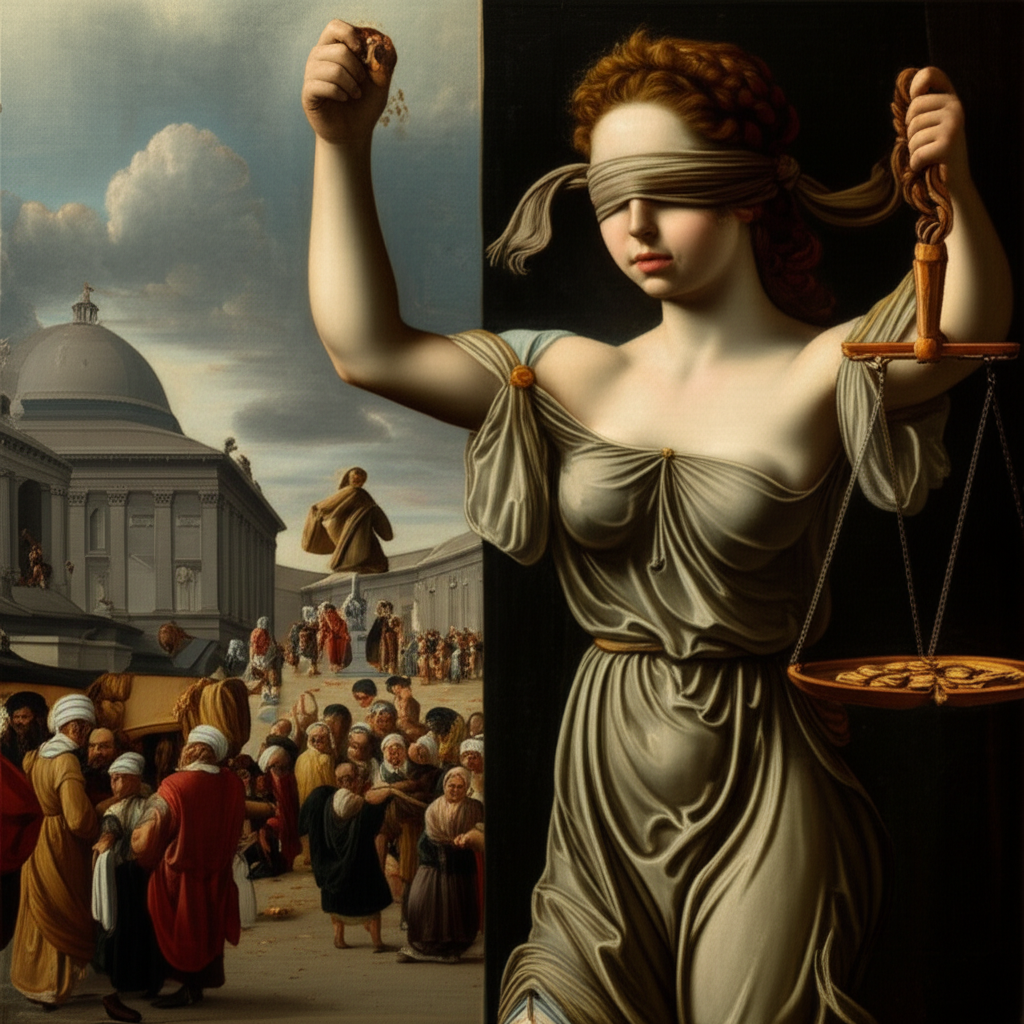
Consequences of Concentrated Wealth
The philosophical critiques of oligarchy are not merely academic exercises; they serve as warnings about the very real societal dangers posed by the extreme concentration of wealth and power.
- Erosion of Democratic Principles: When
wealthdictates political outcomes, the principle of one person, one vote becomes a facade. The voice of the majority is diminished, and genuine representation suffers. - Increased Social Inequality and Unrest: As Aristotle observed, societies with vast disparities between rich and poor are inherently unstable. Resentment among the disenfranchised can boil over into civil strife or revolution.
- Stagnation and Corruption: An oligarchic system may prioritize the preservation of existing
wealthover innovation, progress, or the common good. Corruption becomes endemic as the pursuit of private gain overshadows public service. - Limited Social Mobility: Opportunities for advancement become restricted to those within the established elite or those favoured by them, stifling talent and perpetuating a rigid class structure.
- Ethical Decay: The relentless pursuit of
wealthas the ultimate good can lead to a decline in civic virtue, empathy, and the communal bonds necessary for a healthy society.
Philosophical Responses and Counterarguments
Philosophers throughout history have grappled with how to prevent or mitigate the rise of oligarchy. Aristotle, for instance, advocated for a polity, a mixed government that balances democratic and aristocratic elements, aiming for a large middle class to stabilize society and prevent the extremes of oligarchy (rule by the rich) and extreme democracy (rule by the poor). He believed that a robust middle class, neither excessively rich nor poor, would be less prone to factionalism and more likely to govern in the common interest.
Later thinkers, while not strictly within the "Great Books" canon, have continued this discussion, exploring concepts like distributive justice, progressive taxation, and strong regulatory frameworks as means to counteract the natural tendency of wealth to concentrate and distort political power. The enduring lesson from the ancients, however, remains clear: a society that allows wealth to dictate its government is one that risks its own stability, justice, and ultimately, its freedom.
Conclusion
The philosophical examination of oligarchy and the concentration of wealth reveals a timeless concern. From the ancient Greek city-states to modern global economies, the dynamic interplay between economic power and political power has been a central theme in understanding the rise and fall of civilizations. Plato and Aristotle's insights serve as potent reminders that a government beholden to the wealthy few, rather than the common good, is not only unjust but also inherently precarious. As we navigate the complexities of contemporary societies, the wisdom gleaned from these foundational texts urges us to remain vigilant against the forces that seek to concentrate wealth and power in the hands of a select few, thereby safeguarding the principles of equitable government and a just society.
YouTube Video Suggestions:
-
📹 Related Video: PLATO ON: The Allegory of the Cave
Video by: The School of Life
💡 Want different videos? Search YouTube for: "Plato Republic Book 8 Oligarchy Explained"
-
📹 Related Video: ARISTOTLE ON: The Nicomachean Ethics
Video by: The School of Life
💡 Want different videos? Search YouTube for: "Aristotle Politics Forms of Government Explained"