

Memory as the Basis of Experience: The Unseen Architect of Our Reality
Memory is not merely a faculty for recalling the past; it is the fundamental architect of our present experience, shaping our perception, understanding, and very sense of self. Without memory, each moment would be an isolated, incomprehensible singularity, devoid of context, meaning, or personal significance. It is through the intricate tapestry of remembered events, sensations, and knowledge that we construct a coherent reality, allowing us to learn, anticipate, and navigate the world.
The Foundation of Our Conscious World
From the simplest recognition of a familiar face to the deepest philosophical contemplation, Experience hinges entirely on the capacity to retain and recall. Imagine a mind stripped bare of all memory: every sight, sound, and sensation would be encountered as if for the very first time, perpetually new and utterly meaningless. There would be no learning, no personal history, no recognition of patterns, and ultimately, no coherent Mind. Memory, therefore, is not just a storage unit; it is the active process by which we integrate the past into the present, allowing for continuity and the development of self.
Memory and Imagination: Two Sides of the Same Coin
The relationship between Memory and Imagination is profound and often misunderstood. While memory is typically seen as recalling what was, imagination is often viewed as creating what could be. However, these two faculties are deeply intertwined, drawing from the same wellspring of mental impressions.
Consider their interplay:
- Memory: Recalls actual events, sensations, and learned information. It provides the raw data, the "building blocks" of our mental world. It grounds us in reality and forms the basis of our personal identity and narrative.
- Imagination: Takes these remembered elements and reconstructs, reconfigures, and combines them in novel ways. It allows us to visualize future possibilities, empathize with others by mentally stepping into their shoes, and even to understand abstract concepts by forming mental models based on past experiences.
As many philosophers from the Great Books of the Western World have explored, our capacity to envision a future or understand a hypothetical scenario is entirely dependent on our ability to recall and manipulate past experiences and knowledge. Without memory, imagination would have no material to work with, no framework to build upon.
The Mind, Knowledge, and the Echoes of Antiquity
The philosophical tradition, particularly within the Great Books, has long grappled with memory's pivotal role in the acquisition of Knowledge and the very structure of the Mind.
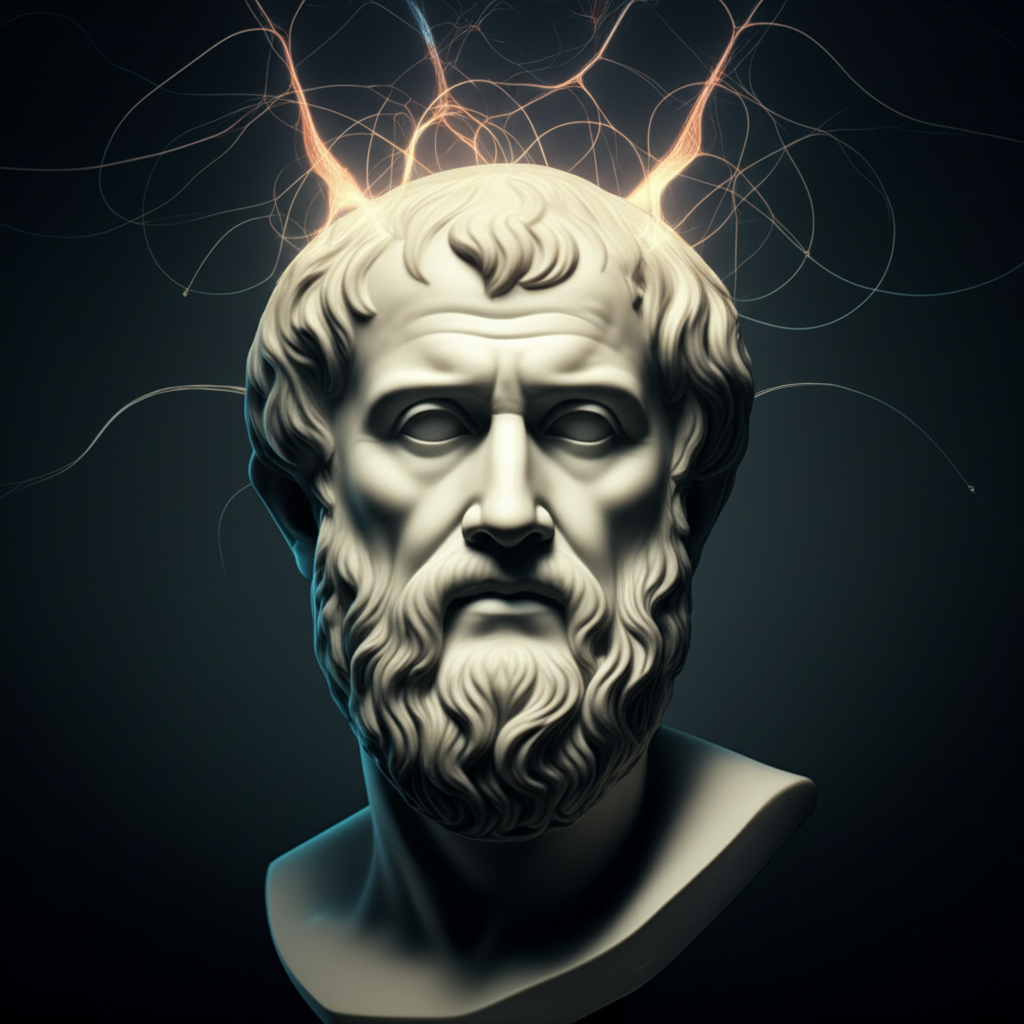
- Plato's Anamnesis: In dialogues like Meno and Phaedo, Plato famously posited the theory of anamnesis, or recollection. For Plato, what we call learning is not the acquisition of new knowledge, but rather the remembering of eternal Forms known by the soul before birth. This radical idea elevates memory from a mere storage function to the very mechanism by which we access true, universal knowledge.
- Aristotle's Storehouse: Aristotle, in De Anima and On Memory and Recollection, offered a more empirical view. He described memory as the retention of "images" or "impressions" of past sensations and thoughts. For Aristotle, recollection is an active search, a process of tracing connections and associations within the mind's storehouse of memories. It is through these stored impressions that we build our understanding of the world and develop practical wisdom.
- Augustine's Vast Palace: St. Augustine, in his Confessions, offered perhaps the most poetic and profound exploration of memory. He marveled at its "vast palaces," its immense capacity, and its mysterious depths, linking it directly to the soul's search for God and self-understanding. For Augustine, memory is not just a repository of facts but a space where past, present, and future converge, and where the very essence of one's being resides.
The Enduring Significance of Memory
From the ancient Greeks to the early Christian thinkers, the understanding that memory underpins our entire cognitive and experiential landscape has been a constant thread in philosophical inquiry. It is memory that allows us to accumulate Knowledge, to develop a coherent Mind, and to engage with the world in a meaningful way. It links our personal history to universal truths, making us who we are, moment by moment.
The very act of reading these words, understanding their meaning, and connecting them to prior concepts is an act of memory. It is the unseen force that binds our perceptions, thoughts, and emotions into the rich, continuous tapestry of human experience.
YouTube: "Plato's Theory of Recollection Explained"
YouTube: "Augustine Confessions Book 10 Memory"
📹 Related Video: What is Philosophy?
Video by: The School of Life
💡 Want different videos? Search YouTube for: "Memory as the Basis of Experience philosophy"