

Memory as the Basis of Experience: Unraveling the Threads of Our Being
Our very existence, the tapestry of our consciousness, is woven from the threads of memory. It is not merely a faculty for recalling past events, but the fundamental bedrock upon which all experience is built, shaping our perception, informing our understanding, and ultimately forging our mind into what it is. Without memory, each moment would be an isolated, incomprehensible flicker, devoid of context, meaning, or the cumulative wisdom that leads to knowledge. This article explores how memory underpins every facet of our interaction with the world, making us who we are.
The Unseen Architect: How Memory Constructs Our Reality
From the moment we draw our first breath, our mind begins to accumulate and store impressions. These are not passive recordings; rather, they are the active ingredients that allow us to interpret new sensations. Imagine a world where every scent, every sound, every touch was entirely new, without any prior reference point. Such a state would be one of perpetual confusion, an endless stream of raw data without the framework to organize it. Memory provides that framework, transforming raw sensory input into coherent experience.
- The Cumulative Effect: Each new experience is filtered through the lens of what has come before. This cumulative effect means that our understanding of the present is inextricably linked to our past.
- Anticipation and Expectation: Memory allows us to anticipate outcomes, to predict dangers, and to seek out pleasures based on past associations. It’s the silent guide that navigates our daily lives.
Experience: The Continuous Dialogue with Our Past
What does it mean to "experience" something? It's more than just receiving sensory data. To truly experience is to integrate new information with existing knowledge, to compare, contrast, and categorize. This process is inherently reliant on memory. When we encounter a new person, place, or idea, our brain immediately consults its vast archives of similar encounters, drawing parallels and identifying differences.
Consider the simple act of learning. A child learns that fire is hot not just from a single burn, but from repeated encounters, reinforced by warnings and observed consequences. This accumulated experience, stored as memory, transforms a mere sensation into a meaningful understanding of cause and effect. Philosophers from Aristotle to Locke have grappled with how experience forms the basis of our ideas, but it is memory that provides the continuity for this formation.
The Dynamic Duo: Memory and Imagination
While memory roots us in the past, imagination allows us to project into the future, to conceive of what is not yet, or what might be. Yet, even imagination is deeply indebted to memory. We cannot imagine something entirely novel without drawing upon elements previously stored in our memory. A fantastical creature, for instance, is often a composite of known animal parts, behaviors, and characteristics.
The interplay between Memory and Imagination is a cornerstone of human creativity and problem-solving. Memory provides the building blocks, while imagination acts as the architect, rearranging and combining these blocks into new structures.
| Aspect | Memory | Imagination |
|---|---|---|
| Relation to Reality | Recalls what was or is (factual) | Conceives what could be or is not (fictional) |
| Source Material | Actual past experiences and perceptions | Elements drawn from memory, recombined |
| Purpose | Learning, recall, identity, knowledge | Creativity, planning, empathy, escapism |
| Constraint | Limited by what has occurred | Limited only by the available mental elements |
Knowledge: The Apex of Remembered Experience
The acquisition of knowledge is fundamentally an act of remembering and integrating. From the empirical observations that form the basis of science to the moral lessons passed down through generations, knowledge is built upon the cumulative record of human experience, preserved and transmitted through various forms of memory – individual, cultural, and historical.
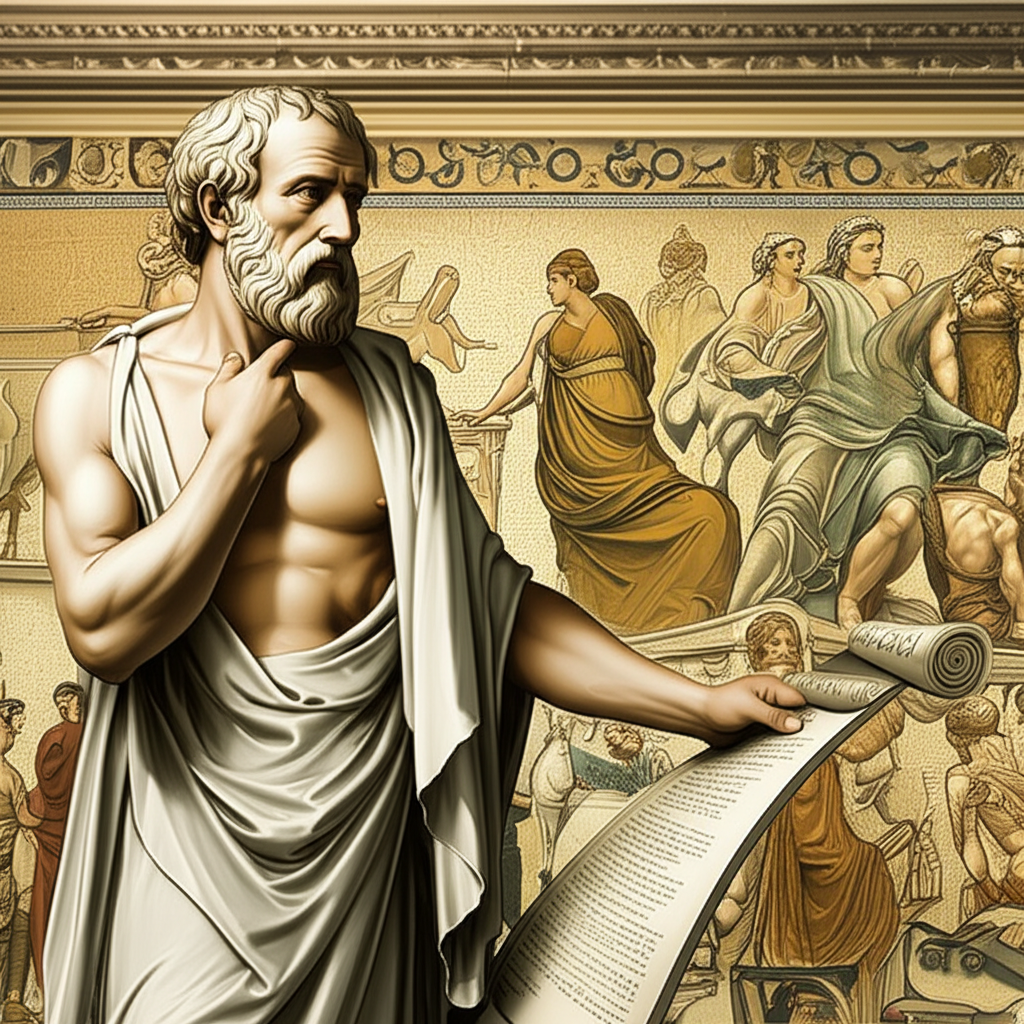
Plato, in his theory of recollection (anamnesis), suggested that learning is essentially remembering innate knowledge. While modern philosophy might frame it differently, the underlying principle remains: prior mental content is crucial for understanding. Aristotle, on the other hand, emphasized that "from experience, that is, from the universal now stabilized in its entirety in the soul...there comes a principle of skill and of understanding." This "stabilized universal" is nothing other than well-organized, remembered experience.
From Recollection to Understanding: The Epistemological Journey
- Sensory Input: Raw data flows into the mind.
- Initial Retention: Immediate memory holds fleeting impressions.
- Encoding: Significant data is processed and stored for longer-term recall.
- Association & Integration: New information is linked with existing memories, forming connections and patterns.
- Understanding: Through these connections, meaning is derived, and isolated facts transform into coherent knowledge.
- Application: Remembered knowledge is then applied to future experiences, refining our understanding and shaping our actions.
The Enduring Legacy of Memory in Philosophy
The Great Books of the Western World are replete with discussions on memory, experience, and their role in shaping the mind and acquiring knowledge. From Augustine's profound meditations on the vastness of memory in his Confessions to Locke's assertion in An Essay Concerning Human Understanding that our ideas originate from sensation and reflection – both forms of experience reliant on memory – the topic has remained central.
Memory is not merely a tool for recalling facts; it is the very essence of identity, the foundation of learning, and the silent architect of our conscious world. To understand memory is to begin to understand the profound depths of human experience itself.
📹 Related Video: PLATO ON: The Allegory of the Cave
Video by: The School of Life
💡 Want different videos? Search YouTube for: ""Plato Theory of Recollection Explained""
📹 Related Video: What is Philosophy?
Video by: The School of Life
💡 Want different videos? Search YouTube for: ""John Locke Experience and Ideas Philosophy""