

Memory as the Foundation of Our Being: A Philosophical Inquiry
Summary: Our very perception of reality, our sense of self, and the accumulation of knowledge are inextricably linked to memory. Far from being a mere storage locker for past events, memory actively shapes and interprets every Experience, transforming raw sensory data into a coherent narrative of existence. This article explores how memory serves as the fundamental basis for our understanding of the world, our personal identity, and the intricate dance between Memory and Imagination that defines the human Mind.
The Indispensable Thread of Experience
From the moment we perceive a color or hear a sound, our Mind is engaged in a continuous act of retention. Without memory, each instant would be an isolated, incomprehensible event, devoid of context or meaning. It is memory that allows us to connect the present to the past, building a cumulative understanding of the world around us. This isn't just about recalling facts; it's about the very process by which sensation becomes Experience. As ancient philosophers, whose works are enshrined in the Great Books of the Western World, often contemplated, what distinguishes a mere sensation from a meaningful experience is the mind's capacity to recognize, categorize, and relate it to what has come before.
Consider the simple act of recognizing a face. This isn't a new perception each time; it's an instantaneous comparison with countless stored memories of that individual, their expressions, and our interactions. This constant referencing is the bedrock upon which our understanding of continuity and personal history is built.
Memory, Knowledge, and the Self
The acquisition of Knowledge is fundamentally a process of memory. Whether it's learning a new skill, understanding a complex theory, or remembering historical events, the information must be encoded, stored, and retrieved. Aristotle, in his treatises, explored how experience, built upon memory, leads to art and science. For him, repeated memories of the same thing give the power of a universal judgment, which is the beginning of art and science.
Beyond factual knowledge, memory is the very fabric of our personal identity. Who are we, if not the sum of our remembered Experiences, our triumphs, our failures, our relationships? John Locke, a prominent figure in the Great Books, argued that personal identity consists not in the substance of the soul or body, but in the continuity of consciousness, which is sustained by memory. If we lose our memories, we effectively lose our sense of self, becoming strangers to our own past.
Key Aspects of Memory's Role in Knowledge and Self:
- Foundation of Learning: All learning, from basic facts to complex theories, relies on the capacity to retain and recall information.
- Personal Identity: Our sense of who we are is constructed from the narrative of our past experiences, held together by memory.
- Moral Framework: Memories of past actions and their consequences inform our ethical decisions and character development.
- Cultural Transmission: Collective memory, passed down through generations, forms the basis of culture, tradition, and historical Knowledge.
Memory and Imagination: A Symbiotic Relationship
The Mind's capacity for Memory and Imagination are not separate faculties but deeply intertwined processes. Memory provides the raw material – the images, sensations, and concepts – from which imagination constructs new possibilities, scenarios, and creative works. When we imagine a future event or invent a fictional world, we are drawing upon fragments and patterns stored in our memory, reconfiguring them in novel ways.
Conversely, imagination can also influence memory. Our memories are not static recordings; they are often reconstructed each time they are recalled, subtly influenced by our current mood, beliefs, and even our imaginative reinterpretations of past events. This dynamic interplay means that while memory anchors us to reality, imagination allows us to transcend it, building upon the foundations of what was to conceive of what could be.
The Fragility and Power of Recall
While memory is powerful, it is also notoriously fallible. Our recollections can be incomplete, distorted, or even entirely fabricated. This fragility underscores the subjective nature of Experience. Two individuals can witness the same event and remember it quite differently, each constructing their own truth based on their unique perspectives and the biases inherent in the recall process.
Despite its imperfections, the profound power of memory lies in its ability to give continuity and meaning to our lives. It allows us to learn from our mistakes, cherish our joys, and build a cohesive narrative that stretches across time. Without this fundamental cognitive function, the concept of a sustained self, the accumulation of Knowledge, and the richness of human Experience would simply cease to exist.
Conclusion:
Memory is not merely a passive archive; it is an active, dynamic process that underpins every facet of our existence. It is the architect of our Experience, the keeper of our Knowledge, and the weaver of our personal identity. Understanding memory's fundamental role is crucial to comprehending the very essence of the human Mind and our place in the world, a realization echoed through centuries of philosophical inquiry contained within the Great Books of the Western World.
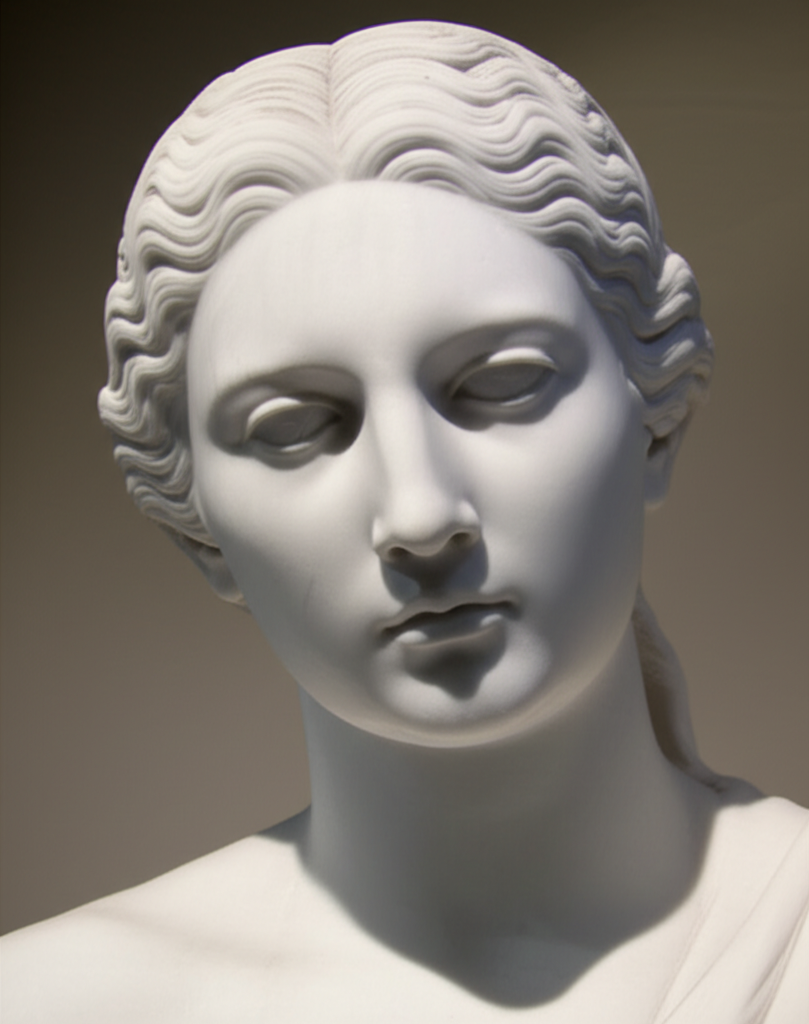 or a philosopher in deep contemplation, surrounded by faint, ethereal representations of abstract thoughts or fragmented images floating around their head, symbolizing the elusive and constructive nature of memory.)
📹 Related Video: PLATO ON: The Allegory of the Cave
Video by: The School of Life
💡 Want different videos? Search YouTube for: ""The Philosophy of Memory: Plato to Modern Neuroscience""
📹 Related Video: PLATO ON: The Allegory of the Cave
Video by: The School of Life
💡 Want different videos? Search YouTube for: ""John Locke's Theory of Personal Identity and Memory Explained""