

Memory as the Basis of Experience
Memory, far from being a mere archive of the past, is the fundamental scaffolding upon which all our experience is built. It is the silent, ubiquitous architect of our present perceptions, shaping how we interpret the world, understand ourselves, and construct our knowledge. Without the intricate workings of memory, our minds would be a perpetual present, devoid of context, learning, or the rich tapestry of personal identity. Every sensation, every thought, every interaction is immediately processed through the lens of what we have remembered, making memory the bedrock of consciousness itself.
The Indispensable Role of Memory in Perception
Consider for a moment what it means to experience anything. Is it merely a raw influx of sensory data? Philosophers from antiquity to the Enlightenment have grappled with this question, often arriving at the conclusion that perception is never truly 'raw.' When we see a tree, we don't just register green leaves and a brown trunk; we recognize it as a tree because our mind instantly draws upon a vast repository of past encounters with trees, concepts of 'tree-ness,' and the associated information. This immediate recognition, this act of making sense of the sensory input, is fundamentally an act of memory.
Memory provides the context, the categories, and the interpretative frameworks that allow us to transform chaotic sensory information into coherent, meaningful experience. Without the ability to recall what a 'chair' is, or the danger of 'fire,' our interactions with the world would be utterly bewildering and, frankly, impossible. It’s not just about recalling facts, but about the implicit memory that guides our actions and reactions, the semantic memory that defines our understanding of the world, and the episodic memory that links us to our personal past.
Memory, Imagination, and the Mind's Canvas
The relationship between Memory and Imagination is deeply symbiotic, forming the creative engine of the mind. While memory typically recalls past events, imagination often reconfigures these remembered elements into novel forms, envisioning futures or crafting fictional worlds. Yet, even imagination is utterly dependent on memory. One cannot imagine a purple elephant without first having memories of 'purple' and 'elephant.'
Aristotle, in his treatise On Memory and Recollection, distinguished between memory (as the retention of a past perception) and recollection (as the active search for a past memory). He also recognized the role of phantasmata (mental images or impressions) which serve as the raw material for both memory and imagination. These mental images, stored and manipulated by the mind, allow us to re-present past experiences and, crucially, to construct new ones.
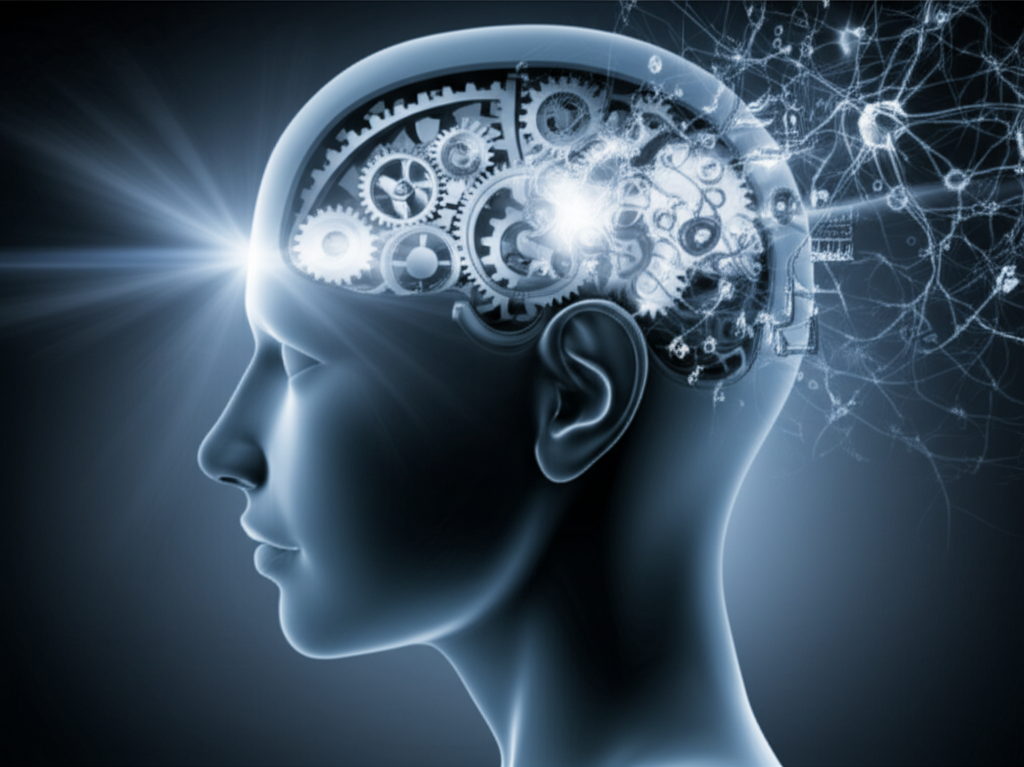
The very act of remembering is often reconstructive, not merely reproductive. Each time we recall an event, we might subtly alter it, integrate new information, or emphasize different aspects. This dynamic process highlights how memory is not a static library but an active, creative faculty, constantly shaping and reshaping our personal narrative.
From Recollection to Knowledge: Building Understanding
The accumulation and organization of knowledge are impossible without memory. From the simplest learned skill to the most complex philosophical theory, everything we 'know' is, in essence, something we remember.
The Stages of Knowledge Formation through Memory:
- Retention of Impressions: As John Locke argued, our mind is initially a tabula rasa, a blank slate, upon which experience writes. Sensory impressions are the first input, and memory is the faculty that retains these impressions, transforming them into 'ideas.'
- Association of Ideas: David Hume further elaborated on how our minds naturally associate ideas based on contiguity, resemblance, and cause-and-effect. This association, heavily reliant on memory, allows us to build complex understandings from simpler experiences.
- Formation of Concepts: Through repeated experiences and the retention of these experiences, we form abstract concepts. The concept of 'justice,' for instance, is built upon countless remembered instances of fairness, injustice, and the principles derived from them.
- Learning and Skill Acquisition: Whether mastering a musical instrument or learning a new language, the process involves repeated practice and the memorization of patterns, rules, and movements. This procedural memory allows us to perform tasks without conscious recollection of every step.
Ultimately, our understanding of the world, our scientific theories, our historical narratives, and our personal wisdom are all elaborate structures built upon the foundation of memory. Without the capacity to store, retrieve, and reflect upon past information, the very notion of 'learning' or 'knowing' would be meaningless.
The Dynamic Architecture of Self
Memory is not just about facts or events; it is profoundly personal. Our episodic memory — the memory of specific events in our lives, tied to a particular time and place — is crucial for constructing our sense of self and personal identity. Who we are is inextricably linked to what we remember doing, feeling, and thinking. The narrative we build about ourselves, our life story, is a continuous act of remembering and re-interpreting our past experiences.
This dynamic architecture of self, constantly under construction, underscores memory's active role. It is not merely a passive repository but an active participant in shaping our present reality and influencing our future actions. Every decision we make, every emotion we feel, every thought we entertain, is filtered through and informed by the vast, intricate network of our memories.
YouTube: memory and consciousness philosophy
YouTube: plato aristotle on memory and recollection
📹 Related Video: What is Philosophy?
Video by: The School of Life
💡 Want different videos? Search YouTube for: "Memory as the Basis of Experience philosophy"