

Medicine and the Maintenance of Life: A Philosophical Inquiry
Summary: Medicine, at its core, is the art and science of healing, a profound human endeavor deeply intertwined with our understanding of life and death. This article delves into the philosophical underpinnings of medicine's role, exploring how it has shaped and been shaped by our evolving concepts of the body, existence, and the ultimate limits of human intervention, drawing insights from the enduring wisdom of the Great Books.
The Enduring Quest: Healing, Sustaining, and Questioning
From the earliest incantations to the marvels of modern biotechnology, humanity's relationship with medicine has been a continuous dialogue with our own fragility. It is a dialogue that transcends mere biology, delving into profound philosophical questions about what it means to live, to suffer, and ultimately, to die. For centuries, thinkers have grappled with the nature of the body, its ailments, and the very essence of life and death, often framing these discussions within the context of healing practices.
Ancient Roots: Medicine, Philosophy, and the Body
The earliest philosophical inquiries into medicine often saw it as an integral part of understanding the cosmos and humanity's place within it. Thinkers like Hippocrates, whose treatises are foundational to Western medicine, viewed the body not just as a collection of parts but as a holistic system influenced by humors and natural forces. His approach, emphasizing observation and ethics, laid the groundwork for science in medicine, even as it was deeply embedded in a philosophical worldview.
Aristotle, in works like On the Soul, delved into the biological functions of living things, examining the body as the vessel of the soul, and its processes as integral to life. His empirical observations, though rudimentary by modern standards, were a foundational step in understanding the physical world and its impact on health. This era saw medicine as a practical application of natural philosophy, where understanding the body was key to understanding life.
Key Philosophical Contributions to Early Medicine:
- Hippocrates: Emphasized observation, prognosis, and ethical conduct (the Hippocratic Oath). Saw health as a balance within the body.
- Plato: Discussed the relationship between the body and soul, viewing illness as potentially disrupting this harmony.
- Aristotle: Provided detailed biological observations, categorizing living beings and exploring the functions necessary for life.
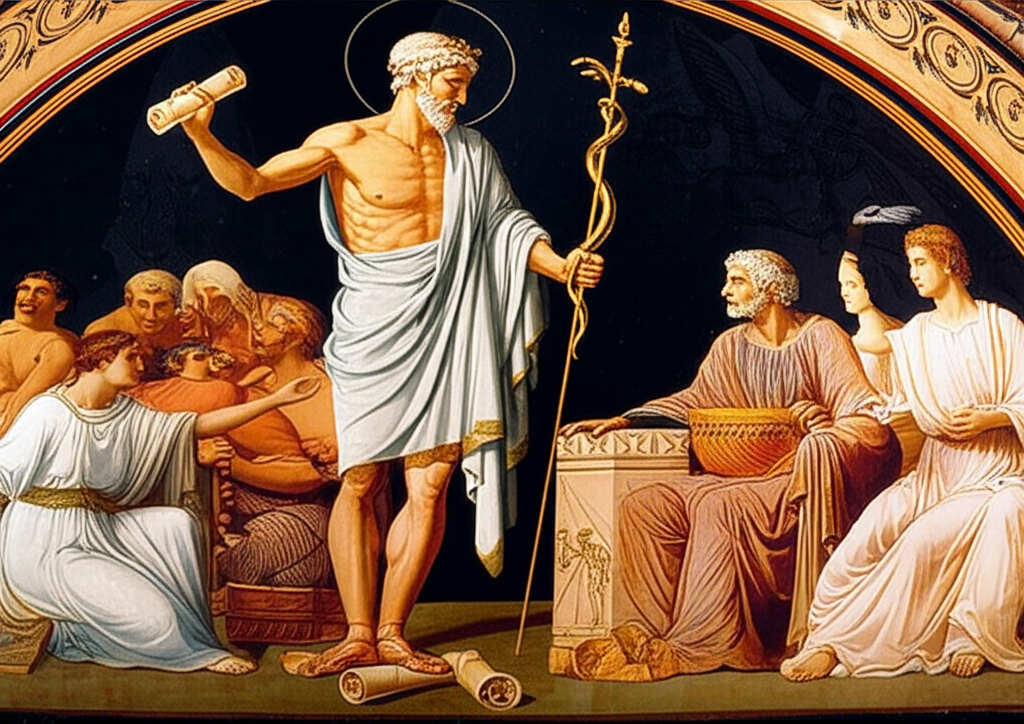
The Shifting Sands: From Humors to Mechanisms
As Western thought progressed, so too did the understanding of the body and the practice of medicine. The Renaissance brought a renewed focus on human anatomy, challenging ancient theories and paving the way for a more empirical approach. Figures like Andreas Vesalius, through meticulous dissection, revolutionized our understanding of the body's structure.
The Enlightenment saw the rise of modern science, fundamentally altering the landscape of medicine. René Descartes, with his radical mind-body dualism, separated the physical body (res extensa) from the non-physical mind (res cogitans). While controversial, this conceptual split allowed for the body to be studied as a machine, subject to mechanical laws, thus accelerating anatomical and physiological research. This mechanistic view, while reducing the body to its parts, proved incredibly powerful for advancing medical science.
Evolution of Medical Understanding:
| Era | Dominant View of the Body | Approach to Medicine | Key Philosophical Impact |
|---|---|---|---|
| Ancient Greece | Holistic, influenced by humors and cosmic forces | Observation, natural remedies, ethical conduct | Life and Death tied to natural order; soul-body unity |
| Medieval | Divine influence, bodily humors, spiritual care | Herbalism, prayer, limited anatomical study | Life as a gift, death as transition; scholastic philosophy |
| Renaissance/Enlight. | Mechanistic, anatomical, empirical | Dissection, systematic observation, experimentation | Descartes' mind-body dualism; rise of science and reason |
| Modern | Biopsychosocial, genetic, complex systems | Evidence-based, specialized, preventative, holistic | Existentialism, ethics of life extension, body autonomy |
Medicine as a Science: Confronting Life and Death
The scientific revolution transformed medicine from an art practiced by healers into a rigorous discipline. Louis Pasteur's germ theory, Robert Koch's postulates, and the discovery of antibiotics fundamentally changed our ability to combat disease and prolong life. This era saw medicine increasingly define its mission as the defeat of illness and the postponement of death.
However, this triumph of science has also brought new philosophical dilemmas. As we extend life and master the body through technology, we are forced to confront the very definition of life, quality of life, and the meaning of death. Is extending life always good? What are the ethical limits of medical intervention? These questions, though couched in scientific terms, are fundamentally philosophical, touching upon human dignity, autonomy, and the natural order.
The Maintenance of Life: Ethical Frontiers
Modern medicine has pushed the boundaries of what is possible, allowing us to maintain biological functions even when consciousness is absent, or to dramatically extend the lifespan of individuals with chronic conditions. This capability forces us to grapple with the concept of "maintenance of life" itself.
- Prolonging Life vs. Quality of Life: When does the pursuit of longevity become a burden?
- Defining Death: Advances in resuscitation and life support have complicated the traditional definitions of death, leading to concepts like brain death.
- Body Autonomy: Who decides what happens to one's body at the end of life? The rise of patient rights and advanced directives reflects a philosophical shift towards individual agency over one's own body and the process of death.
- Genetic Engineering: The ability to alter the body's fundamental blueprint raises profound questions about human nature and the future of life.
These are not merely medical questions, but deep philosophical inquiries into our values, our understanding of suffering, and our place in the natural world.
Conclusion: Medicine, Philosophy, and the Human Condition
Medicine is more than just a collection of techniques and treatments; it is a profound expression of humanity's ongoing struggle with its own mortality. From the ancient insights into the body's humors to the cutting-edge science of genomics, the journey of medicine is inextricably linked to our philosophical understanding of life and death. As Chloe Fitzgerald, I find myself continually drawn to how these two disciplines, often seen as distinct, are in fact two sides of the same coin, each enriching our understanding of the other, and ultimately, our understanding of what it means to be human. The maintenance of life is not just a biological imperative; it is a philosophical quest, constantly evolving and challenging us to redefine our existence.
YouTube Video Suggestions:
-
📹 Related Video: What is Philosophy?
Video by: The School of Life
💡 Want different videos? Search YouTube for: ""Great Books of the Western World Medicine Philosophy""
2. ## 📹 Related Video: ARISTOTLE ON: The Nicomachean Ethics
Video by: The School of Life
💡 Want different videos? Search YouTube for: ""The Philosophy of Death and Dying Medical Ethics""