

Medicine and the Maintenance of Life: A Philosophical Inquiry
Summary: Medicine, at its core, is the art and science dedicated to the maintenance and prolongation of human life. Yet, its advancements force us to confront profound philosophical questions about our existence, the nature of the Body, the limits of Science, and our relationship with Life and Death. This article delves into the philosophical underpinnings of medicine's role, drawing from the wisdom of the Great Books, to explore how our efforts to sustain life inevitably lead us to ponder its meaning.
The Enduring Quest: Healing, Sustaining, and Questioning
From the earliest incantations to the most advanced surgical procedures, humanity's engagement with Medicine has been an unwavering testament to our desire to preserve Life. It is a discipline born of necessity, driven by the stark reality of illness, injury, and our inevitable mortality. But beyond the practical application of healing, medicine operates on a deeper, philosophical plane, constantly redefining our understanding of what it means to be alive, healthy, and ultimately, human.
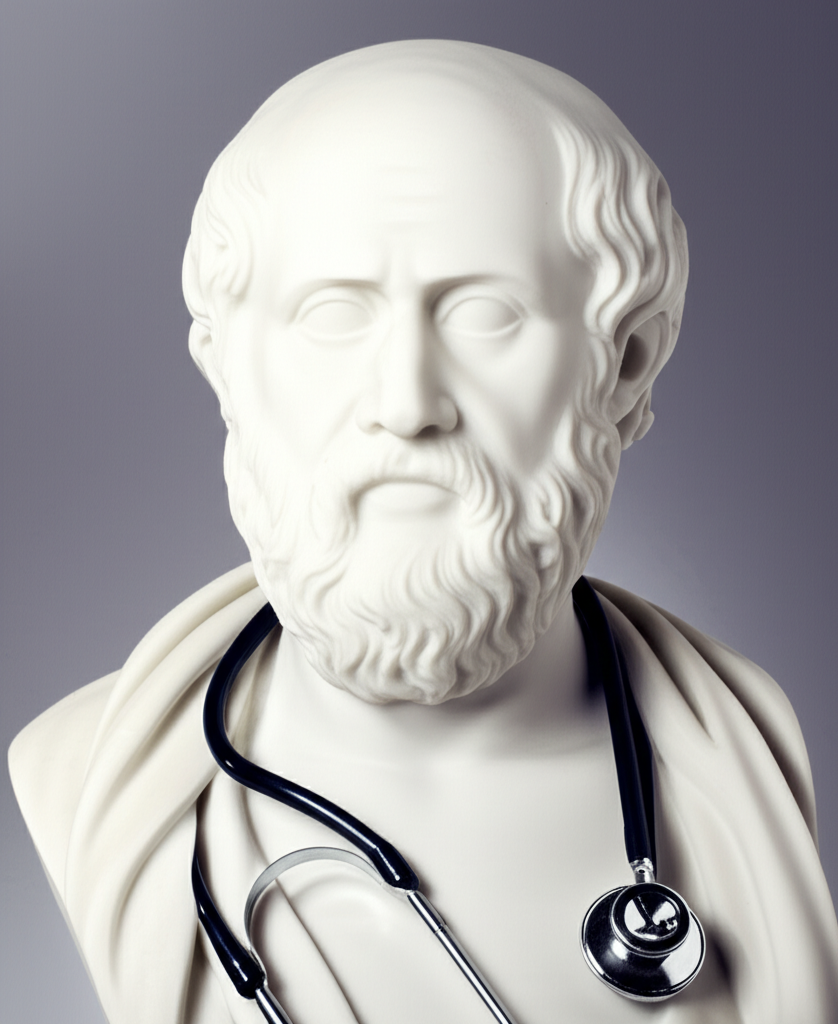
In the ancient world, as illuminated by texts within the Great Books of the Western World, the distinction between the physical Body and the spirit or soul was often blurred, and health was seen as a harmonious balance. Hippocrates, revered as the father of medicine, emphasized observation and empirical evidence, yet his oath also bound physicians to ethical duties that transcend mere technical skill. His approach, while scientific for its time, was deeply holistic, understanding the patient within their environment and their unique constitution.
The Body: A Philosophical Canvas for Science
The human Body is not merely a biological machine; it is the vessel of our experience, the site of sensation, emotion, and thought. For philosophers throughout history, from Plato's allegories of the soul's imprisonment in the body to Aristotle's more integrated view of the soul as the form of the body, its nature has been a central concern.
Modern Science, through the lens of medicine, has achieved unprecedented insights into the body's intricate mechanisms. We can mend broken bones, replace failing organs, and combat diseases that once spelled certain doom. This triumph of scientific understanding, however, often reduces the body to a collection of systems, cells, and molecules. While incredibly effective for treatment, this reductionist view can sometimes obscure the holistic, lived experience of the body.
Here, a tension arises:
- Philosophical View: The
Bodyas an integrated whole, imbued with consciousness, identity, and a unique narrative. - Scientific View: The
Bodyas a complex biological system amenable to analysis, diagnosis, and repair.
This duality challenges us to consider how we reconcile the measurable aspects of health with the immeasurable aspects of well-being and existential meaning.
Medicine as a Mediator Between Life and Death
Perhaps medicine's most profound philosophical role lies in its position as a mediator between Life and Death. Every intervention, every treatment, is an attempt to push back the boundary of non-existence, to extend the precious gift of life. This fundamental objective forces us to confront our mortality head-on.
Key Questions Posed by Medical Advancement:
- What constitutes "life worth living"? As medicine prolongs life, often with significant interventions, the quality of that extended life becomes a central ethical and philosophical debate.
- Where do we draw the line? When is it appropriate to cease aggressive treatment, to allow the natural course of
Life and Deathto unfold? - Does the pursuit of immortality diminish the value of finite life? If we could theoretically live indefinitely, would the urgency, beauty, and poignancy of our current existence be altered?
These questions resonate with ancient Stoic reflections on accepting fate, as well as modern existentialist inquiries into freedom and responsibility in the face of death.
The Ethical Imperative: Beyond the Cure
The Great Books remind us that wisdom is not merely the accumulation of facts, but the understanding of how to live well. Medicine, in its pursuit of health, cannot escape its ethical dimensions. From the Hippocratic Oath to contemporary bioethics, the moral obligations of healers are paramount.
Ethical Considerations in Modern Medicine:
| Ethical Principle | Description | Philosophical Connection |
|---|---|---|
| Autonomy | Respecting the patient's right to make decisions about their own medical care. | Rooted in Enlightenment philosophy (Kant's categorical imperative), emphasizing individual agency and reason. |
| Beneficence | Acting in the best interest of the patient. | A core tenet of ancient medical ethics, seen in Hippocratic writings, aiming for the good of the patient. |
| Non-maleficence | "First, do no harm." Avoiding actions that cause harm to the patient. | Also central to the Hippocratic tradition, a foundational principle for any intervention. |
| Justice | Ensuring fair distribution of healthcare resources and equal treatment. | Explored by Plato in The Republic regarding the ideal society, and by modern political philosophers concerning social equity and access to essential services. |
| Dignity | Upholding the inherent worth and respect of every individual, especially in illness and at end-of-life. | Connects to humanistic philosophies and concepts of inherent value, regardless of physical or mental capacity, a concern often arising in discussions of advanced medical care and palliative approaches. |
Conclusion: Medicine, Life, and the Ongoing Dialogue
Medicine is more than a field of Science; it is a profound human endeavor that continually pushes the boundaries of our understanding of Life and Death. It forces us to confront the fragility of the Body and the resilience of the human spirit. As we continue to advance our ability to maintain life, we must also deepen our philosophical reflection on what that life means, how it should be lived, and what responsibilities come with such powerful capabilities. The dialogue between medicine and philosophy is not merely academic; it is essential for navigating the complex ethical landscape of our shared human future.
YouTube Video Suggestions:
-
📹 Related Video: PLATO ON: The Allegory of the Cave
Video by: The School of Life
💡 Want different videos? Search YouTube for: ""Plato's Phaedo and the Soul's Immortality" for philosophical context on body and soul"
2. ## 📹 Related Video: ARISTOTLE ON: The Nicomachean Ethics
Video by: The School of Life
💡 Want different videos? Search YouTube for: ""Bioethics and the End of Life Debate" for contemporary ethical discussions"