

Medicine and the Maintenance of Life: A Philosophical Inquiry
Medicine, often perceived as a purely scientific and technical discipline, harbors profound philosophical implications for our understanding of life, death, and the very essence of human existence. This article delves into the historical and philosophical underpinnings of medicine's role, drawing from the Great Books of the Western World, to explore its complex relationship with the body, science, and our ultimate confrontation with mortality. We will journey from ancient perspectives that intertwined healing with cosmic harmony to modern dilemmas that challenge our definitions of wellness and the limits of intervention.
The Philosophical Pulse of Medicine
At its core, medicine is an art and a science dedicated to the maintenance of life. But what exactly is life? And what does it mean to "maintain" it? These aren't just biological questions; they are deeply philosophical. From the moment we are born, our physical body is a canvas upon which the forces of nature, society, and our own choices paint a story. Medicine, in its various forms, intervenes in this narrative, seeking to correct, restore, or prolong. Yet, every intervention raises questions about natural order, human agency, and the inevitable horizon of death.
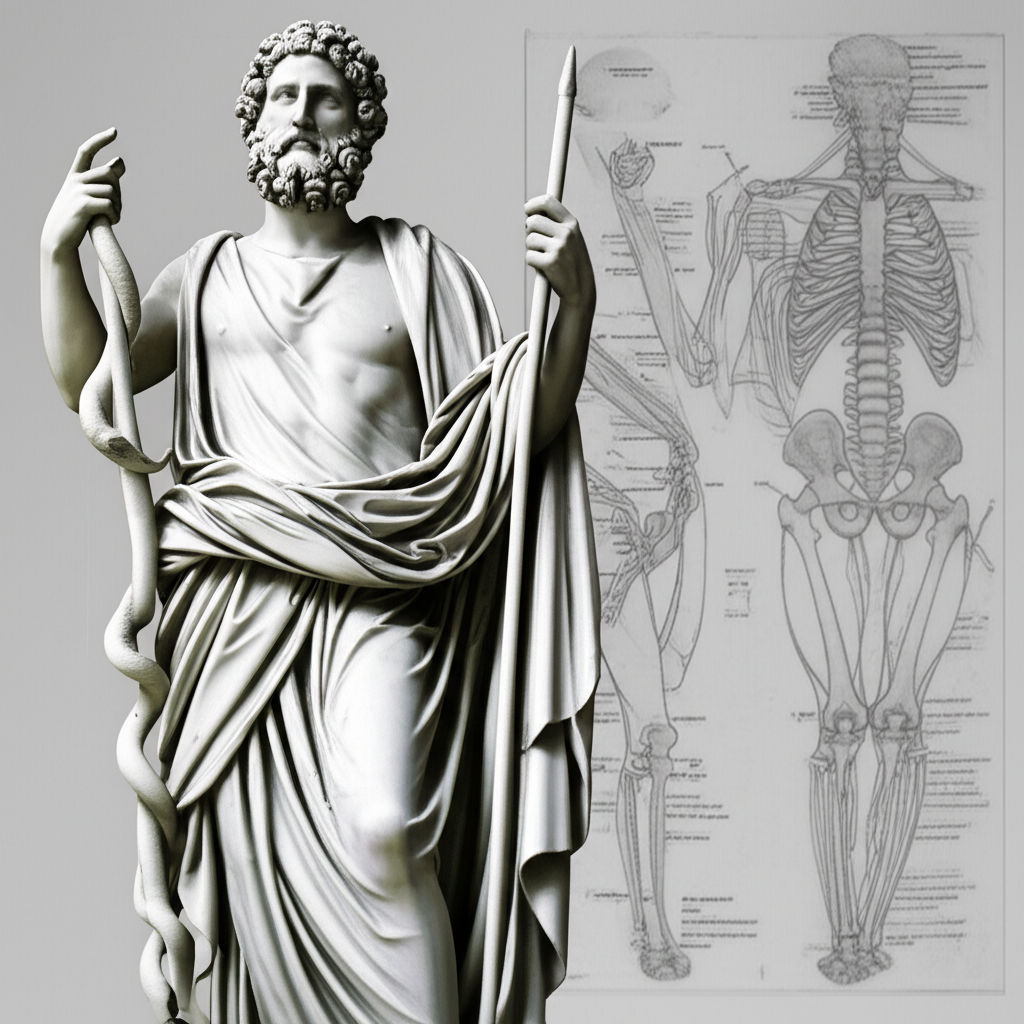
Ancient Roots: Medicine as Philosophy
Long before the advent of modern laboratories and complex surgical procedures, the practice of medicine was inextricably linked with philosophy, religion, and natural observation. The ancients saw the body not merely as a collection of organs but as a microcosm reflecting a larger cosmic order.
Hippocrates and the Art of Healing
The figure of Hippocrates, often called the "Father of Western Medicine," stands as a pivotal point. His approach, detailed in texts like Aphorisms and On Ancient Medicine, emphasized observation, prognosis, and ethical conduct. He moved away from purely supernatural explanations for disease, proposing that illnesses had natural causes. For Hippocrates, health was a state of balance within the body's humors, and illness was an imbalance. This wasn't just a medical theory; it was a philosophical statement about the inherent order and self-regulating capacity of life. The Hippocratic Oath, still resonant today, underscores the profound moral responsibility inherent in the act of healing, placing the welfare of the patient above all else.
Plato, Aristotle, and the Healthy Polis
Philosophers like Plato and Aristotle further integrated the understanding of the body and health into their broader metaphysical and ethical systems.
- Plato, in works like The Republic, often used the analogy of a healthy body to describe a well-ordered soul or a just society (polis). For him, health was a form of harmony, where each part (or humor, or social class) performed its function correctly. Disease, conversely, was a disharmony. The care of the body, therefore, was not merely a physical act but a component of ethical living and civic virtue.
- Aristotle, with his keen interest in biology and natural science, delved deeper into the physiological aspects of life. His empirical observations of animals laid foundational groundwork for understanding biological processes. He viewed the body as a unified organism with a purpose (telos), and health as the flourishing of that organism. His concept of the "soul" (psyche) was not separate from the body but rather its animating principle, emphasizing the integrated nature of human existence.
For these thinkers, medicine was not just about treating symptoms but about understanding and restoring the natural, harmonious state of life itself.
The Ascent of Science: From Observation to Intervention
The transition from ancient philosophical medicine to a more empirical and scientific approach marked a significant shift in how humanity understood the body and its ailments.
Galen's Legacy and the Systematization of the Body
Galen of Pergamon, a Roman physician and philosopher, built upon Hippocratic principles, but his extensive anatomical dissections (though often on animals) and physiological theories dominated Western medicine for over a millennium. His detailed descriptions of the body's systems and his emphasis on experimentation (even if limited by the era) solidified medicine as a more systematic science. Galen’s work, preserved through the Great Books, represented a monumental effort to rationalize and categorize the complex functions of the body, bringing a new level of precision to the maintenance of life.
Descartes' Machine: The Body Redefined
The Scientific Revolution brought a radical re-evaluation of the human body. René Descartes, a towering figure in the Great Books, famously articulated a dualistic view of mind and body. In his Discourse on Method and Meditations, he posited that the body is a complex machine, governed by mechanical laws, entirely separate from the non-physical, thinking mind (soul). This perspective had profound implications for medicine:
- It encouraged a more mechanistic study of the body, treating it as a system of levers, pumps, and fluids.
- It paved the way for modern anatomy and physiology, focusing on observable, measurable phenomena.
- It inadvertently created a philosophical challenge: if the body is just a machine, what is the meaning of illness, suffering, and death? How do we reconcile the mechanical body with the lived experience of life?
This shift underscored medicine's growing reliance on observable phenomena and empirical evidence, moving it further into the realm of science.
Medicine's Modern Dilemma: Extending Life, Confronting Death
Today, medicine stands at an unprecedented peak of scientific achievement, capable of intervening in ways unimaginable to our ancestors. Yet, these triumphs bring new philosophical quandaries, particularly concerning the boundaries of life and death.
The Triumph of Science: Eradicating Disease
Modern science has delivered astonishing victories against diseases that once decimated populations. Vaccines, antibiotics, advanced surgical techniques, and sophisticated diagnostic tools have dramatically extended human lifespan and improved the quality of life. This relentless pursuit of health often frames disease as an enemy to be conquered, a glitch in the body's machine that science can fix. The focus is on the active "maintenance of life" through aggressive intervention.
The Unavoidable Horizon: Life and Death in the Age of Advanced Medicine
Despite all our advancements, the ultimate reality of death remains. Medicine can prolong life, but it cannot abolish mortality. This brings us to a crucial philosophical tension:
- When does "maintenance of life" become prolongation of suffering?
- Who decides the quality of life, especially when the body is severely compromised?
- What is the ethical imperative when technology allows us to sustain biological functions long after consciousness or meaningful interaction has ceased?
These are not merely medical questions; they are fundamental ethical and existential inquiries that force us to confront our deepest values regarding life and death.
Ethical Crossroads: Defining "Maintenance" and "Quality of Life"
The Great Books offer frameworks for ethical deliberation, from Aristotle's eudaimonia (flourishing) to Kant's categorical imperative. In contemporary medicine, these frameworks are tested daily. The definition of "maintenance" expands beyond merely keeping the body alive to encompass considerations of dignity, autonomy, and the pursuit of a "good life."
Here are some key philosophical considerations in modern medical ethics:
- Autonomy: The patient's right to make decisions about their own body and treatment, even if those decisions conflict with medical advice.
- Beneficence and Non-maleficence: The physician's duty to do good and to do no harm, a direct echo of Hippocrates.
- Justice: Equitable access to medical care, a societal challenge that speaks to the philosophical ideal of a just polis.
- The Definition of Death: Advancements in medicine have complicated the traditional definition of death, especially with the concept of brain death, pushing philosophers and ethicists to redefine the boundary between life and death.
Conclusion: The Enduring Question of Our Mortal Coil
From ancient philosophers who viewed the body as a harmonious system to modern scientists who meticulously map its genetic code, the quest to understand and maintain life through medicine has been a continuous philosophical journey. The Great Books of the Western World provide a rich tapestry of thought, reminding us that medicine is never just about fixing a broken body; it is about confronting the profound mystery of existence, the delicate balance of life and death, and our enduring human desire to thrive. As our scientific capabilities advance, so too must our philosophical reflection, ensuring that our pursuit of health remains anchored in wisdom, compassion, and a deep respect for the human condition.
**## 📹 Related Video: PLATO ON: The Allegory of the Cave
Video by: The School of Life
💡 Want different videos? Search YouTube for: ""Plato's Philosophy of the Body and Soul""**
**## 📹 Related Video: ARISTOTLE ON: The Nicomachean Ethics
Video by: The School of Life
💡 Want different videos? Search YouTube for: ""Descartes Dualism and Modern Medicine Ethical Dilemmas""**