

Medicine and the Maintenance of Life: A Philosophical Inquiry
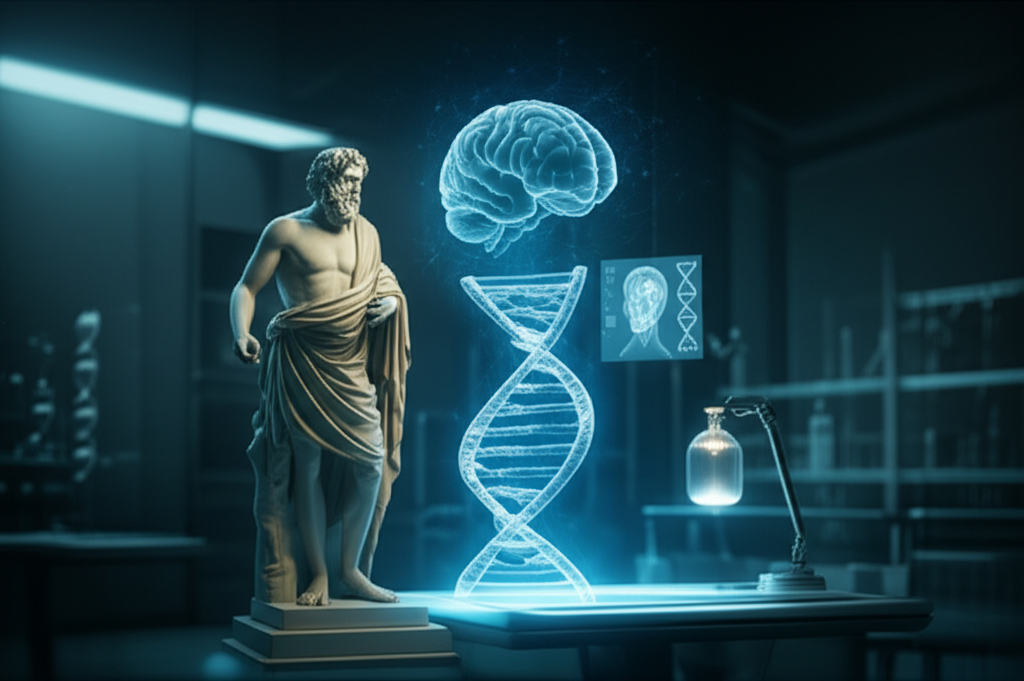
Medicine, at its core, is the art and science of maintaining life, alleviating suffering, and restoring health. Yet, beyond the sterile confines of a clinic or the intricate workings of a laboratory, lies a profound philosophical landscape. This article delves into the intricate relationship between Medicine and the human condition, exploring how our evolving understanding of the Body through Science continually redefines our perceptions of Life and Death, challenging us to confront fundamental questions about existence, purpose, and the very limits of our being. From ancient remedies to cutting-edge biotechnologies, medicine is not merely a practical discipline; it is a mirror reflecting our deepest values and our ongoing quest to understand what it means to live, and ultimately, to die.
The Ancient Roots of Healing and Being
For millennia, the practice of healing has been inextricably linked to humanity's understanding of itself and its place in the cosmos. Early philosophers and physicians, often one and the same, sought to comprehend the Body not as a mere collection of parts, but as an integrated system, deeply connected to nature and the soul.
From Miasma to Method: Early Understandings of the Body
In the classical world, figures like Hippocrates laid the groundwork for rational Medicine, moving beyond purely supernatural explanations for illness. His emphasis on observation, prognosis, and the concept of "physis" (nature's healing power) marked a pivotal shift. Aristotle, in his extensive biological treatises, meticulously studied the Body's functions, viewing living organisms as possessing an inherent purpose or telos. For these thinkers, health was a state of balance, an equilibrium within the individual and with their environment. Disease was a disruption of this harmony, and Medicine sought to restore it. The very act of living, therefore, was a constant negotiation with the forces of nature, and the maintenance of life was a holistic endeavor encompassing diet, lifestyle, and spiritual well-being. The line between Life and Death was understood with a certain reverence, a natural cycle within a larger cosmic order.
Science, the Body, and the Shifting Sands of Life and Death
The advent of the scientific revolution fundamentally transformed our approach to Medicine, dissecting the Body with unprecedented precision and challenging ancient philosophical assumptions.
The Mechanistic Turn: Descartes and the Dissected Self
With thinkers like René Descartes, the human Body began to be conceptualized as a complex machine, separate from the non-physical mind or soul. This dualistic perspective, while offering a powerful framework for anatomical and physiological investigation, also paved the way for a more reductionist approach to Medicine. The focus shifted from holistic balance to identifying and repairing specific, malfunctioning parts. Science offered new tools – microscopes, surgical instruments, pharmaceutical compounds – that promised mastery over disease and, implicitly, over the very processes of Life and Death. This era saw incredible breakthroughs, yet it also raised new philosophical questions: If the body is a machine, what then is the essence of life? Where does consciousness reside?
Defining Life and Death in the Age of Intervention
Modern Medicine has pushed the boundaries of what was once considered immutable. Life support systems can maintain vegetative states indefinitely, organ transplantation blurs the lines of individual identity, and advanced diagnostics allow us to predict predispositions to disease long before symptoms appear. These interventions force us to re-evaluate our definitions of Life and Death. Is life merely the presence of biological function, or does it require consciousness, interaction, and purpose? The concept of "brain death," for instance, emerged as a necessary medical and ethical construct to navigate the complexities of advanced life support and organ donation, prompting profound societal debates about the moment a person truly ceases to be. The maintenance of life, in this context, becomes not just a biological fact, but a carefully considered decision, often fraught with ethical dilemmas.
The Ethical Compass in the Realm of Medicine
As medicine's capabilities expand, so too do the ethical quandaries it presents, forcing us to confront the moral implications of our power over Life and Death.
The Burden of Choice: Autonomy, Suffering, and the Limits of Care
The ability to prolong life, even in states of profound suffering, places an immense burden of choice upon individuals, families, and healthcare providers. Questions of patient autonomy – the right to refuse treatment, the right to choose the timing and manner of one's death – have become central to modern medical ethics. Debates around euthanasia and assisted suicide highlight the tension between the medical imperative to preserve life and the philosophical recognition of human dignity and the right to self-determination. Medicine is no longer just about healing; it is about navigating the complex landscape of human values and the alleviation of suffering, even if that means acknowledging the limits of what Science can achieve.
Beyond Repair: Embracing Mortality in an Age of Longevity
Despite all advancements, mortality remains the ultimate constant. The philosophical challenge for Medicine is not just to extend life, but to enhance its quality, and ultimately, to facilitate a dignified end. Palliative care, a field dedicated to alleviating suffering and improving quality of life for those facing life-limiting illnesses, represents a philosophical shift. It acknowledges that Life and Death are intertwined, and that true care involves embracing the entirety of the human experience, including its conclusion. The maintenance of life, in this view, extends to ensuring a meaningful and peaceful end, recognizing that not all problems can be "fixed" by Science.
The Future of Maintenance: Transhumanism and the Human Condition
Looking ahead, the convergence of Medicine, Science, and technology promises even more radical transformations, pushing us to redefine the very essence of the human Body and our existence.
Enhancement vs. Healing: Redefining the 'Normal' Body
Biotechnology, genetic engineering, and neuro-enhancements are not just about curing disease but about augmenting human capabilities. This raises the specter of transhumanism – the idea that humanity can and should be upgraded beyond its current biological limitations. If Medicine can not only restore but enhance physical and cognitive functions, what then constitutes a "normal" Body? Where do we draw the line between therapy and enhancement? These questions force us to grapple with profound philosophical implications for human identity, equality, and the very meaning of the human condition. The maintenance of life may evolve into the active engineering of life, with ethical considerations that dwarf those we face today.
YouTube:
- "Philosophy of Medicine: What is Health and Disease?"
- "Ethical Dilemmas in Modern Medicine: Life, Death, and Autonomy"
📹 Related Video: What is Philosophy?
Video by: The School of Life
💡 Want different videos? Search YouTube for: "Medicine and the Maintenance of Life philosophy"