

Medicine and the Maintenance of Life: A Philosophical Inquiry
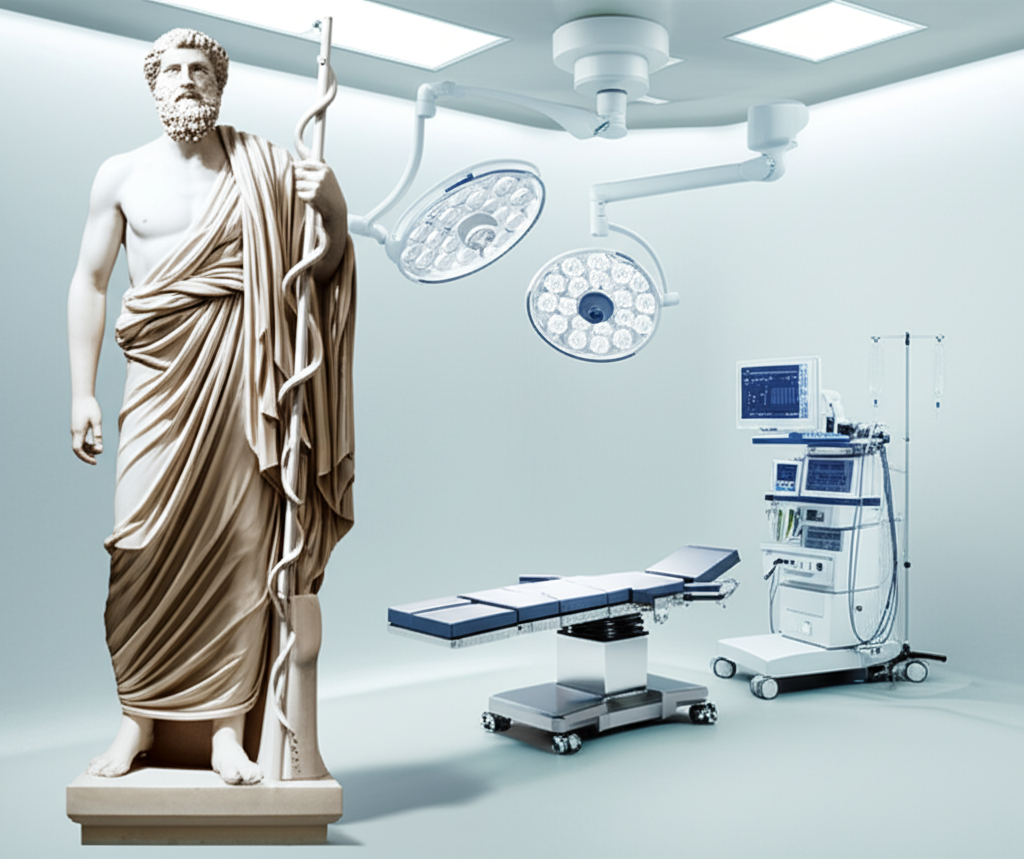
The relentless march of medicine through history has been, at its core, a testament to humanity's most primal urge: the desire to preserve life. From ancient poultices to cutting-edge gene therapies, the aim remains consistent – to mend the body, alleviate suffering, and push back the inevitable tide of death. But beneath the sterile glow of operating theaters and the precision of scientific instruments lies a profound philosophical landscape, one that begs us to question not just how we maintain life, but why, and what the very act of maintenance signifies for our understanding of existence itself. This article delves into the historical and philosophical underpinnings of medicine's role, tracing its evolution from a practical art to a complex science, and examining the ethical quandaries that arise when we confront the boundaries of the human body and the ultimate mysteries of life and death.
The Ancient Imperative: Healing, Harmony, and the Human Body
For millennia, the practice of medicine was less a science in the modern sense and more an art intertwined with philosophy, religion, and observation. The ancients, particularly those whose wisdom is enshrined in the Great Books of the Western World, grappled with the fragility of the body and the fleeting nature of life.
- Hippocrates, the legendary physician, understood the human body as an intricate system, advocating for observation, prognosis, and the ethical treatment of patients. His oath, a cornerstone of medical ethics, speaks not merely to healing but to the dignity of the individual. He taught that the physician's role was to assist nature, to restore balance, not to wage war against it. This early wisdom laid the groundwork for a holistic view, where illness was a disruption of natural harmony, and health its restoration.
- Plato, in works like The Republic and Timaeus, explored the relationship between the soul and the body, often viewing the body as a vessel, sometimes even a prison, for the immortal soul. While not a physician, his philosophical framework influenced how subsequent thinkers perceived physical ailments and their connection to mental or spiritual states.
- Aristotle, a keen observer of the natural world, delved into biology with an unparalleled empirical rigor for his time. His studies of anatomy and physiology, though rudimentary by modern standards, highlighted the interconnectedness of bodily functions and the telos (purpose) inherent in biological forms. For Aristotle, life was an active principle, and the body was the instrument through which this principle manifested.
The overarching theme of this ancient period was a recognition of the body's inherent vulnerability and the physician's role as a steward of its natural processes, always in the shadow of the ultimate reality of death.
The Philosophical Divide: Mind, Body, and the Soul's Journey
As philosophy evolved, so did the conceptualization of the body and its relationship to consciousness. This shift profoundly impacted how medicine was understood and practiced.
- Descartes, in his Meditations on First Philosophy, famously articulated the problem of mind-body dualism. He posited that the mind (soul) and body were distinct substances, interacting primarily in the pineal gland. This philosophical separation, while foundational to modern thought, inadvertently set the stage for a mechanistic view of the body – a complex machine that could be analyzed, repaired, or even replaced, independent of the non-physical mind. This perspective, though challenged, has deeply influenced the development of modern medicine as a science focused on physical mechanics.
- Augustine of Hippo, reflecting on Christian theology, also grappled with the nature of the body and soul, viewing the body as a temporary dwelling for the immortal soul, subject to sin and decay, yet destined for resurrection. His writings underscore the profound spiritual dimension often associated with illness and healing, especially in pre-modern contexts.
This period marked a significant intellectual divergence, where the body became increasingly an object of scientific scrutiny, even as its philosophical and spiritual implications continued to be debated.
Medicine as Science: From Observation to Intervention
The Scientific Revolution ushered in a new era, transforming medicine from an art of observation and tradition into a rigorous science. Thinkers like Francis Bacon championed empirical methods, advocating for systematic observation and experimentation to unlock nature's secrets. This new methodology was eagerly applied to the human body.
Key Developments in the Scientific Approach to Medicine:
- Empirical Observation and Experimentation: Moving beyond ancient theories, scientists began dissecting, observing, and experimenting, leading to a deeper understanding of anatomy and physiology.
- The Germ Theory: The discovery of microorganisms as agents of disease revolutionized public health and treatment, moving away from humoral theories.
- Technological Advancements: The microscope, X-rays, and later, advanced imaging techniques, provided unprecedented views into the body's inner workings.
- Pharmaceutical Revolution: The isolation and synthesis of specific compounds allowed for targeted interventions against disease.
This shift empowered medicine to not just maintain life but to actively intervene, to conquer diseases previously considered untreatable, and to significantly extend human lifespans. The body was now a complex system whose mechanisms could be understood, manipulated, and, to a degree, controlled.
The Modern Predicament: Extending Life, Confronting Death
Today, medicine stands at an unprecedented pinnacle of capability. We can transplant organs, edit genes, and sustain life far beyond what was imaginable even a century ago. Yet, with this power comes a host of complex ethical, social, and philosophical challenges, forcing us to re-evaluate our understanding of life and death.
Ethical Dilemmas in Contemporary Medicine:
- The Definition of Life: When does life truly begin or end, especially with advancements in reproductive technologies and artificial life support?
- The Quality of Life: Is merely extending life always the primary goal, or should the quality of that life take precedence, particularly in cases of chronic illness or severe disability?
- Resource Allocation: Who gets access to expensive, life-saving treatments? This question highlights societal values and the inherent inequalities within healthcare systems.
- Human Enhancement: As medicine moves beyond treating illness to enhancing human capabilities, where do we draw the line? Is it ethical to modify the body for non-medical reasons?
- The Right to Die: If medicine can prolong life indefinitely, does an individual have the right to refuse treatment or even to choose a dignified end to their life? This question forces us to confront the ultimate sovereignty over our own body and existence.
These questions, though framed by modern science, echo the perennial philosophical debates found in the Great Books – concerning human dignity, autonomy, suffering, and the meaning of existence in the face of our inevitable mortality.
The Planksip Perspective: Beyond Mere Maintenance
At planksip, we believe that medicine's role extends beyond the mere mechanical maintenance of the body. While the science of healing is undeniably crucial, the deeper philosophical inquiry lies in understanding what constitutes a life worth living, and how our pursuit of longevity impacts our understanding of purpose, meaning, and our relationship to life and death.
The body is not just a collection of cells and organs; it is the vessel of our experience, our consciousness, and our connection to the world. When medicine intervenes, it is not merely repairing tissue; it is, in a profound sense, touching the very fabric of human existence. The great thinkers, from Plato to Kant, compel us to consider the ethical duties we have to ourselves and to others, and how the power of medicine must be wielded with wisdom and compassion.
We are reminded that even as we push the boundaries of life extension, death remains the ultimate horizon. How we confront this reality, and how medicine assists us in that confrontation – whether through palliative care, ethical end-of-life choices, or simply by affording us more time to live meaningfully – defines our humanity. The maintenance of life is not an end in itself, but a means to pursue the rich tapestry of human experience, understanding, and connection.
Conclusion: The Enduring Quest
The journey of medicine reflects humanity's enduring quest to understand, control, and ultimately transcend the limitations of the body. From the ancient wisdom of Hippocrates to the sophisticated biotechnologies of today, the impulse to maintain life remains a powerful driver. Yet, as we continue to advance, the philosophical questions deepen: What does it mean to live well? What is our responsibility to the body and to life itself? And how do we navigate the terrain between our scientific capabilities and our ethical obligations in the face of life and death?
These are not questions that science alone can answer. They require a return to the wellspring of philosophical thought, to the Great Books of the Western World, and to a continuous, critical examination of our values as individuals and as a society. For in the maintenance of life, we are not merely preserving biological function; we are engaging with the very essence of what it means to be human.
📹 Related Video: PLATO ON: The Allegory of the Cave
Video by: The School of Life
💡 Want different videos? Search YouTube for: ""Plato's Philosophy of the Body and Soul Explained""
📹 Related Video: ARISTOTLE ON: The Nicomachean Ethics
Video by: The School of Life
💡 Want different videos? Search YouTube for: ""Ethical Dilemmas in Modern Medicine: Life, Death, and Technology""