

In the grand tapestry of political philosophy, the concept of justice transcends mere legalistic adherence, emerging as the foundational virtue that defines the very essence and purpose of the State. This article delves into the profound insights from the Great Books of the Western World, primarily Plato's Republic and Aristotle's Politics, to illuminate how ancient thinkers envisioned a just polity. For them, a truly virtuous state is one meticulously structured by Law, where each component contributes harmoniously to the common good, actively fostering individual flourishing and diligently averting the corrosive influence of vice.
Introduction: The State's Moral Compass
From the earliest stirrings of organized human society, the question of how we ought to live together has been inextricably linked to the nature of the State. Is the state merely a mechanism for order, or does it possess a higher moral calling? The giants of ancient Greek philosophy, whose works form the bedrock of the Great Books of the Western World, unequivocally assert the latter. For them, the State is not morally neutral; it is either virtuous or vicious, and its paramount virtue is Justice. This isn't just about punishment or fair dealing; it's about the very structure, purpose, and operation of governance, guiding societies away from vice and towards collective flourishing.
Plato's Republic: Justice as Harmonic Order
Perhaps nowhere is the concept of Justice as the Virtue of the State more meticulously explored than in Plato's Republic. Through the voice of Socrates, Plato constructs an ideal city (Kallipolis) to understand justice writ large, believing that what is true for the individual soul must also be true for the body politic.
Plato posits that just as the individual soul comprises three parts—reason, spirit, and appetite—the ideal State also has a tripartite structure:
- Guardians (Philosopher-Kings): Representing reason, they possess the virtue of wisdom and rule.
- Auxiliaries (Soldiers): Embodying spirit, they exhibit courage and defend the state.
- Producers (Workers): Driven by appetite, they display temperance by performing their specific economic functions.
For Plato, Justice in the state is not a separate virtue but the harmonious interrelation of these parts, where each performs its proper function without interfering with the others. It is the architectonic virtue that ensures the State's health and stability. When wisdom guides, courage defends, and temperance underpins economic activity, the State achieves its highest virtue of Justice. Any deviation, any part usurping another's role, leads to vice and instability, undermining the very essence of good governance.
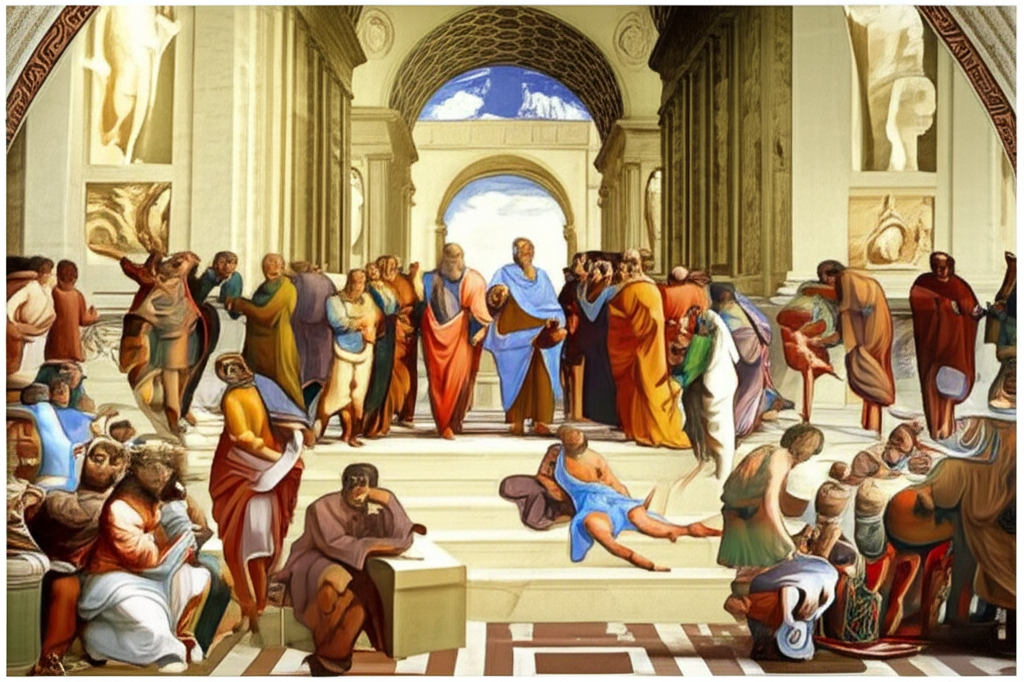
Aristotle's Polis: The State as Enabler of the Good Life
Aristotle, Plato's most famous student, offers a more empirically grounded yet equally profound vision of the State's virtue. In his Politics, Aristotle argues that the State (polis) exists for the sake of the good life. It is the natural culmination of human association, designed to enable citizens to achieve eudaimonia—human flourishing.
For Aristotle, the State is not merely an aggregation of individuals but a moral community whose primary function is to cultivate virtue in its citizens. The Law plays a crucial role here. Good Law is not just about maintaining order; it is a pedagogical tool, guiding citizens towards virtuous conduct.
Aristotle identifies different types of States based on their ruling principle:
| Form of Government | Virtuous (Rule for Common Good) | Vicious (Rule for Self-Interest) |
|---|---|---|
| Rule by One | Monarchy | Tyranny |
| Rule by Few | Aristocracy | Oligarchy |
| Rule by Many | Polity | Democracy (mob rule) |
Justice for Aristotle, particularly distributive justice, involves giving each person their due based on merit or contribution, ensuring fairness within the political community. A virtuous State is one where the Law is applied justly, distributing offices and honors equitably, and fostering the conditions for all citizens to live a life of virtue. Tyranny, oligarchy, and extreme democracy are vices because they prioritize the self-interest of the rulers over the common good, thereby undermining the State's fundamental purpose.
The Interplay of Virtue and Vice: When Justice Falters
When the State deviates from Justice, it inevitably succumbs to vice. Plato's Republic meticulously details the decline from the ideal aristocracy (rule by the best, i.e., philosopher-kings) through timocracy, oligarchy, democracy, and finally, tyranny. Each successive form represents a further corruption, a greater dominance of lower parts of the soul (spirit, appetite) over reason, leading to injustice and instability.
- Timocracy: Ruled by honor and ambition, valuing warriors over wisdom.
- Oligarchy: Ruled by wealth, valuing property above all else, leading to class division.
- Democracy: Ruled by unbridled freedom and desire, leading to chaos and a lack of moral authority.
- Tyranny: The ultimate vice, where one individual seizes absolute power, driven by insatiable personal desires, oppressing all others.
In each case, the failure of Justice manifests as a breakdown in the harmonious functioning of the State, a triumph of particular interests over the common good, and a perversion of the Law to serve the powerful rather than uphold virtue. The erosion of virtue in the leadership inevitably leads to a decline in the State's overall health and ethical standing.
The Enduring Relevance of Justice as State Virtue
The insights from the Great Books of the Western World are not mere historical curiosities; they offer timeless wisdom for understanding contemporary governance. The call for a State guided by Justice and Law, committed to the flourishing of its citizens, remains profoundly relevant. Whether we speak of the separation of powers, the rule of law, or social welfare policies, the underlying philosophical impulse often echoes these ancient concerns about the State's moral obligation to its people.
A truly virtuous State is one that:
- Upholds the Law impartially.
- Distributes resources and opportunities equitably.
- Protects the rights and fosters the virtues of its citizens.
- Resists the temptation to allow narrow self-interest (the vice of faction or individual tyranny) to undermine the common good.
Conclusion: A Timeless Pursuit
The concept of Justice as the Virtue of the State is a cornerstone of Western political thought, forged in the crucibles of ancient Greece. Through the profound works of Plato and Aristotle, we learn that the ideal State is not merely an administrative entity but a moral enterprise, a community striving for collective virtue. Its health and legitimacy are measured not just by its power or prosperity, but by its unwavering commitment to Justice, its fidelity to the spirit of the Law, and its capacity to uplift its citizens from vice to flourishing. This ancient wisdom continues to challenge us to imagine and strive for polities worthy of human dignity.
YouTube Video Suggestions:
📹 Related Video: PLATO ON: The Allegory of the Cave
Video by: The School of Life
💡 Want different videos? Search YouTube for: "Plato's Republic Justice State Philosophy"
📹 Related Video: ARISTOTLE ON: The Nicomachean Ethics
Video by: The School of Life
💡 Want different videos? Search YouTube for: "Aristotle Politics Virtue Ethics State"