

In the Lamian Wars
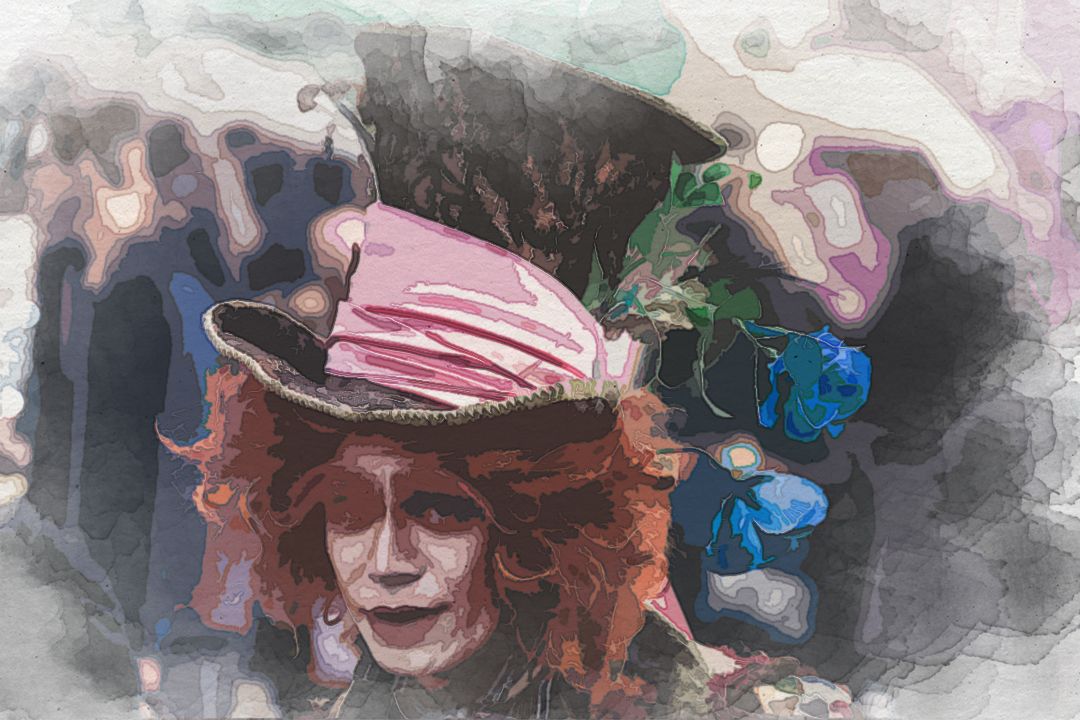
Don't Be Mad At Her
Sophia: Martin, you speak often of what could be—the potential, the sheer possibility of things—as something far richer than what we observe now, this fixed, actual world. Why is that? What makes that unfulfilled state so powerful?
Martin: (Leaning forward slightly, hands resting on a sheaf of old notes) Because the possible holds all the future shapes of Being. The actual is merely one choice, one settled form. But the possible… it is untainted by failure, unconfined by circumstance. It’s where freedom truly resides. To dwell in possibility is to strive, to climb toward a higher self that hasn't yet been pinned down by the mud of reality.
Sophia: And Samuel, you observe this striving, this climb, and you conclude that the climb itself might be... well, a bit unhinged. You suggest a kind of innate frenzy in all of us, a natural state of madness.
Samuel: (A dry, mirthless chuckle escapes him) Frenzy is too dramatic, Sophia. Let's call it a fundamental absurdity. We arrive demanding meaning where there is none, expecting order in the chaos. We invent these elaborate structures—like Martin's 'higher self'—to cover the stark nakedness of our existence. Most of us, thank the heavens, manage to put on the coat of convention; we find our comforting, actual routine. But the essential craziness is the engine—the raw, untamed possibility that drives us until we finally settle into the actual. And some, bless them, never quite button up the coat. They remain the purest expressions of that original, mad possibility.
The possible ranks higher than the actual.
— Martin Heidegger (1889-1976)
Sophia: So you see the pursuit of Martin's possible as a kind of noble, yet frantic, attempt to escape the confines of a mind that's already fundamentally... eccentric?
Samuel: Precisely. The moment we start reaching for that higher thing, we've already acknowledged that the actual thing—ourselves—is a bit of a mess.
Sophia: (She smiles, a knowing, gentle expression) Then perhaps we shouldn't be too harsh on that fundamental mess. Martin, if the possibility is so much higher, do we not condemn the actual—the world, the people—for failing to live up to it? And Samuel, if the world is rooted in this essential absurdity, do we not spend all our energy judging those who are simply acting out the script they were born with? We are so often angry at reality, furious at people's flaws, mad at the limits of the actual.
Martin: We must acknowledge the shortfall, the distance between what is and what could be. That tension is necessary for progress.
Samuel: And we must acknowledge that everyone's trying their best to look sane while wrestling a deeply insane existence.
We are all born mad. Some remain so.
— Samuel Beckett (1906-1989)
Sophia: Yes, but imagine the Possibility—that high, bright thing you cherish, Martin—as a woman. She exists only in potential. She is untouched, perfect. And then imagine Actuality—the world as it is—as another woman. She is messy, she has dust on her shoes, she makes mistakes, she is perhaps even a bit mad, as you say, Samuel. When we hold Actuality up to Possibility, and find Actuality wanting... it's as if we're perpetually saying, "You should be more like her."
(She leans back, looking from one man to the other)
Sophia: But she is here. She is the only one who can truly touch us, truly change. Possibility inspires, but Actuality exists. And if we let go of the rigid judgment, if we stop being mad at her for not being the ideal, we might finally see the strange, wild beauty she actually holds. The possible is the dream. The actual is the difficult, beautiful, and slightly mad person standing in front of you. And she deserves a little grace.
Do you think a person can truly appreciate the "actual" without first glimpsing the "possible"?

The planksip Writers' Cooperative is proud to sponsor an exciting article rewriting competition where you can win part of over $750,000 in available prize money.
Figures of Speech Collection Personified
Our editorial instructions for your contest submission are simple: incorporate the quotes and imagery from the above article into your submission.
What emerges is entirely up to you!
Winners receive $500 per winning entry multiplied by the article's featured quotes. Our largest prize is $8,000 for rewriting the following article;
 Heraclitus
At planksip, we believe in changing the way people engage—at least, that's the Idea (ἰδέα). By becoming a member of our thought-provoking community, you'll have the chance to win incredible prizes and access our extensive network of media outlets, which will amplify your voice as a thought leader. Your membership truly matters!