

How Induction Leads to Universal Knowledge
By Benjamin Richmond
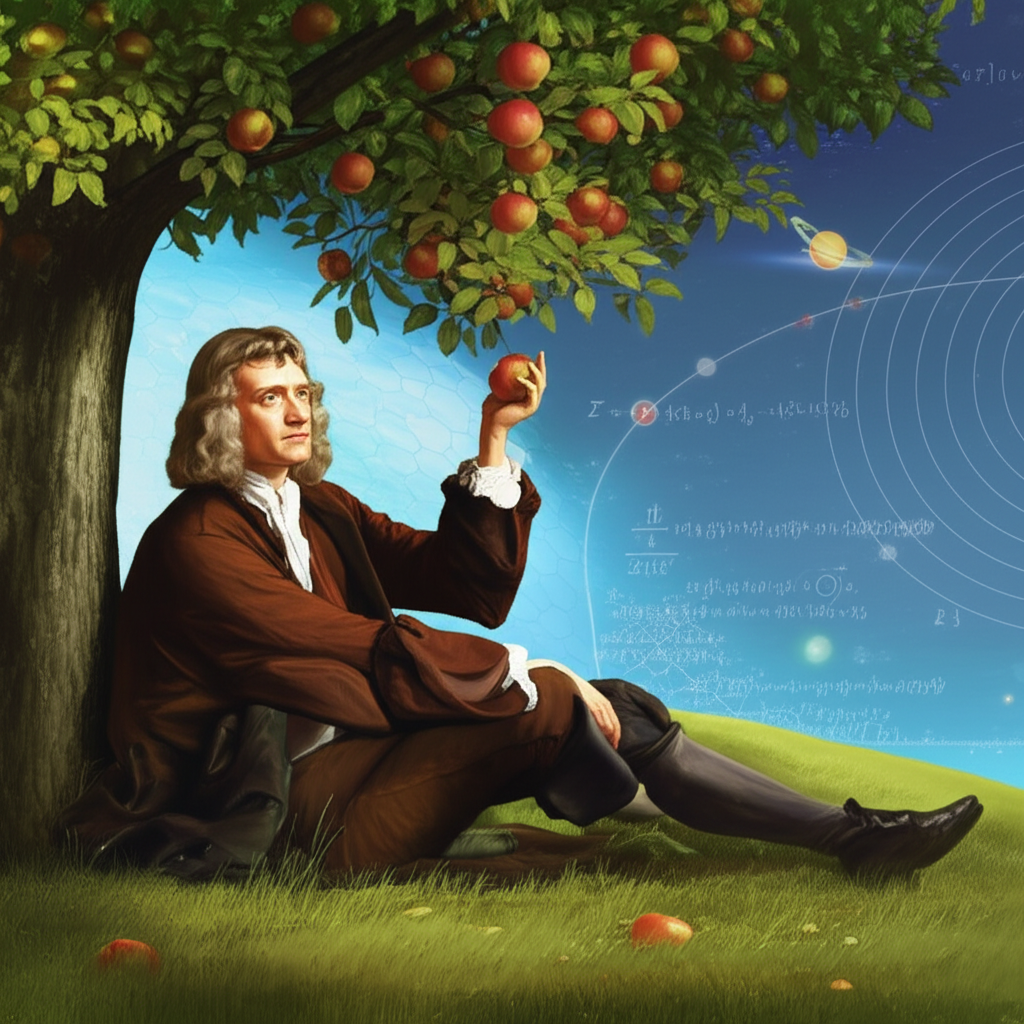
The quest for knowledge has, throughout history, been driven by a fundamental human desire to understand the world not just in its isolated instances, but in its grand, overarching principles. How do we move from observing a single apple falling to understanding the universal law of gravity? The answer lies in the powerful, albeit often debated, process of induction. This article explores how induction, by bridging the gap between the particular and the universal, serves as an indispensable tool for accumulating knowledge, especially within the rigorous framework of science.
The Bridge from the Particular to the Universal
At its core, induction is a form of reasoning that moves from specific observations or experiences to broader generalizations and theories. Unlike deduction, which starts with a general premise and predicts specific outcomes, induction builds general principles from a collection of individual facts. It is the process by which we observe that the sun has risen every morning of our lives and conclude that the sun will rise tomorrow morning. This seemingly simple leap is, in fact, the bedrock upon which much of our understanding of the world, from everyday common sense to the most complex scientific theories, is built. Without the capacity to infer universal truths from particular instances, our knowledge would remain fragmented, confined to individual events, and utterly incapable of prediction or explanation.
The Nature of Induction: From Observation to Generalization
Induction is not merely about making assumptions; it's a systematic approach to identifying patterns and formulating hypotheses.
What is Induction?
Induction involves:
- Observation of Particular Instances: Gathering data from individual events, experiments, or phenomena.
- Identification of Patterns: Recognizing recurring relationships or similarities among these instances.
- Formulation of a General Conclusion: Proposing a rule, law, or theory that applies beyond the observed cases.
For example, observing numerous instances of metals expanding when heated leads us to the general principle that "all metals expand when heated." This principle, though derived from a limited set of observations, aims to describe a universal property of metals.
Induction vs. Deduction: A Key Distinction
| Reasoning Type | Starting Point | Direction of Inference | Conclusion Certainty | Primary Use |
|---|---|---|---|---|
| Deduction | General Theory | General to Specific | Logically Certain | Proving, Testing |
| Induction | Specific Data | Specific to General | Probable, Not Certain | Discovering, Hypothesizing |
While deduction guarantees the truth of its conclusion if its premises are true, induction offers probability, making it a powerful tool for discovery but also a subject of philosophical scrutiny.
The Role of Induction in Science
The scientific method, the most robust system humanity has devised for acquiring reliable knowledge, is deeply reliant on induction. Science begins with observation, and observation provides the particular data points from which universal theories are constructed.
Building Scientific Knowledge
- Hypothesis Generation: Scientists observe phenomena (e.g., planets moving in elliptical orbits) and inductively formulate hypotheses (e.g., Newton's law of universal gravitation).
- Empirical Testing: These hypotheses are then tested through further observation and experimentation, gathering more particular data to support or refute the generalized claim.
- Theory Formation: Repeated successful inductions, corroborated by extensive evidence, lead to the development of robust scientific theories and laws that describe universal principles.
- Prediction: Once a universal law is established (e.g., the laws of electromagnetism), it can be deductively applied to predict specific outcomes in new situations.
The history of science is replete with examples where inductive reasoning has led to profound breakthroughs, from Galileo's experiments with falling bodies informing the laws of motion, to the countless biological observations that underpin evolutionary theory.
The Philosophical Challenge: The Problem of Induction
Despite its undeniable utility, induction presents a profound philosophical challenge, famously articulated by David Hume. Hume argued that there is no purely rational justification for induction. Our belief that the future will resemble the past, or that unobserved instances will conform to observed ones, is based not on logical necessity but on custom or habit.
The Leap of Faith?
The "problem of induction" highlights that no matter how many times we observe a particular phenomenon (e.g., swans being white), we can never logically guarantee that the next instance will conform (e.g., that we won't find a black swan). This means that inductive conclusions, while highly probable, are never logically certain in the way deductive conclusions can be. This uncertainty is a fundamental aspect of empirical knowledge.
From Particular Observations to Universal Laws
Acknowledging Hume's challenge does not negate the practical power of induction. Instead, it encourages us to refine our inductive methods and understand the probabilistic nature of scientific knowledge.
Refining Inductive Reasoning
Modern science addresses the problem of induction not by eliminating it, but by strengthening its application through:
- Rigorous Methodology: Controlled experiments, statistical analysis, and large sample sizes reduce the margin of error and increase the reliability of generalizations.
- Falsifiability: As Karl Popper suggested, good scientific theories are those that can, in principle, be proven false. This means scientists actively seek particular instances that would contradict their universal claims, thereby strengthening those claims that withstand scrutiny.
- Coherence and Explanatory Power: Universal theories derived inductively are valued not just for their predictive power, but also for their ability to coherently explain a wide range of phenomena and integrate with other established knowledge.
Through these rigorous processes, science endeavors to build universal knowledge that, while never absolutely certain, is remarkably reliable and effective in helping us understand and interact with the world. The constant interplay between collecting particular data and refining universal theories is the engine of scientific progress.
Conclusion: Induction as the Path to Understanding Our World
Induction stands as a testament to humanity's capacity to learn from experience and extrapolate meaning beyond the immediate. It is the essential intellectual tool that allows us to transcend the fleeting nature of particular observations and formulate enduring, universal principles. While philosophical debates about its ultimate justification persist, the practical success of science – from predicting eclipses to developing life-saving medicines – unequivocally demonstrates the profound utility of induction in building our collective knowledge. It is through this patient, iterative process of observing, generalizing, testing, and refining that we continue to illuminate the mysteries of the cosmos and our place within it, steadily advancing our understanding of the universal truths that govern existence.
📹 Related Video: SOCRATES ON: The Unexamined Life
Video by: The School of Life
💡 Want different videos? Search YouTube for: ""Problem of Induction Explained," "Scientific Method Induction Deduction," "Philosophy of Science Induction""