

How Induction Leads to Universal Knowledge
In the grand tapestry of human inquiry, one of the most profound challenges we face is bridging the gap between the specific observations of our experience and the sweeping generalizations that form the bedrock of our understanding. This article explores induction, the indispensable logical process that allows us to ascend from particular instances to universal knowledge, shaping not only our everyday reasoning but also the very foundations of science. While fraught with philosophical complexities, induction remains our primary tool for constructing a coherent, albeit provisional, picture of the world.
The Inductive Leap: From Observation to Generalization
At its heart, induction is a form of reasoning that derives general principles from specific observations. Unlike deduction, which moves from universal premises to particular conclusions with logical certainty, induction works in reverse: it takes a collection of individual facts or instances and infers a broader, more encompassing rule or theory.
Consider a simple example: every swan you have ever seen is white. Through inductive reasoning, you might conclude that all swans are white. This leap from "all observed swans are white" to "all swans are white" is the essence of induction. It's a powerful mechanism for expanding our knowledge beyond what we have directly experienced.
Francis Bacon, a towering figure in the Great Books of the Western World, eloquently advocated for this empirical approach. In his Novum Organum, he critiqued the purely deductive, syllogistic methods of his predecessors, urging a return to systematic observation and experimentation as the true path to understanding nature. For Bacon, true knowledge emerged not from abstract reasoning alone, but from carefully collected particulars leading to robust universals.
Understanding the Process:
- Observation: Gathering specific data points or instances.
- Pattern Recognition: Identifying recurring themes or relationships within the data.
- Generalization: Formulating a hypothesis or theory that explains these patterns and extends to unobserved instances.
- Prediction: Using the generalization to anticipate future observations.
The Quest for Universal and Particular Knowledge
The distinction between the universal and particular is fundamental to philosophy. Particulars are individual, concrete entities or events (e.g., "this specific apple," "yesterday's sunset"). Universals, on the other hand, are general concepts, properties, or relations that can apply to many particulars (e.g., "redness," "gravity," "justice"). The pursuit of universal knowledge is the quest to understand the underlying principles, laws, and structures that govern the world, transcending individual instances.
Induction serves as our primary bridge to this universal understanding. When a scientist observes countless instances of objects falling to the earth, they are gathering particulars. The inductive leap leads to the formulation of a universal law of gravity. This law doesn't just describe those specific falling objects; it purports to describe all falling objects, everywhere, under similar conditions.
However, this transition is not without its perils. As David Hume famously pointed out in his Enquiry Concerning Human Understanding, there is no purely logical justification for assuming that future instances will resemble past ones. The sun has risen every day, but this past regularity does not logically guarantee it will rise tomorrow. This "problem of induction" highlights that while induction is pragmatically indispensable, it doesn't offer the same absolute certainty as deduction.
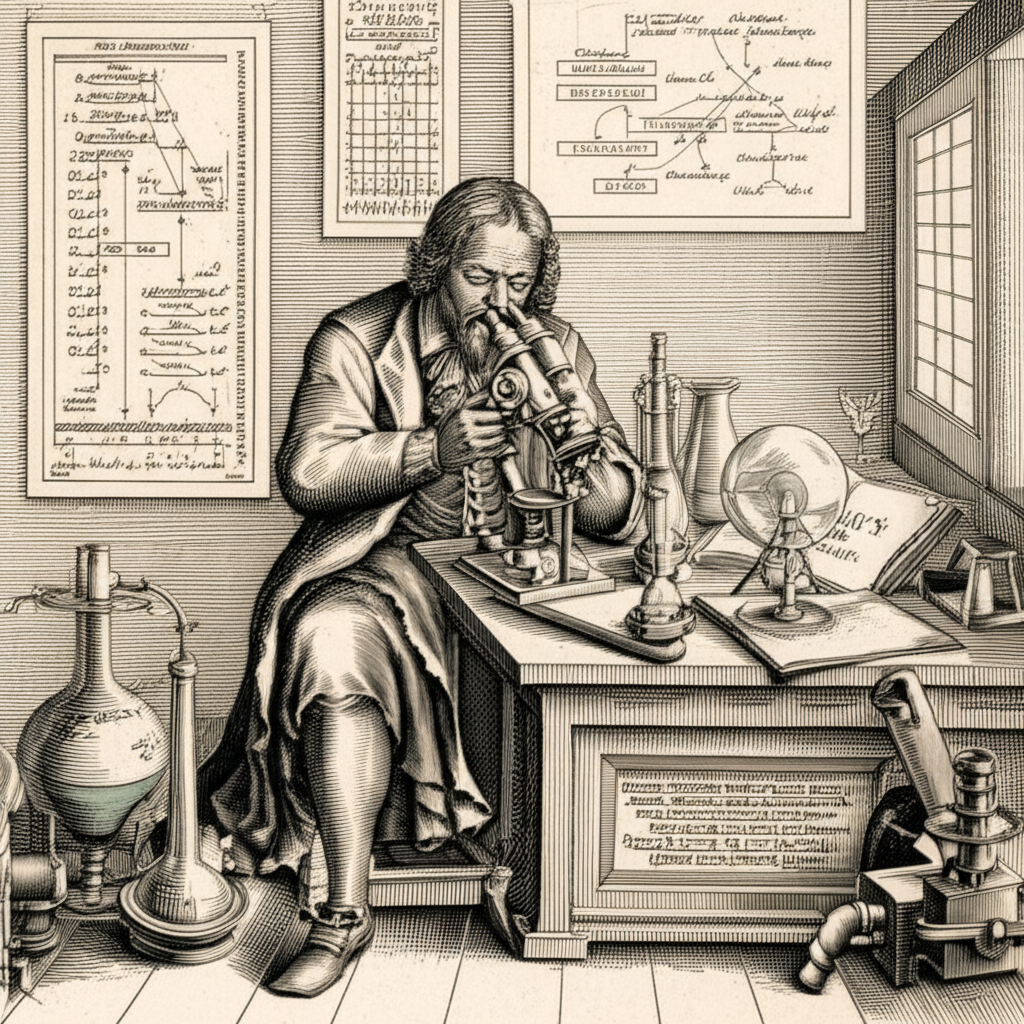
Induction in Science: Building Empirical Knowledge
Nowhere is the power and necessity of induction more evident than in science. The scientific method is inherently inductive, relying on empirical observation to build and refine theories.
Stages of Inductive Reasoning in Science:
| Stage | Description | Example (Physics) |
|---|---|---|
| Observation | Careful, systematic recording of phenomena. | Observing that unsupported objects consistently fall towards the Earth. |
| Hypothesis Formation | Proposing a general explanation for observed phenomena. | Hypothesizing that there is a force attracting objects to the Earth. |
| Experimentation | Testing the hypothesis through controlled observations. | Dropping objects of different masses and observing their acceleration. |
| Theory Development | Refining and expanding hypotheses into broader, more robust explanations. | Developing Newton's Universal Law of Gravitation from countless observations. |
| Prediction | Using the theory to forecast new, unobserved phenomena. | Predicting the trajectory of a projectile or the orbit of a new planet. |
Through this iterative process, science accumulates knowledge. Each successful prediction strengthens the inductive inference, making the universal theory more probable, even if never absolutely proven. Scientific laws, therefore, are not immutable truths but highly confirmed generalizations that hold until contradictory evidence emerges. This provisional nature is a strength, allowing science to adapt and evolve its understanding of the universal principles governing our cosmos.
The Philosophical Underpinnings and Limitations
Despite its undeniable utility, induction presents profound philosophical questions. How can we justify the inductive leap? Is our belief in the uniformity of nature merely a habit, as Hume suggested, or is there a deeper, perhaps transcendental, basis for it?
Philosophers like Immanuel Kant, also a central figure in the Great Books, sought to address Hume's skepticism by suggesting that certain universal principles, like causality, are not derived from experience but are necessary preconditions for our experience and understanding. These "synthetic a priori" judgments provide a framework within which inductive knowledge can operate.
Ultimately, while induction cannot offer absolute logical certainty, it provides the most effective pathway we have to navigate and understand the world. It is the engine of discovery, allowing us to move beyond isolated facts to grasp the underlying patterns that govern reality. Without it, our knowledge would be confined to mere description, unable to predict, explain, or build upon past experiences. It allows us to infer the existence of electrons from their effects, to predict the course of epidemics, and to craft technologies based on universal principles.
Induction, therefore, is not merely a logical trick; it is a fundamental mode of human engagement with reality, a necessary tool for transforming fragmented observations into a coherent and functional body of universal knowledge.
📹 Related Video: SOCRATES ON: The Unexamined Life
Video by: The School of Life
💡 Want different videos? Search YouTube for: ""Problem of induction explained philosophy" and "Scientific method induction deduction examples""