

The Inductive Ascent: Bridging Particular Observations to Universal Knowledge
In our relentless pursuit of understanding the world, humanity constantly grapples with a fundamental question: how do we move beyond the fleeting observations of individual instances to grasp truths that apply universally? The answer, a cornerstone of both philosophy and science, lies largely in the power of induction. This article will explore how induction serves as the vital bridge, allowing us to synthesize countless particular experiences into robust, often predictive, universal knowledge, thereby expanding the very frontiers of human comprehension.
The Lure of the Universal: From "What Is" to "What Always Is"
From the earliest philosophers gazing at the stars to modern scientists probing the subatomic realm, the human mind has yearned for more than just a collection of facts. We seek patterns, laws, and principles that transcend individual occurrences, striving for universal knowledge that can explain, predict, and ultimately, empower. How do we arrive at such grand pronouncements from the limited scope of our own experience? This is the profound challenge that induction addresses. It is the intellectual engine that drives us from observing this swan is white, and that swan is white, to the (perhaps provisional) conclusion that all swans are white – a leap from the particular to the universal.
Defining Induction: The Art of Generalization
At its heart, induction is a form of reasoning that derives general principles from specific observations. Unlike deduction, which moves from universal premises to particular conclusions with logical necessity, induction makes an inferential leap. It posits that what has been observed to be true in many instances will likely be true in similar, unobserved instances, or even universally.
Consider the following:
- Particular Observation 1: The sun rose in the east yesterday.
- Particular Observation 2: The sun rose in the east today.
- Particular Observation 3: The sun has risen in the east every day of recorded history.
Through induction, we arrive at the universal conclusion: The sun will always rise in the east. This conclusion is not logically guaranteed; there's no inherent contradiction in imagining the sun rising in the west tomorrow. Yet, based on overwhelming evidence, it is an extremely reliable piece of knowledge.
Bridging the Gap: How Particulars Inform Universals
The journey from particular observations to universal knowledge via induction is not a single, instantaneous leap, but often a methodical process of accumulating evidence and identifying recurring patterns.
The Inductive Journey: From Data to Doctrine
- Observation of Particular Instances: We begin by carefully noting specific events, phenomena, or data points. These are the raw materials of our understanding.
- Identification of Patterns and Similarities: As we accumulate observations, our minds naturally seek out recurring themes, common characteristics, or predictable sequences.
- Formulation of a General Hypothesis: Based on these patterns, we propose a preliminary general statement or rule that accounts for the observed particulars. This is our initial attempt at a universal truth.
- Testing and Refinement: The hypothesis is then subjected to further observation and experimentation. Does it hold true in new, similar instances? If not, it must be revised or rejected.
- Provisional Universal Knowledge: If the hypothesis consistently holds up under scrutiny, it gains strength and can be accepted as a piece of universal knowledge, albeit one that remains open to further challenge and refinement.
This iterative process allows us to build a robust framework of understanding, moving from isolated facts to coherent explanatory principles.
Induction as the Engine of Science
Perhaps nowhere is the power of induction more evident than in the realm of modern science. The scientific method itself is deeply rooted in inductive reasoning. Scientists observe phenomena, gather data (often numerous particular instances), and then formulate hypotheses and theories that generalize these observations into universal laws.
For instance, Isaac Newton observed countless particular instances of objects falling to the earth, planets orbiting the sun, and apples dropping from trees. Through induction, he synthesized these diverse observations into his universal law of gravity. This law didn't just describe what happened in those specific cases; it provided a predictive framework for what would always happen under similar conditions, thus expanding our knowledge of the cosmos.
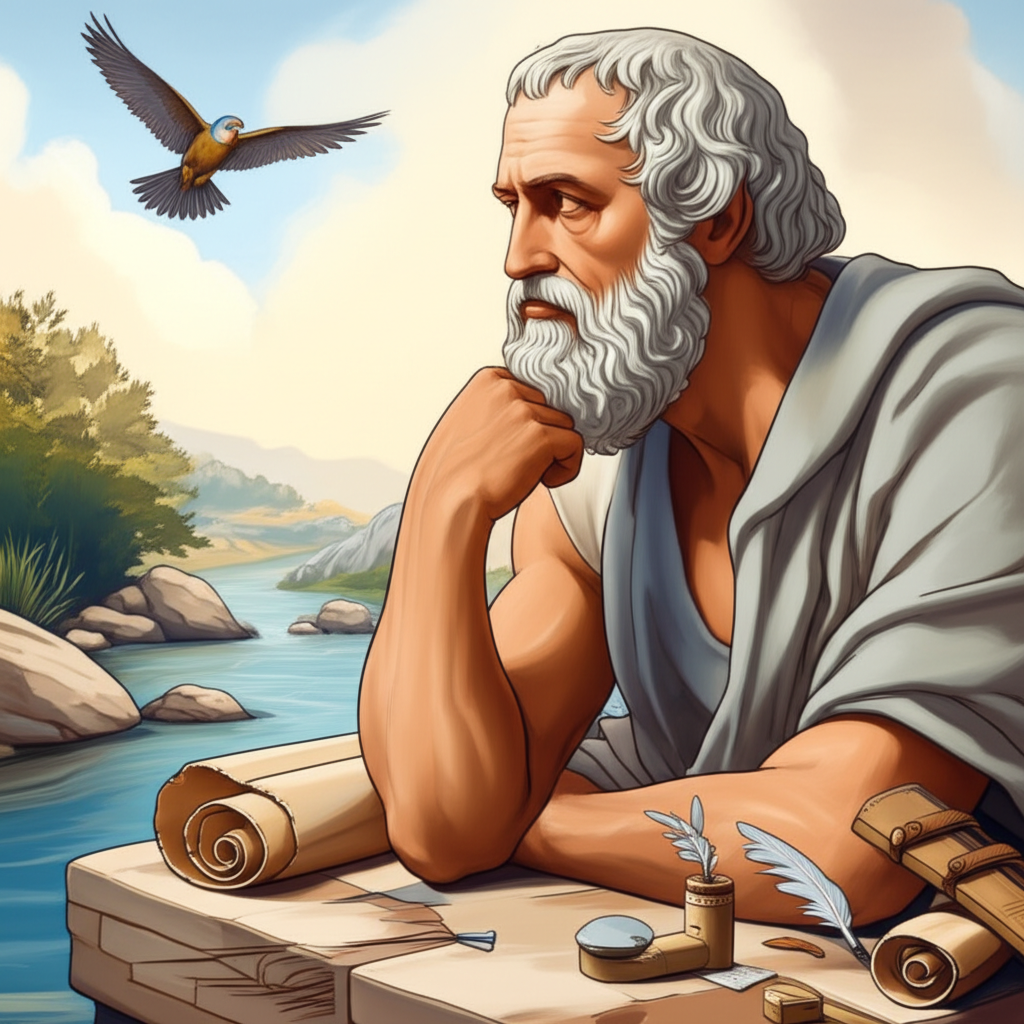
While scientific laws derived through induction are incredibly powerful, it's crucial to remember their provisional nature. A single counter-example, a black swan appearing after centuries of only seeing white ones, can challenge or even overturn a long-held universal truth. This openness to revision is a strength, not a weakness, of the inductive approach, ensuring that our knowledge remains dynamic and responsive to new evidence.
The Philosophical Challenge: The Problem of Induction
Despite its indispensable role, induction has faced significant philosophical scrutiny, most notably from David Hume. The "problem of induction" questions the logical justification for assuming that the future will resemble the past, or that unobserved instances will conform to observed ones. Why should we believe that the sun will rise in the east tomorrow simply because it always has? Our belief, Hume argued, is based on custom and habit, not on logical necessity.
This challenge highlights a critical distinction: induction provides probable conclusions, not logically certain ones. Yet, for all its philosophical hurdles, induction remains the primary method by which we expand our empirical knowledge of the world. Without it, science would be impossible, and our understanding would be confined to the immediate and the directly observed, never reaching for the universal.
The Pursuit of Universal Knowledge: An Ever-Expanding Horizon
The journey from particular observations to universal knowledge is the very essence of intellectual progress. Induction empowers us to move beyond mere description to profound explanation, to predict the future based on the past, and to build complex systems of knowledge that transform our world. While the philosophical nuances of its justification continue to be debated, its practical efficacy in science and everyday life is undeniable. It is the tool by which we constantly refine our understanding, turning scattered facts into coherent narratives, and pushing the boundaries of what we know to embrace the vastness of what is universally true.
YouTube Video Suggestions:
-
📹 Related Video: What is Philosophy?
Video by: The School of Life
💡 Want different videos? Search YouTube for: "The Problem of Induction Explained - Philosophy"
2. ## 📹 Related Video: What is Philosophy?
Video by: The School of Life
💡 Want different videos? Search YouTube for: "Inductive vs Deductive Reasoning - Crash Course Philosophy"