

The Inductive Leap: How Induction Leads to Universal Knowledge
In the grand tapestry of human inquiry, the quest for universal knowledge often begins with the humble observation of particulars. How do we bridge the vast chasm between singular experiences and sweeping truths that apply everywhere, always? The answer, as philosophers and science practitioners alike have long grappled with, lies largely in the power of induction. This article will explore how inductive reasoning, a cornerstone of empirical investigation, allows us to construct robust frameworks of understanding, transforming scattered data into coherent knowledge about the world.
From Specifics to Generality: Understanding Induction
At its core, induction is a form of logical reasoning that moves from specific observations to general conclusions. Unlike deduction, which starts with a general premise and infers specific consequences, induction works in the opposite direction. We observe a pattern in a finite number of instances and then infer that the pattern will hold true for all similar instances, or that a general rule governs these observations.
- Example 1: Every swan I have ever seen is white. Therefore, all swans are white.
- Example 2: The sun has risen every day of recorded history. Therefore, the sun will rise tomorrow.
While these examples highlight the intuitive nature of induction, they also subtly hint at its inherent challenges. Yet, without this fundamental cognitive process, our ability to learn, predict, and build knowledge would be severely limited.
The Role of Particulars and Universals
The distinction between the Universal and Particular is central to understanding induction's ambition.
- Particulars are individual instances, specific events, or unique objects (e.g., this swan, that observation of gravity).
- Universals are general concepts, laws, or principles that apply to an entire class of particulars (e.g., all swans, the law of gravity).
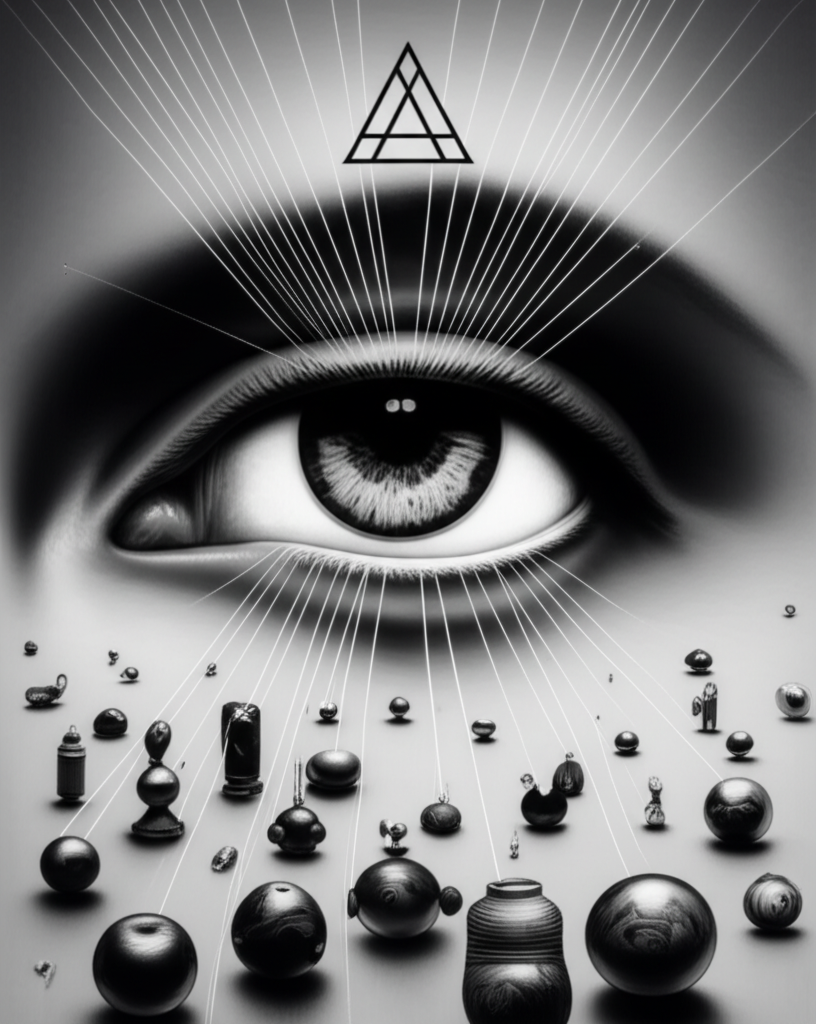
Induction is precisely the mental and methodological tool we use to ascend from the realm of countless particulars to the formulation of universals. We gather enough particular observations to discern a common thread, a recurring characteristic, or a causal relationship, and then project this pattern onto the larger, unobserved universe. This leap of faith, albeit a reasoned one, is what allows us to transcend mere description and engage in genuine explanation and prediction.
Science's Empirical Engine: Induction in Practice
The scientific method, the most powerful engine for generating reliable knowledge we possess, is deeply reliant on induction. From the formulation of hypotheses to the establishment of broad scientific theories, induction guides the empirical journey.
Consider the process:
- Observation: Scientists meticulously observe phenomena, gathering particular data points. (e.g., observing planets moving in specific paths).
- Pattern Recognition: They identify recurring patterns or correlations within these observations. (e.g., noticing that planets move in elliptical orbits).
- Hypothesis Formation: Based on these patterns, a general explanation or rule (a universal) is proposed. (e.g., Kepler's laws of planetary motion).
- Testing and Refinement: Further experiments and observations are conducted to test the hypothesis, either strengthening its inductive support or leading to its modification.
This iterative process, championed by figures like Francis Bacon in his Novum Organum (a foundational text in the Great Books of the Western World), transformed scientific inquiry. Bacon advocated for a systematic, empirical approach, moving away from purely deductive scholasticism towards a method that built knowledge from the ground up, through careful observation and inductive generalization.
The Philosophical Quandary: Hume's Challenge and the Nature of Universal Knowledge
While indispensable, the inductive leap is not without its philosophical complexities. David Hume, in his A Treatise of Human Nature and An Enquiry Concerning Human Understanding (also part of the Great Books canon), famously articulated the "problem of induction." Hume argued that there is no rational, deductive justification for assuming that past patterns will continue into the future. Our belief in the uniformity of nature, he contended, is based on custom or habit, not on logical necessity.
This challenge highlights a crucial aspect of knowledge derived through induction: it is inherently probabilistic, not absolutely certain.
- We can say it is highly probable that the sun will rise tomorrow, given its consistent behavior.
- We cannot deductively prove it will rise, as there is no logical contradiction in imagining a scenario where it does not.
Despite Hume's profound critique, induction remains the bedrock of empirical science and everyday reasoning. Philosophers like John Stuart Mill, in his A System of Logic, attempted to formalize inductive methods, providing rules for inferring causal relationships from observed correlations. While not solving Hume's fundamental problem, such efforts underscore the human need to organize and generalize from experience to build functional and predictive knowledge.
Lessons from the Great Books: A Historical Perspective on Induction
The discussion of induction, particulars, and universals has deep roots in philosophical thought, frequently revisited by the authors compiled in the Great Books of the Western World.
- Aristotle: Though often associated with deduction (syllogisms), Aristotle's scientific works demonstrate an empirical spirit, moving from observations of specific biological specimens to general classifications and principles. He recognized the process of abstracting universals from particulars.
- Francis Bacon: As mentioned, Bacon's Novum Organum was a revolutionary call for a new inductive methodology to advance science, emphasizing systematic observation and experimentation over received wisdom.
- John Locke: In An Essay Concerning Human Understanding, Locke's empiricism posits that all knowledge originates from sensory experience (particulars). Our minds then form general ideas (universals) by abstracting common qualities from these experiences.
- David Hume: His skeptical challenge to induction forced philosophers to confront the limits of human reason and the probabilistic nature of empirical knowledge.
- John Stuart Mill: Mill's A System of Logic provided a comprehensive framework for inductive reasoning, outlining various methods (e.g., Method of Agreement, Method of Difference) for establishing causal links, thereby strengthening the scientific application of induction.
These intellectual giants, each from their unique vantage point, contributed to our understanding of how we move from the fragmented data of experience to the grand theories that shape our perception of reality. The journey from particulars to universals through induction is not a smooth, unproblematic ascent to absolute knowledge, but rather a continuous, critical, and immensely productive process that underpins all empirical understanding and scientific progress.
YouTube Video Suggestions:
-
📹 Related Video: PLATO ON: The Allegory of the Cave
Video by: The School of Life
💡 Want different videos? Search YouTube for: "The Problem of Induction Explained"
2. ## 📹 Related Video: PLATO ON: The Allegory of the Cave
Video by: The School of Life
💡 Want different videos? Search YouTube for: "Francis Bacon Novum Organum Summary"