

How Induction Leads to Scientific Law
The bedrock of our understanding of the natural world, from the orbits of planets to the behavior of subatomic particles, is built upon a profound and often understated philosophical tool: induction. It is through this vital form of reasoning that science painstakingly constructs its grand edifice of knowledge, culminating in the formulation of robust scientific laws. This article explores the journey from particular observations to universal scientific principles, demonstrating induction's indispensable role in shaping our comprehension of reality.
The Inductive Leap: From Specifics to Universals
At its core, induction is a method of reasoning that moves from specific observations to broader generalizations. Unlike deductive reasoning, which guarantees its conclusions if the premises are true, inductive reasoning offers conclusions that are probable, not certain. Yet, it is precisely this probabilistic nature that allows us to venture beyond what we have directly observed and posit general rules about how the world operates.
Consider the simple act of observing that every swan you have ever seen is white. An inductive leap would be to conclude that "all swans are white." While this conclusion might later be proven false (as it was with the discovery of black swans in Australia), the process itself is fundamental to how we learn and predict.
- Specific Observations: Swan A is white, Swan B is white, Swan C is white.
- Inductive Generalization: Therefore, all swans are white.
This seemingly straightforward process is the engine behind scientific discovery.
Building Blocks of Scientific Understanding
The journey from raw observation to a scientific law is a systematic and iterative process, heavily reliant on inductive steps.
Observing and Pattern Recognition
Science begins with observation. Whether it's Galileo noting the swinging pendulum or Darwin documenting finch beaks, meticulous observation is the initial data collection phase. When these observations are repeated and consistent, patterns begin to emerge.
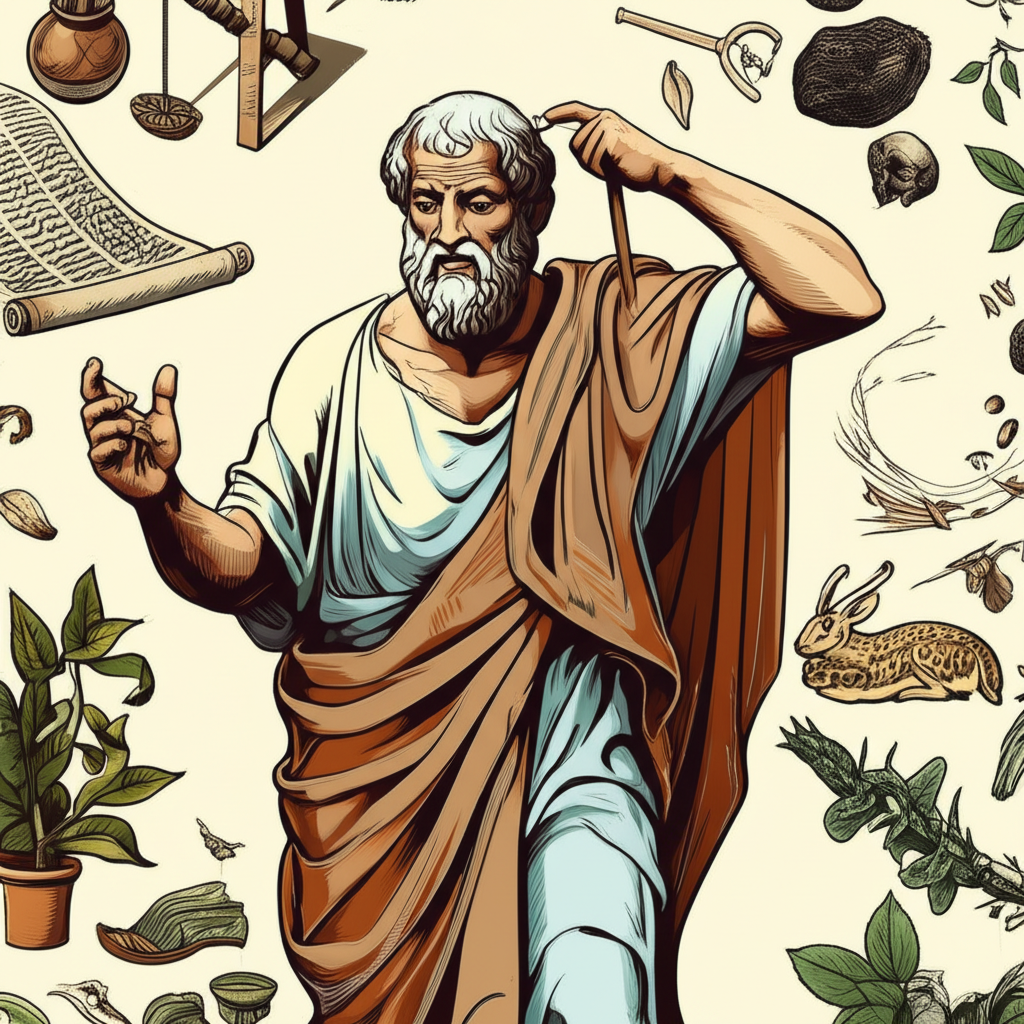
Forming Hypotheses
Once patterns are identified, scientists formulate hypotheses – testable, tentative explanations for these patterns. A hypothesis is an inductive generalization, suggesting that what has been observed repeatedly in specific instances holds true more generally. For example, after observing many objects falling towards the Earth, one might hypothesize: "All objects with mass are attracted to each other."
Testing and Corroboration
The critical next step involves rigorous testing. Scientists design experiments to see if the hypothesis holds true under various conditions. Each successful experiment, each new observation that aligns with the hypothesis, strengthens its inductive support. It doesn't prove the hypothesis with absolute certainty, but it increases its probability and reliability.
The Ascent to Scientific Law
The progression from a well-supported hypothesis to a scientific theory, and eventually to a scientific law, is a testament to the power of sustained inductive reasoning and empirical validation.
- Hypothesis: A testable statement derived from limited observations. (e.g., "The force between two objects depends on their masses and the distance between them.")
- Theory: A well-substantiated explanation of some aspect of the natural world, based on a body of facts that have been repeatedly confirmed through observation and experiment. Theories often encompass and explain multiple related hypotheses. (e.g., Newton's Theory of Universal Gravitation, which explains why objects attract each other.)
- Law: A description of an observed phenomenon in the natural world that holds true consistently under specific conditions. Scientific laws are typically concise mathematical relationships or statements that predict what will happen, but do not necessarily explain why. (e.g., Newton's Law of Universal Gravitation, F = Gm1m2/r², which precisely quantifies the attraction.)
Scientific laws represent the pinnacle of inductive generalization. They are statements of fundamental principles that have been confirmed through vast amounts of empirical evidence, making them exceptionally reliable predictors of natural phenomena. They describe how nature behaves under certain circumstances, derived from countless specific instances where that behavior was observed.
The Philosophical Challenge and Enduring Necessity
While induction is undeniably effective, philosophers from David Hume to Karl Popper have highlighted its inherent philosophical challenges. Hume famously pointed out the "problem of induction": there is no logical guarantee that the future will resemble the past. Just because the sun has risen every day does not deductively prove it will rise tomorrow.
Despite this philosophical conundrum, induction remains the indispensable engine of science. Without it, we would be unable to move beyond individual observations to form any generalized knowledge, predict future events, or formulate the universal laws that allow us to understand and manipulate our world. The "Great Books of the Western World" attest to this enduring quest for understanding, from Aristotle's empirical classifications to Francis Bacon's advocacy for systematic observation and experimentation as the path to scientific knowledge.
Science addresses the problem of induction not by solving it philosophically, but by establishing rigorous methodologies:
- Replicability: Experiments and observations must be repeatable by others.
- Falsifiability: Hypotheses and theories must be capable of being proven false.
- Parsimony (Ockham's Razor): The simplest explanation that fits the evidence is usually preferred.
These practices strengthen the inductive arguments and ensure that scientific laws are built upon the most robust and widely tested evidence possible.
Conclusion: The Inductive Path to Understanding
Induction is not merely a philosophical curiosity; it is the beating heart of scientific progress. It is the courageous leap of reasoning that transforms scattered observations into coherent patterns, tentative hypotheses into encompassing theories, and ultimately, into the enduring scientific laws that map the universe. While its probabilistic nature demands constant vigilance and critical scrutiny, induction remains the most powerful tool humanity possesses for making sense of the cosmos and building a reliable body of knowledge.
YouTube: The Problem of Induction Explained
YouTube: Scientific Law vs. Scientific Theory
📹 Related Video: What is Philosophy?
Video by: The School of Life
💡 Want different videos? Search YouTube for: "How Induction Leads to Scientific Law philosophy"