

How Induction Forges the Path to Scientific Law
Summary: Induction is the fundamental process of scientific reasoning that allows us to move from specific observations to general principles and, ultimately, to universal scientific laws. It is the engine driving our understanding of the natural world, transforming countless individual experiences into coherent, predictive frameworks, even while acknowledging its inherent philosophical challenges.
The Inductive Engine of Science
At the heart of scientific discovery lies a powerful, yet often scrutinized, form of reasoning: induction. Unlike deduction, which moves from general premises to specific conclusions, induction embarks on the opposite journey. It starts with a collection of particular observations, instances, or experimental results and seeks to identify patterns, regularities, and underlying principles that can be generalized to explain a broader class of phenomena. This remarkable intellectual leap is precisely how Science progresses from mere description to the formulation of predictive and explanatory laws.
From Observation to Generalization: The Inductive Leap
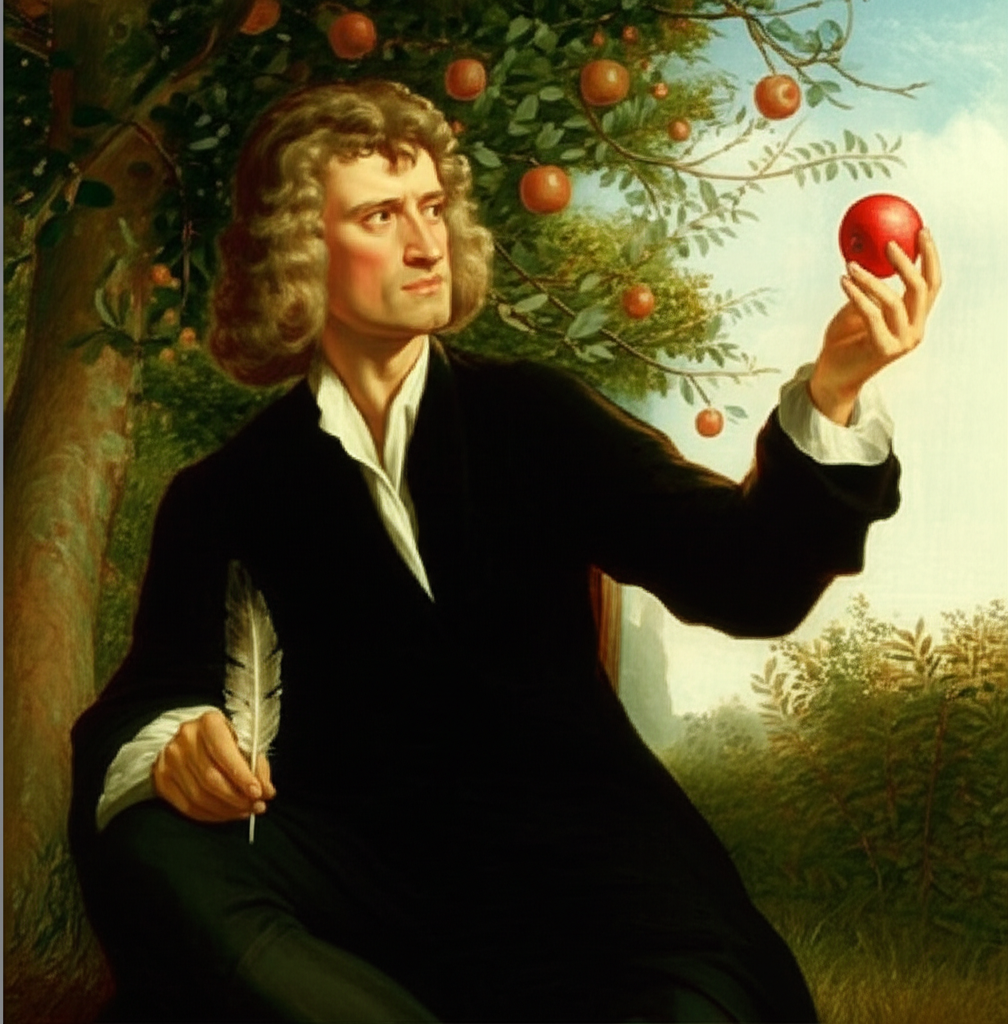
Imagine observing an apple falling from a tree, then a stone, then a raindrop. Each is a specific event. Inductive reasoning prompts us to ask: Is there a common force at play here? When countless such observations, across various objects and locations, consistently point to a downward pull, we begin to generalize. This isn't a logical necessity, but a probabilistic inference – a leap of faith that the future will resemble the past, and that unobserved instances will behave like observed ones.
This empirical foundation was famously championed by figures like Francis Bacon, whose work, often referenced within the Great Books of the Western World, emphasized systematic observation and experimentation as the bedrock of true scientific knowledge. Bacon argued that only by meticulously gathering data and gradually building generalizations could we avoid the errors of preconceived notions and arrive at genuine insights into nature's workings.
The Pillars of Scientific Law: Pattern Recognition and Hypothesis Formation
The inductive process isn't a single jump but a series of iterative steps:
- Observation: Meticulous gathering of data on specific phenomena.
- Pattern Recognition: Identifying recurring relationships or trends within the observations.
- Hypothesis Formation: Proposing a general explanation or rule that accounts for the observed patterns. This is the first tentative law in the making.
- Testing and Verification: Designing experiments to see if the hypothesis holds true under different conditions. This involves both confirming existing predictions and exploring new ones.
- Refinement and Generalization: Modifying the hypothesis as new data emerges, broadening its scope, or specifying its conditions.
Through this rigorous process, a well-supported hypothesis can eventually gain the status of a scientific law. A law in Science is not merely an educated guess; it's a statement about an observed regularity in nature that has been repeatedly confirmed and is widely accepted. It describes what happens under certain conditions, even if it doesn't always explain why.
The Path to Universal Law: Verification and Falsification
The journey from a specific observation to a universal scientific law is paved with rigorous testing. Consider the following stages:
| Stage of Inductive Reasoning | Description | Example |
|---|---|---|
| Particular Observations | Gathering specific data points or instances. | Noticing that all observed objects near Earth fall downwards. |
| Pattern Identification | Recognizing consistent relationships or behaviors across observations. | Realizing that the rate of fall is consistent, regardless of an object's mass (ignoring air resistance). |
| Tentative Generalization | Forming a preliminary hypothesis based on identified patterns. | Proposing that all objects are attracted towards the Earth's center. |
| Hypothesis Testing | Designing experiments to confirm or refute the hypothesis. | Dropping various objects in a vacuum chamber; observing planetary orbits. |
| Formulation of Law | When a hypothesis is repeatedly confirmed and broadly applicable. | Newton's Law of Universal Gravitation, describing the attractive force between any two masses. |
The Philosophical Conundrum: The Problem of Induction
Despite its indispensable role, induction is not without its philosophical challenges. The Scottish philosopher David Hume famously highlighted the "problem of induction," arguing that there is no purely logical justification for assuming that the future will resemble the past. Our belief in inductive inferences, Hume suggested, rests on custom and habit, not on demonstrable reasoning. We trust that the sun will rise tomorrow because it always has, but this is an assumption, not a logical certainty.
This profound insight reminds us that scientific laws, while incredibly robust and reliable, are always open to revision based on new evidence. They represent our best current understanding, built upon a mountain of inductive reasoning, but never absolute, immutable truths.
Induction in Action: Shaping Our Understanding
From the earliest human attempts to predict seasons for agriculture to the most complex theories of quantum mechanics, induction has been the bedrock. It allowed early astronomers to predict planetary movements, chemists to formulate the periodic law of elements, and biologists to develop the germ theory of disease. Each of these monumental advancements in Science began with careful observation and the inductive leap from specific instances to general laws.
The Indispensable Tool of Discovery
In conclusion, induction is more than just a method; it is the very essence of how Science constructs knowledge. It empowers us to discern order from chaos, to extrapolate from the known to the unknown, and to translate the particularities of experience into the grand, unifying principles of scientific law. While the philosophical underpinnings of this reasoning process may provoke endless debate, its practical efficacy in unraveling the mysteries of the universe remains undeniable, making it an indispensable tool in humanity's quest for understanding.
YouTube Video Suggestions:
-
📹 Related Video: PLATO ON: The Allegory of the Cave
Video by: The School of Life
💡 Want different videos? Search YouTube for: ""David Hume Problem of Induction Explained""
2. ## 📹 Related Video: KANT ON: What is Enlightenment?
Video by: The School of Life
💡 Want different videos? Search YouTube for: ""Inductive vs Deductive Reasoning in Science""