

The Unseen Hand: How Desire Forges Human Action
From the simplest urge to the most complex aspiration, desire stands as a fundamental, often overlooked, architect of human experience. It is not merely a fleeting emotion but the very engine that propels Man through life, shaping his choices, driving his pursuits, and ultimately defining his destiny. Understanding how desire interacts with the Mind and the Will is crucial to comprehending the intricate tapestry of human motivation, a topic philosophers have grappled with for millennia within the hallowed pages of the Great Books of the Western World.
The Primal Urge: Defining Desire
At its core, desire is a sensation of longing or craving, an impulse towards an object, state, or experience perceived as good or necessary for one's well-being or fulfillment. It can manifest as a lack, a yearning for something absent, or an attraction, a pull towards something present or attainable. Philosophers from Plato to Spinoza have recognized this intrinsic force, seeing it as the initial spark that sets the human journey in motion. Without desire, there would be no impetus to move, to learn, to create, or even to survive. It is the persistent whisper in the background, urging us forward.
Man's Intricate Web: Desire and Human Nature
Man, in his essence, is a creature of desire. Our lives are a continuous interplay of seeking satisfaction for these desires, whether they are physiological (hunger, thirst, comfort) or psychological (love, recognition, knowledge, power). This fundamental truth has been explored repeatedly, from Aristotle’s understanding of human action as striving towards a perceived good, to Hobbes’s view of human life as a perpetual and restless desire for power after power that ceases only in death. The complexity arises when these desires conflict, or when they are mediated by reason and moral considerations. It is in these moments that the true nature of human agency comes into focus.
The Mind's Labyrinth: Reason, Emotion, and Desire
The Mind plays a pivotal, albeit often contentious, role in the landscape of desire. Is the mind the master, guiding and disciplining desires, or merely a servant, rationalizing the heart's impulses?
Plato, in his allegory of the charioteer, depicted reason (the charioteer) as needing to control the two horses of spirit and appetite (representing different forms of desire). Similarly, later thinkers like Kant emphasized the Mind's capacity for rational autonomy, suggesting that true moral action stems not from inclination (desire) but from duty, dictated by reason.
However, it's also true that the mind can generate desires. The pursuit of knowledge, the yearning for truth, or the ambition to achieve a complex goal are all desires born and nurtured within the intellectual sphere. The mind processes information, evaluates potential outcomes, and thereby shapes what we desire and how intensely we pursue it.
The Will's Command: Translating Desire into Action
If desire is the impulse and the mind the navigator, then the Will is the faculty of execution. It is the power that translates intention into action. Without the will, desire remains a mere wish, an unfulfilled longing. The relationship between desire and will is profound and often debated:
- Is the Will free to choose against desire? Augustine wrestled with this, exploring how an enslaved will might still choose sin, even when the mind knows better.
- Does the Will always follow the strongest desire? Some philosophers argue that our will is ultimately determined by the most compelling desire, while others contend that we retain a capacity for genuine freedom, even in the face of strong inclinations.
Regardless of the nuanced philosophical stance, it is clear that the will is the bridge between our inner urges and our outer reality. It is the Will that marshals our resources, overcomes obstacles, and directs our efforts towards the satisfaction of our desires.
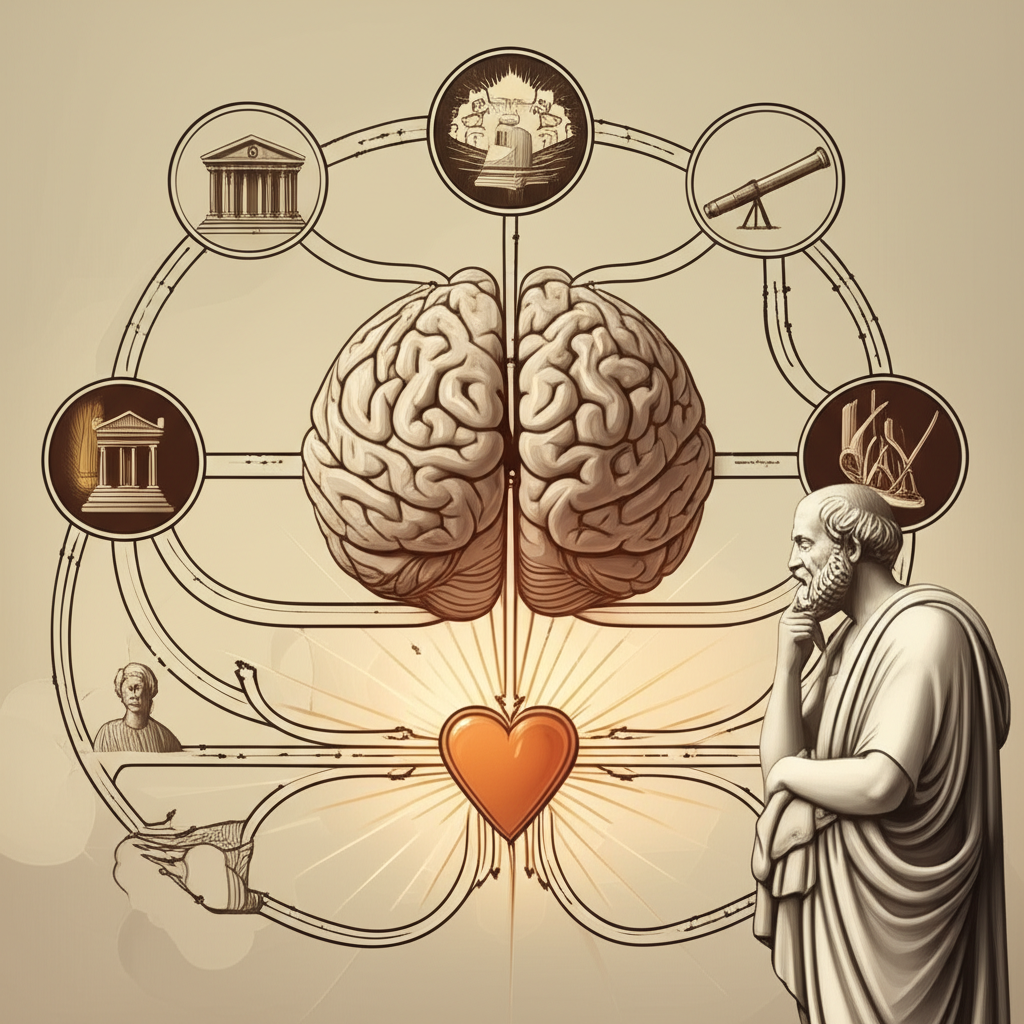
The Spectrum of Motivation: How Desires Drive Us
The motivations stemming from desire are vast and varied. They can be broadly categorized, demonstrating the pervasive influence of this fundamental force:
- Survival Desires: The most basic impulses for food, water, shelter, and safety directly lead to actions geared towards self-preservation.
- Social Desires: The longing for connection, love, belonging, and recognition motivates us to form relationships, build communities, and engage in altruistic acts.
- Intellectual Desires: The innate curiosity and hunger for knowledge drive scientific inquiry, philosophical exploration, and artistic creation.
- Aspirational Desires: The yearning for achievement, power, status, or self-actualization propels individuals to set ambitious goals and strive for excellence.
- Ethical Desires: The desire for justice, fairness, and moral righteousness can motivate actions aimed at societal improvement and adherence to principles.
Each of these desires, filtered through the Mind and actualized by the Will, contributes to the rich tapestry of human endeavor. From crafting a masterpiece to fighting for freedom, desire is the initial spark that ignites the flame of action.
Conclusion: The Enduring Power of Desire
In sum, desire is not merely a fleeting emotion but a profound, enduring force that fundamentally motivates Man. It acts as the initial impulse, which the Mind then processes, evaluates, and often refines, before the Will translates it into tangible action. This intricate interplay, explored by countless thinkers throughout the history of philosophy, reveals desire as the unseen hand guiding human progress, conflict, and creativity. To understand human action is, at its heart, to understand the intricate workings of desire within us all.
**## 📹 Related Video: PLATO ON: The Allegory of the Cave
Video by: The School of Life
💡 Want different videos? Search YouTube for: ""Plato's Chariot Allegory Explained""**
**## 📹 Related Video: What is Philosophy?
Video by: The School of Life
💡 Want different videos? Search YouTube for: ""Philosophy of Will and Motivation""**