

The Irresistible Impulse: How Desire Ignites Human Action
Summary: Desire, far from being a mere whim, stands as a fundamental force propelling human action. Rooted deeply in the very essence of Man, it engages the Mind in a complex interplay with the Will, shaping our choices, our aspirations, and ultimately, the course of our lives. From ancient philosophical inquiries to modern psychological insights, the intrinsic link between what we yearn for and what we do remains an enduring subject of profound contemplation.
The Primal Spark: Unpacking the Nature of Desire
At the heart of human experience lies desire – an inherent longing, an insatiable urge that predates conscious thought and rational deliberation. It is the initial stir within us, the impulse that sets us on a path, whether towards sustenance, knowledge, love, or transcendence. The great thinkers of the Western tradition have long grappled with this powerful motivator, recognizing its dual capacity for both creation and destruction.
Plato, in his Republic, famously dissected the soul into three parts: the appetitive, the spirited, and the rational. The appetitive soul, driven by basic bodily desires for food, drink, and sex, represents the most fundamental layer of our motivational architecture. While often seen as base, these desires are essential for survival. Aristotle, too, understood desire (orexis) as a fundamental aspect of living beings, a striving towards some perceived good or end (telos). For Man, this striving is often directed towards eudaimonia, or flourishing, which incorporates both rational and non-rational desires.
The Mind's Crucible and the Will's Command
While desire provides the initial spark, it is within the intricate chambers of the Mind that this raw impulse is processed, evaluated, and given direction. The mind acts as a crucible, weighing the objects of desire, considering their implications, and often, shaping them into more refined aspirations. This cognitive engagement transforms a simple craving into a goal, a fleeting wish into a sustained ambition.
However, the journey from desire to action is not solely a mental one; it crucially involves the Will. The will is the executive faculty, the power that translates the mind's deliberations and the heart's yearnings into concrete steps. As Thomas Aquinas, drawing heavily from Aristotle, explained in his Summa Theologica, the intellect apprehends a good, and the will then moves towards it. The will is not merely passive; it can assent to a desire, resist it, or choose between competing desires. The strength of our Will often determines whether a powerful desire remains a mere fantasy or manifests as tangible action.
- The Interplay of Faculties:
- Desire: The initial impulse or longing.
- Mind: Evaluates, reasons, and conceptualizes the object of desire.
- Will: Directs the body and mind to act upon or resist the desire.
René Descartes, in his Passions of the Soul, explored how bodily movements give rise to sensations and passions, which then influence the Mind. While he sought to establish the mind's control over the passions through reason, he acknowledged their profound influence. Baruch Spinoza, in his Ethics, went further, positing that desire (cupiditas) is the very essence of Man, the striving (conatus) by which everything endeavors to persevere in its own being. For Spinoza, our actions are ultimately determined by our desires, even if we believe we are acting freely.
Man's Journey: Navigating a Labyrinth of Longings
Man is, in essence, a desiring being. From the moment of birth to the final breath, our lives are a continuous narrative of seeking, wanting, and striving. This constant pull of desire shapes our individual identities and the collective trajectory of humanity. It motivates us to build civilizations, create art, pursue scientific discovery, and forge profound relationships.
Yet, the labyrinth of human longings is fraught with complexities. David Hume famously argued in A Treatise of Human Nature that "Reason is, and ought only to be the slave of the passions, and can never pretend to any other office than to serve and obey them." For Hume, reason merely helps us find the means to satisfy our desires; it does not originate them. This perspective challenges the classical view that reason can, and should, govern our desires.
Immanuel Kant offered a powerful counter-argument in his ethical philosophy. For Kant, truly moral action stems not from inclination or desire, but from Will acting out of duty, guided by universal moral laws. While our desires might prompt us to act in certain ways, only actions performed from a pure sense of duty hold moral worth. This highlights a crucial tension in understanding human motivation: are we primarily driven by our desires, or can our rational Mind and autonomous Will transcend them?
Key Philosophical Perspectives on Desire and Action
| Philosopher | Core Concept of Desire | Role in Human Action |
|---|---|---|
| Plato | Appetitive soul, striving for the Good | Drives basic needs; higher desires for knowledge/virtue. |
| Aristotle | Orexis (striving), desire for Eudaimonia (flourishing) | Motivates all action towards a perceived good or end. |
| Augustine | Restless heart, desire for God | Ultimate motivation for spiritual fulfillment. |
| Descartes | Passions as bodily motions influencing the mind | Can be controlled by reason, but strongly influence will. |
| Spinoza | Conatus, essence of being, striving to persevere | All actions are expressions of desire for self-preservation. |
| Hume | Passions as primary motivators | Reason serves passions, finds means to their ends. |
| Kant | Inclination vs. Duty | Moral action stems from Will acting from duty, not desire. |
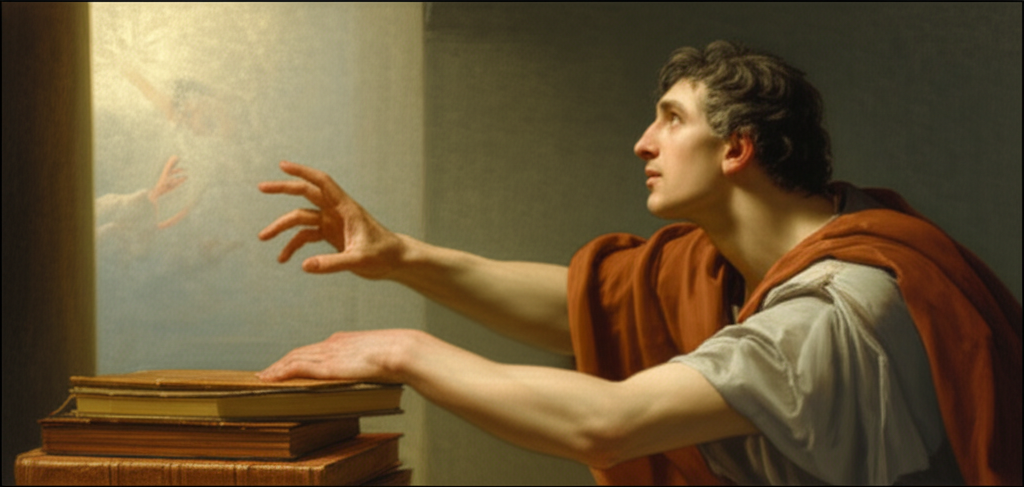
The Enduring Philosophical Inquiry
The pervasive influence of desire on Man's actions, mediated by the Mind and enacted by the Will, remains one of philosophy's most fertile grounds for inquiry. Whether viewed as an inherent drive, a passion to be controlled, or the very essence of our being, desire is undeniably the engine of human endeavor. Understanding its complexities helps us to better comprehend ourselves, our choices, and the intricate moral landscape we navigate.
YouTube: "Plato's Tripartite Soul Explained"
YouTube: "Kant's Ethics: Duty vs. Inclination"
📹 Related Video: What is Philosophy?
Video by: The School of Life
💡 Want different videos? Search YouTube for: "How Desire Motivates Human Action philosophy"