

Hemlock and the Passive Oppressor
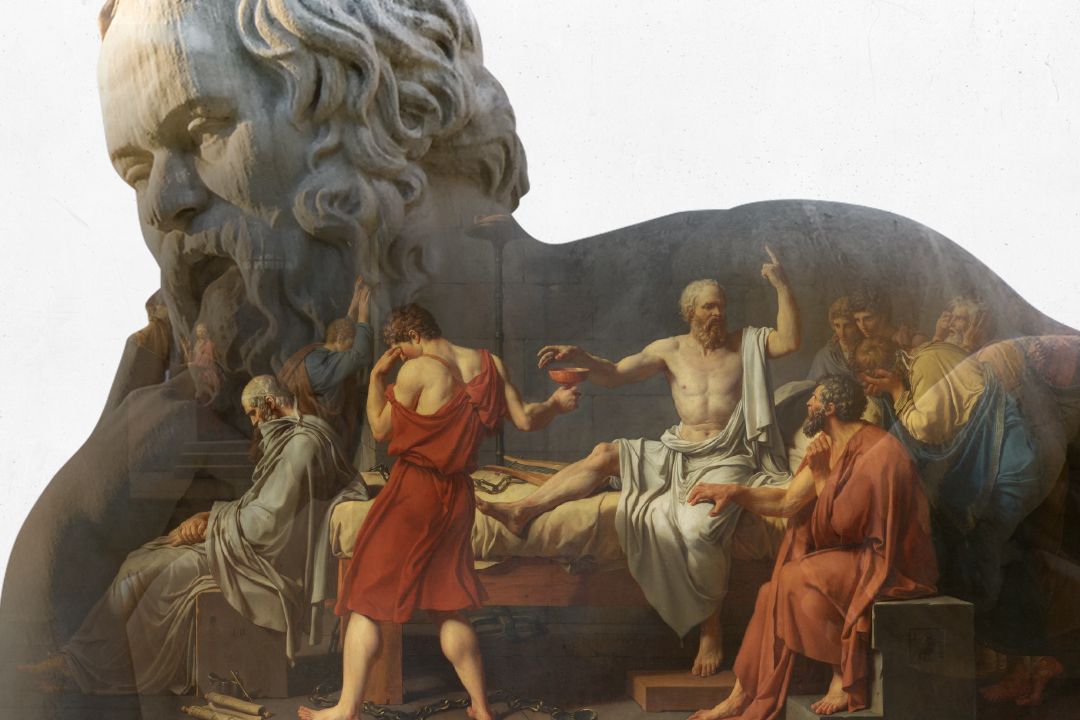
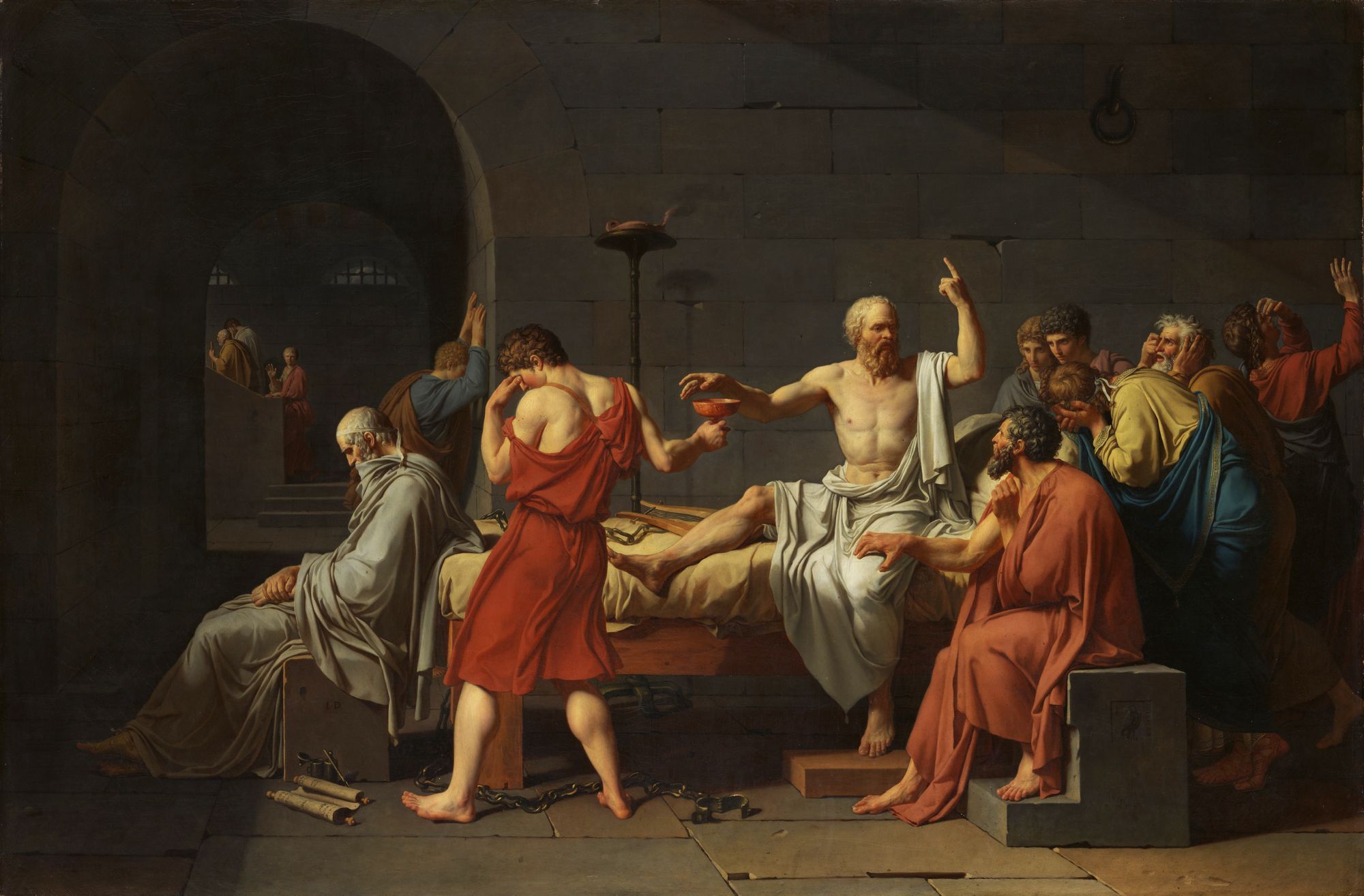
David - The Death of Socrates
The Setting
(A sun-drenched, tranquil garden, where a single, ancient olive tree casts a cool shade.)
Sophia: Welcome, Denis. Your voice, even across the centuries, still rings with a fascinating challenge to convention. I’ve been contemplating your assertion—that the subtle difference between two simple plants holds more immediate consequence than the grandest theological questions.
Denis: (Gesturing to the garden's herbs) It’s simply a matter of utility, Sophia. A mistake in distinguishing a common herb from a deadly poison brings an immediate, terminal consequence to one’s life—a very practical, final error. Survival demands precise, empirical knowledge.
Sophia: Ah, so you prioritize the verifiable and the immediate over the infinite and the abstract. You find the immediate demands of living—the need to eat safely, to avoid physical harm—to be the true test of intellect. The pursuit of life, this life, takes precedence.
It is very important not to mistake hemlock for parsley, but to believe or not believe in God is not important at all.
— Denis Diderot (1713-1784)
Denis: Precisely. For the living, the certainty of what will end a meal is a more pressing concern than the uncertainty of what may begin or end existence. Belief, or the lack thereof, in a transcendent power, does not change the laws of physics, nor does it alter the necessity of tending to our earthly well-being. The tangible world requires our complete attention.
Sophia: But is not the capacity to choose how we live—the moral and ethical structures we erect around our practical survival—also a fundamental human necessity? Your contemporary, the subject of David's canvas, chose a lethal drink based on a profound conviction about the value of his principles and the laws of his city. He made no error of botany, yet he embraced the hemlock based on a conviction that had everything to do with the abstract idea of justice.
Denis: That is a different kind of precision—a political and moral calculus. The Socrates of the account chose his end, yes, demonstrating the ultimate conviction in his own intellectual integrity. He showed that a life lived under a certain set of principles is more vital than the raw fact of staying alive. However, my observation is about the foundation of all thought: the basic need to exist to do the choosing. A mistaken mouthful ends all capacity for principled action or philosophical inquiry.
Sophia: So, the flavor of conviction, whether it's the bitter taste of principle over survival, or the lethal sweetness of a mistaken plant, defines the life we have. You teach us that before we can debate the heavens, we must first learn to navigate the earth. We must master the small, critical distinctions that keep us breathing, for without breath, wisdom is but a quiet, unheeded thought.
Denis: The real work is here, among the weeds and the gardens. Knowledge, when applied to the here and now, is life itself.
Sophia: And true wisdom, perhaps, is knowing which knowledge to apply to the task at hand. Thank you, Denis. Your pragmatism is a bracing draught.
The planksip Writers' Cooperative is proud to sponsor an exciting article rewriting competition where you can win over $750,000 in prize money.
Figures of Speech Collection Personified
Our editorial instructions for your contest submission are simple: incorporate the quotes and imagery from the above article into your submission.
What emerges is entirely up to you!
Winners receive $500 per winning entry multiplied by the article's featured quotes. Our largest prize is $8,000 for rewriting the following article;
 Heraclitus
At planksip, we believe in changing the way people engage; at least, that's the Idea (ἰδέα). By becoming a member of our thought-provoking community, you'll have the chance to win incredible prizes and access our extensive network of media outlets that will amplify your voice as a thought leader. Your membership truly matters!