

Fate vs. Free Will: Necessity and Contingency – An Enduring Philosophical Riddle
This article delves into one of philosophy's most profound and persistent debates: the tension between fate and free will. We will explore how the concepts of necessity and contingency underpin this discussion, shaping our understanding of human agency, moral responsibility, and the very fabric of the cosmos. Drawing from the rich tapestry of the Great Books of the Western World, we will trace the historical trajectory of this intricate relationship, examining how cause and effect have been interpreted through the ages, and why these questions remain as vital today as they were millennia ago.
The Everlasting Tug-of-War: Defining Our Terms
At the heart of this ancient debate lies a fundamental question: Are our lives predetermined, or do we possess genuine freedom to choose our path? To unpack this, we must first clarify the key concepts.
- Fate: Often understood as a predetermined sequence of events, a destiny or divine plan that dictates all occurrences, leaving no room for individual will. In many ancient cosmologies, Fate was an impersonal force, sometimes even superior to the gods themselves.
- Free Will: The capacity of agents to make choices that are not determined by antecedent events, but are genuinely open and originate from the individual's own agency. It implies the ability to choose otherwise.
- Necessity: Refers to that which must be. An event is necessary if it cannot fail to occur, or if its negation is impossible. This can be logical necessity (e.g., a triangle must have three sides), physical necessity (e.g., gravity necessitates objects falling), or metaphysical necessity (e.g., God's existence, for some philosophers).
- Contingency: Refers to that which may or may not be. A contingent event is one that could have been otherwise, or whose non-existence is possible. Most everyday events are considered contingent – I might choose coffee or tea, but neither choice is strictly necessary.
The core tension arises when we ask if human actions are necessary or contingent. If they are necessary, then our will seems illusory. If they are contingent, how do they fit into a universe seemingly governed by cause and effect?
Echoes Through the Ages: Perspectives from the Great Books
The Great Books of the Western World offer an unparalleled journey through the evolution of these ideas, revealing how thinkers have grappled with the implications of fate and will.
Ancient Foundations: Destiny and Determinism
From the Greek tragedians to the Stoics, the idea of an inescapable fate loomed large. Oedipus's tragic destiny, for instance, unfolds despite his desperate attempts to defy the prophecy, illustrating a powerful sense of predetermined outcomes.
- The Stoics: Advocated for a highly deterministic worldview, where the universe operates according to a rational, necessary divine plan (Logos). For them, true freedom lay not in defying fate, but in understanding and assenting to the inevitable, cultivating inner tranquility (ataraxia) by aligning one's will with the natural order. They saw every event as part of an unbroken chain of cause and effect.
- Aristotle: While not a strict determinist, Aristotle's concept of potentiality and actuality, and his analysis of cause (material, formal, efficient, final), provided a framework for understanding how things come to be. He recognized an element of contingency in human affairs and moral choice, distinguishing between necessary truths and those that are merely probable or possible.
Medieval Meditations: Divine Foreknowledge and Human Freedom
With the rise of monotheistic religions, the debate took on new dimensions, particularly concerning God's omnipotence and omniscience.
- Augustine of Hippo: Grappled extensively with the problem of divine foreknowledge and human free will. If God knows everything that will happen, including our choices, are our choices truly free? Augustine argued that God's foreknowledge does not cause our actions, but rather knows them as they will freely occur. He maintained that human will is free, but also acknowledged the necessity of divine grace for salvation.
- Thomas Aquinas: Building on Aristotle, Aquinas explored the nature of voluntary action and the role of intellect and will. He differentiated between natural necessity (e.g., a stone falling) and the freedom of rational agents, suggesting that while God's will is primary, human will operates within a sphere of contingency, guided by reason towards the good.
The Modern Conundrum: Mechanism and Morality
The Enlightenment brought a renewed focus on scientific laws and the mechanical universe, challenging traditional notions of freedom.
- Baruch Spinoza: A radical determinist, Spinoza argued that everything in the universe, including human thoughts and actions, follows necessarily from the nature of God (or Nature). He saw free will as an illusion born of our ignorance of the true causes of our desires. For Spinoza, true freedom is the intellectual understanding of this necessity, leading to a rational acceptance of one's place in the cosmic order.
- David Hume: Explored the nature of cause and effect, suggesting that we observe constant conjunctions, not necessary connections. While he argued for a form of "moral liberty" compatible with determinism (compatibilism), his analysis of causality raised profound questions about the basis of both scientific prediction and human agency.
- Immanuel Kant: Sought to reconcile the deterministic laws of the phenomenal world (the world of experience governed by cause and effect) with the moral freedom of the noumenal self (the world of things-in-themselves). For Kant, free will is a necessary postulate for morality; without it, moral responsibility would be impossible. Our practical reason necessitates belief in freedom, even if our theoretical reason cannot prove it.
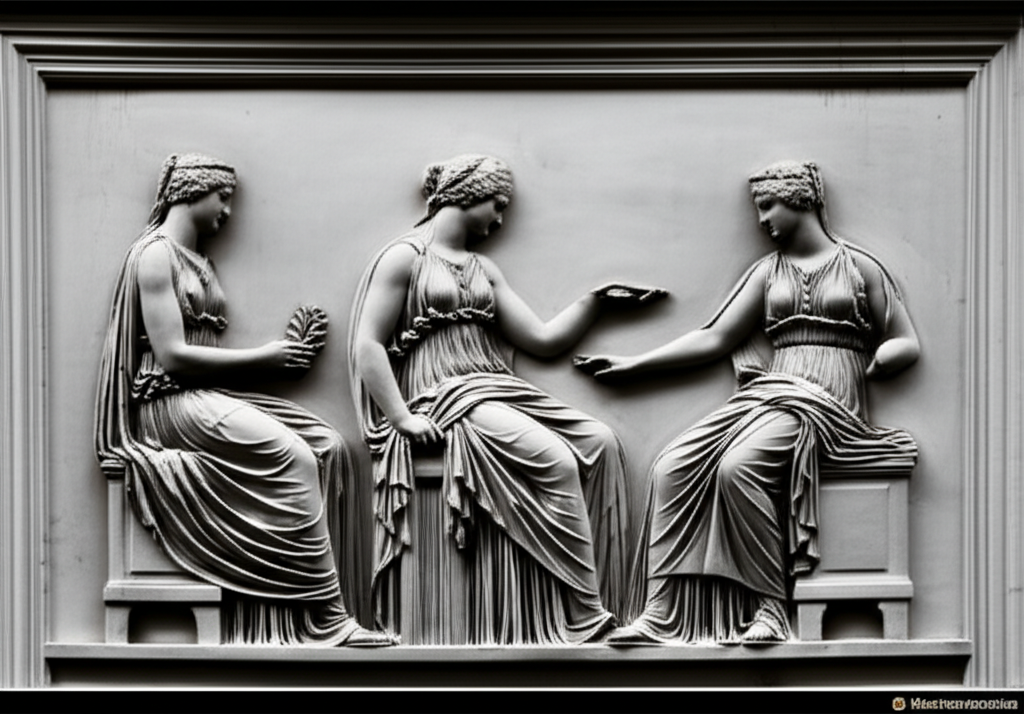 spinning, measuring, and cutting the thread of life, symbolizing destiny, juxtaposed with a lone figure reaching out, as if in an act of choice or rebellion against the threads.)
The Intricate Dance of Cause and Effect
The concept of cause is central to the debate between fate and free will. If every event has a prior cause, and that cause itself has a prior cause, stretching back infinitely, then where does will enter the picture? This chain of necessity seems to leave no room for genuine contingency.
- Determinism: The philosophical position that all events, including human actions, are ultimately determined by causes external to the will. This can be hard determinism (incompatible with free will) or soft determinism/compatibilism (compatible with free will).
- Indeterminism: The view that at least some events are not wholly determined by prior causes, introducing an element of randomness or genuine contingency. This is often seen as a prerequisite for free will, though it raises questions about how an uncaused will could be considered rational or responsible.
The challenge lies in explaining how our internal mental states – our desires, intentions, and choices – can be both caused by prior events (e.g., upbringing, genetics, environment) and simultaneously be the cause of our actions in a way that preserves genuine freedom.
Navigating the Labyrinth: Compatibilism and Incompatibilism
Philosophers have largely adopted two main stances in attempting to resolve the fate vs. free will dilemma:
| Philosophical Stance | Core Idea Free Will: The ability to make choices that are genuinely open and are not solely determined by prior causes or external forces. Our inner sense of choice.
- Necessity: Events that must occur, given the prior state of the universe and the laws of nature. If all events are necessary, then there's no room for true contingency.
- Contingency: Events that may or may not occur, or could have been otherwise. These are the "could-haves" and "might-bes" of our experience, often associated with our sense of freedom.
The core philosophical problem arises when we attempt to reconcile our intuitive experience of free will with a scientific understanding of the universe, which often posits that every event is the effect of a preceding cause. If every cause is itself an effect, then the chain of necessity seems to leave no room for genuine contingency originating from our own will.
Historical Currents: Tracing the Debate Through the Great Books
The Great Books of the Western World provide a rich tapestry of perspectives on this enduring dilemma, revealing how different eras and thinkers have grappled with the implications of fate and will.
Ancient Greece: The Shadow of Destiny
In ancient Greek thought, the idea of fate was a potent force. The tragedies of Aeschylus and Sophocles, particularly the story of Oedipus, dramatically illustrate characters caught in the inescapable grip of prophecy and predetermined destiny, regardless of their choices.
- The Stoics: Advocated for a profoundly deterministic worldview. They believed the cosmos was governed by an all-encompassing, rational principle (Logos or God) that dictated every event through an unbreakable chain of cause and effect. For the Stoics, true freedom wasn't the ability to defy fate, but to understand and rationally assent to its necessity. By aligning one's will with the inevitable course of nature, one could achieve inner peace (ataraxia).
- Aristotle: While not a strict determinist, Aristotle's meticulous analysis of causality (material, formal, efficient, and final causes) provided a framework for understanding how things come into being. He recognized that while some events are necessary, others contain an element of contingency, particularly in the realm of human action and moral choice. His concepts of potentiality and actuality allowed for a world where possibilities could be actualized through agency.
Medieval Scholasticism: Divine Foreknowledge and Human Agency
With the advent of monotheistic religions, the debate gained new theological dimensions, particularly concerning God's omnipotence and omniscience.
- Augustine of Hippo: Grappled extensively with the apparent paradox of divine foreknowledge and human free will. If God knows all future events, including our choices, are our choices truly free? Augustine argued that God's foreknowledge does not cause our actions, but rather knows them as they will freely occur. He maintained that human will is free, but also emphasized the necessity of divine grace for salvation, introducing a complex interplay between divine and human agency.
- Thomas Aquinas: Building upon Aristotle, Aquinas explored the nature of voluntary action. He distinguished between natural necessity (e.g., a stone falling) and the freedom of rational agents. For Aquinas, while God's will is the ultimate cause, human will operates within a sphere of contingency, guided by reason towards the good. Our choices are free in that they are not coerced, even if they ultimately fall within God's providential plan.
The Modern Age: Mechanism, Morality, and Mind
The Enlightenment and the rise of scientific determinism brought renewed challenges to the concept of free will.
- Baruch Spinoza: Offered a radical form of determinism, arguing that everything in the universe, including human thoughts and actions, follows with necessity from the nature of God (or Nature). He viewed free will as an illusion, stemming from our ignorance of the true causes of our desires. For Spinoza, genuine freedom lies in understanding this necessity and intellectually assenting to it, thereby achieving a rational acceptance of one's place in the cosmic order.
- David Hume: Critically examined the concept of cause and effect, suggesting that we observe only constant conjunctions of events, not a necessary connection. While his empiricism questioned the metaphysical basis of necessity, he also argued for a "moral liberty" compatible with determinism, often considered a form of compatibilism. For Hume, freedom meant acting according to one's desires, even if those desires were themselves determined.
- Immanuel Kant: Sought to bridge the chasm between the deterministic laws of the phenomenal world (the world of sensory experience, governed by cause and effect) and the moral freedom of the noumenal self (the realm of things-in-themselves). For Kant, free will is a necessity for morality; without the capacity to choose freely, moral responsibility and duty would be meaningless. Our practical reason necessitates belief in freedom, even if our theoretical reason cannot definitively prove it.
The Interplay of Cause and Effect: A Deeper Look
The concept of cause is perhaps the most critical pivot in the fate vs. free will debate. If every event, every thought, every action, is the inevitable effect of a prior cause, then the universe operates like a colossal clockwork mechanism.
Consider the following:
- Hard Determinism: Posits that all events, including human choices, are entirely determined by prior causes. If this is true, then free will is an illusion, and our sense of contingency is merely a lack of knowledge about the true necessity of events. Moral responsibility then becomes problematic.
- Indeterminism: Suggests that at least some events are not wholly determined by prior causes, introducing an element of randomness or genuine contingency. This is often seen as a prerequisite for free will, as it allows for a break in the causal chain. However, if choices are random, how can they be attributed to a responsible agent?
The challenge for those who defend free will is to explain how our internal mental states – our desires, intentions, and choices – can be both influenced by prior events (e.g., upbringing, genetics, environment) and yet still be the cause of our actions in a way that preserves genuine freedom and moral accountability.
The Pathways Forward: Compatibilism vs. Incompatibilism
Philosophers have largely adopted two main categories of thought when attempting to reconcile or distinguish fate/necessity and free will/contingency:
1. Incompatibilism:
This view holds that free will and determinism (or fate) are fundamentally incompatible. One cannot logically exist if the other is true.
- Hard Determinism: Accepts determinism and rejects free will. Our choices are merely necessary outcomes of prior causes.
- Libertarianism: Accepts free will and rejects determinism. It argues that agents have the genuine ability to choose otherwise, meaning that some actions are not fully determined by prior causes. This often implies a degree of contingency at the heart of human decision-making.
2. Compatibilism (or "Soft Determinism"):
This view argues that free will and determinism are, in fact, compatible. It redefines free will not as the absence of cause, but as the ability to act according to one's own desires and intentions, without external coercion.
- A compatibilist might say: "You are free if you could have done otherwise if you had chosen to do otherwise." The choice itself might be determined, but if it originates from your own will and desires, it is considered free.
- This perspective seeks to preserve moral responsibility within a causally determined universe, arguing that blame and praise are still meaningful because they influence future determined actions.
Conclusion: The Unfolding Riddle
The debate between fate and free will, framed by the concepts of necessity and contingency, is not merely an academic exercise. It touches upon our deepest intuitions about autonomy, responsibility, and the meaning of human existence. From the ancient Greeks grappling with divine destiny to modern philosophers wrestling with quantum mechanics and neuroscience, the Great Books of the Western World reveal an ongoing human quest to understand our place in a universe governed by cause and effect.
Whether our lives are a predetermined script or an unfolding narrative of genuine choices, the questions persist, inviting us to continually examine the nature of our will, the forces that shape us, and the profound implications of living in a world of both necessity and tantalizing contingency. The journey itself, the very act of questioning, remains a testament to our enduring intellectual freedom.
YouTube: "Fate vs Free Will Philosophy Explained"
YouTube: "Compatibilism vs Libertarianism: Crash Course Philosophy"
📹 Related Video: What is Philosophy?
Video by: The School of Life
💡 Want different videos? Search YouTube for: "Fate vs. Free Will: Necessity and Contingency philosophy"