

Fate vs. Free Will: Necessity and Contingency
The eternal philosophical dance between Fate and Free Will is one of humanity's most profound and enduring intellectual challenges. It forces us to confront fundamental questions about our existence: Are our lives predetermined, unfolding according to an unchangeable script, or are we the architects of our own destinies, capable of genuine choice and independent action? This ancient dilemma, explored meticulously within the pages of the Great Books of the Western World, hinges on the intricate concepts of Necessity and Contingency, and the pervasive role of Cause in shaping our reality. Understanding this debate is not merely an academic exercise; it touches upon our sense of moral responsibility, the meaning of justice, and the very essence of what it means to be human.
The Unyielding Hand of Fate: Embracing Necessity
From the ancient Greek tragedians to the Stoic philosophers, the notion of Fate has cast a long shadow over human ambition. Fate often implies a predetermined course of events, an unalterable destiny set in motion by cosmic forces, divine decree, or an inexorable chain of cause and effect. When we speak of Fate, we are often speaking of Necessity – the idea that certain events must happen, that they could not possibly be otherwise.
Consider the following aspects of a fated existence:
- Divine Decree: In many theological systems, a benevolent or omniscient deity has foreknowledge of all events, or even actively ordains them. If God knows what you will choose, is your choice truly free? As figures like Augustine grappled with in their theological works, the divine foreknowledge of human actions presents a significant challenge to the concept of human Will.
- Cosmic Order: For the Stoics, the universe operates according to a rational and necessary order. Everything that happens is a consequence of this cosmic reason, and thus, individually, we are part of this larger, determined whole. True freedom, in this view, lies in aligning one's Will with this necessary order, rather than resisting it.
- Causal Determinism: At its philosophical core, the idea of Necessity often aligns with causal determinism. This view posits that every event, including every human decision, is the inevitable result of antecedent causes. If every cause necessarily leads to a specific effect, then the future is as fixed as the past, leaving no room for alternative outcomes or genuine contingency.
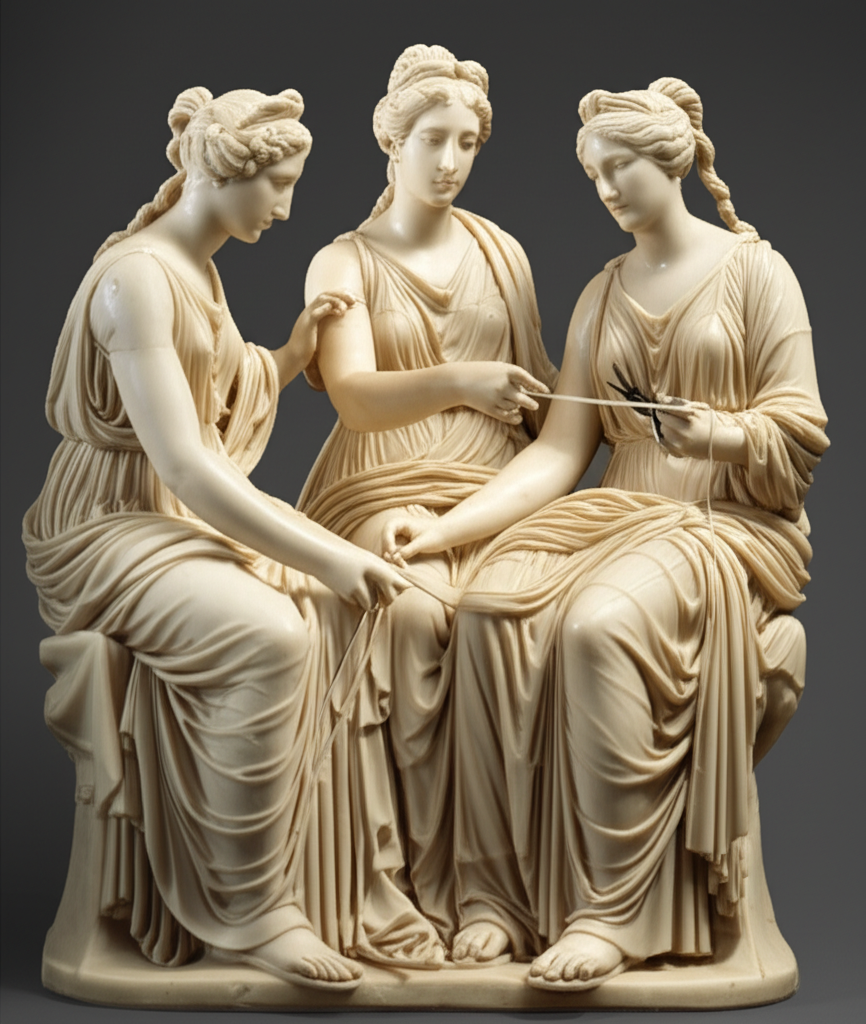
The Spark of Autonomy: The Promise of Free Will
Against the backdrop of an unyielding Fate stands the compelling human experience of Free Will. We inherently feel that we make choices, that our decisions matter, and that we could have acted differently. This subjective sense of agency is deeply intertwined with the concept of Contingency – the idea that events might or could have been otherwise; they are not necessary.
The arguments for Free Will often center on:
- Moral Responsibility: If our actions are entirely fated or causally determined, how can we be held morally responsible for them? The concepts of praise, blame, justice, and punishment all seem to presuppose that individuals have the capacity to choose between right and wrong. Philosophers like Immanuel Kant argued that Will must be free for morality to have any meaning, asserting that we must act as if we are free.
- Deliberation and Choice: Our daily lives are filled with moments of deliberation – weighing options, making decisions, and experiencing regret or satisfaction based on our choices. This introspective experience strongly suggests an active, independent Will at play, introducing contingency into the world.
- The Problem of Indeterminism: If Will is truly free, then our choices cannot be entirely necessitated by prior causes. This implies a degree of indeterminism, where human decisions are not simply links in a deterministic chain but rather originate from the agent's autonomous Will.
Necessity and Contingency: The Philosophical Bedrock
The terms Necessity and Contingency are the philosophical bedrock upon which the debate between Fate and Free Will is built. They describe different modes of being and becoming:
| Feature | Necessity | Contingency |
|---|---|---|
| Definition | That which must be; cannot be otherwise. | That which might be or could be otherwise; not necessary, not impossible. |
| Causal Link | Every event is the inevitable outcome of prior causes. | Events are not fully determined by prior causes; alternative outcomes are possible. |
| Temporal Scope | Future is as fixed as the past. | Future is open; multiple paths are possible. |
| Implication | Often associated with determinism, Fate, and lack of genuine choice. | Often associated with Free Will, chance, and genuine choice. |
Philosophers throughout history, from Aristotle distinguishing between necessary truths (like mathematical axioms) and contingent events (like a coin toss), to Aquinas discussing God's Will and human freedom, have grappled with how these two modes coexist in a coherent worldview. If the universe operates under strict causal necessity, where does contingency enter, especially regarding human Will?
Navigating the Labyrinth: Attempts at Reconciliation
The tension between Necessity and Contingency, and thus between Fate and Free Will, has led to various attempts at reconciliation:
- Compatibilism: This view argues that Free Will and determinism (a form of Necessity) are not mutually exclusive. A person is considered "free" if they act according to their own desires and intentions, even if those desires and intentions are themselves causally determined. The Will is free if it is uncoerced, even if its underlying causes are themselves necessitated. David Hume, for instance, suggested that freedom is merely the "power of acting or not acting, according to the determinations of the will."
- Incompatibilism: This stance holds that Free Will and determinism are fundamentally incompatible.
- Libertarianism: Argues that Free Will is real and requires genuine contingency – our choices are not fully determined by prior causes. This often implies a special kind of agent-causation, where the Will itself is an uncaused cause.
- Hard Determinism: Concludes that determinism is true, and therefore Free Will is an illusion. All actions are necessitated by prior causes, and contingency in human choice is unreal.
The Great Books offer a rich tapestry of these positions. Spinoza, for example, presented a rigorous system where everything, including human actions, follows from the necessary nature of God (or Nature), making freedom the recognition and acceptance of this Necessity. Descartes, conversely, emphasized the absolute freedom of the Will as distinct from the determined material world.
The Enduring Quest for Understanding
The debate over Fate versus Free Will, framed by the concepts of Necessity and Contingency, and driven by our understanding of Cause, remains one of philosophy's most vibrant battlegrounds. There are no easy answers, and each position carries profound implications for our understanding of ourselves, our moral obligations, and our place in the cosmos. Whether we see ourselves as passengers on a predetermined journey or captains of our own souls, the very act of pondering these questions affirms a uniquely human capacity for reflection and self-awareness—a capacity that, in itself, feels like an exercise of Will.
📹 Related Video: What is Philosophy?
Video by: The School of Life
💡 Want different videos? Search YouTube for: ""Free Will vs. Determinism Debate Explained" or "Necessity and Contingency in Philosophy""