

Fate vs. Free Will: Navigating Necessity and Contingency
The age-old philosophical debate surrounding Fate and Free Will cuts to the very core of our understanding of existence, responsibility, and the nature of reality itself. Are our lives predetermined, unfolding according to an unyielding script of Necessity, or do we possess the genuine capacity to choose, to deviate, to introduce Contingency into the world? This profound inquiry, pondered by thinkers across millennia, challenges us to examine the intricate dance between what must be and what might be, ultimately questioning the very essence of human agency and the pervasive influence of Cause.
The Unyielding Hand of Fate and Necessity
From the ancient oracles of Delphi to the cosmic determinism of some modern theories, the idea of Fate has long held a powerful grip on the human imagination. Fate suggests a predetermined destiny, an inescapable sequence of events that unfolds regardless of individual desires or efforts. It's the notion that our paths are etched in stone, our futures already written.
Closely intertwined with Fate is the concept of Necessity. In philosophy, necessity refers to events, truths, or states of affairs that must be the case; they cannot be otherwise. If something is necessary, its negation is impossible. Thinkers like the Stoics, whose insights are preserved in the Great Books of the Western World, often embraced a form of determinism, believing that the universe operates according to an unbroken chain of Cause and effect. Every event, they argued, is the inevitable outcome of prior conditions, leading to a cosmic order where everything that happens had to happen.
- Key Characteristics of Necessity:
- Inevitability: Events are unavoidable.
- Causal Chain: Every effect has a preceding cause, ad infinitum.
- Predictability (in principle): If one knew all causes, one could predict all effects.
- Implication for Will: Human choices are merely links in this chain, not independent initiators.
This perspective can be both comforting, in its promise of an ordered universe, and terrifying, in its potential erosion of personal responsibility.
The Assertion of Free Will and Contingency
In stark contrast stands the powerful human intuition of Free Will. This is our deeply felt sense that we are the authors of our own choices, that faced with alternatives, we genuinely possess the ability to choose one path over another. It's the experience of deliberation, the weight of a decision, and the subsequent feeling of ownership over our actions.
Parallel to Free Will is the idea of Contingency. Contingency describes events, truths, or states of affairs that might or might not be the case; they are not necessary. A contingent event is one that depends on factors that could have been otherwise. If I choose to write this sentence, it is a contingent event; I could have chosen not to. My decision introduces something new, something that wasn't strictly necessitated by prior conditions.
- Key Characteristics of Contingency:
- Possibility of Alternatives: Events could unfold in different ways.
- Agent Causation: Individuals can initiate new causal chains.
- Unpredictability: True choices introduce an element of genuine novelty.
- Implication for Will: Human choices are self-generated and genuinely open.
The concept of Free Will is fundamental to our moral and legal systems. Without it, how can we hold individuals accountable for their actions? The very notions of praise, blame, justice, and repentance seem to crumble if our choices are merely predetermined outcomes.
The Causal Chain: A Philosophical Knot
At the heart of the Fate vs. Free Will debate lies the concept of Cause. If every event has a prior cause, and that cause itself was an effect of an earlier cause, tracing back infinitely, where does Free Will find its footing? This is the essence of causal determinism: the belief that all events, including human actions, are ultimately determined by prior causes.
Consider the following:
| Deterministic View (Necessity) | Libertarian View (Contingency) |
|---|---|
| Every event, including choices, is an effect of prior causes. | Some events, specifically free choices, are not fully determined by prior causes. |
| Choice is an illusion, or merely the experience of a necessitated outcome. | Choice is a genuine act of origination, introducing new causal chains. |
| Responsibility is problematic if actions are unavoidable. | Responsibility is foundational because actions are chosen. |
| The universe operates like a complex, predictable machine. | The universe contains genuine openness and irreducible novelty. |
Many philosophers, drawing from the Great Books, have grappled with this. Spinoza, for instance, argued for a thoroughgoing determinism where everything, including human volitions, flows with mathematical necessity from God's nature. On the other hand, thinkers like Kant defended free will as a prerequisite for morality, suggesting that reason demands we act as if we are free, even if empirical observation struggles to prove it. The question then becomes: can Cause and Will coexist without one negating the other? This is the challenge of compatibilism, which seeks to reconcile free will with a deterministic universe, often by redefining "freedom" not as the absence of cause, but as the ability to act according to one's desires, even if those desires are themselves caused.
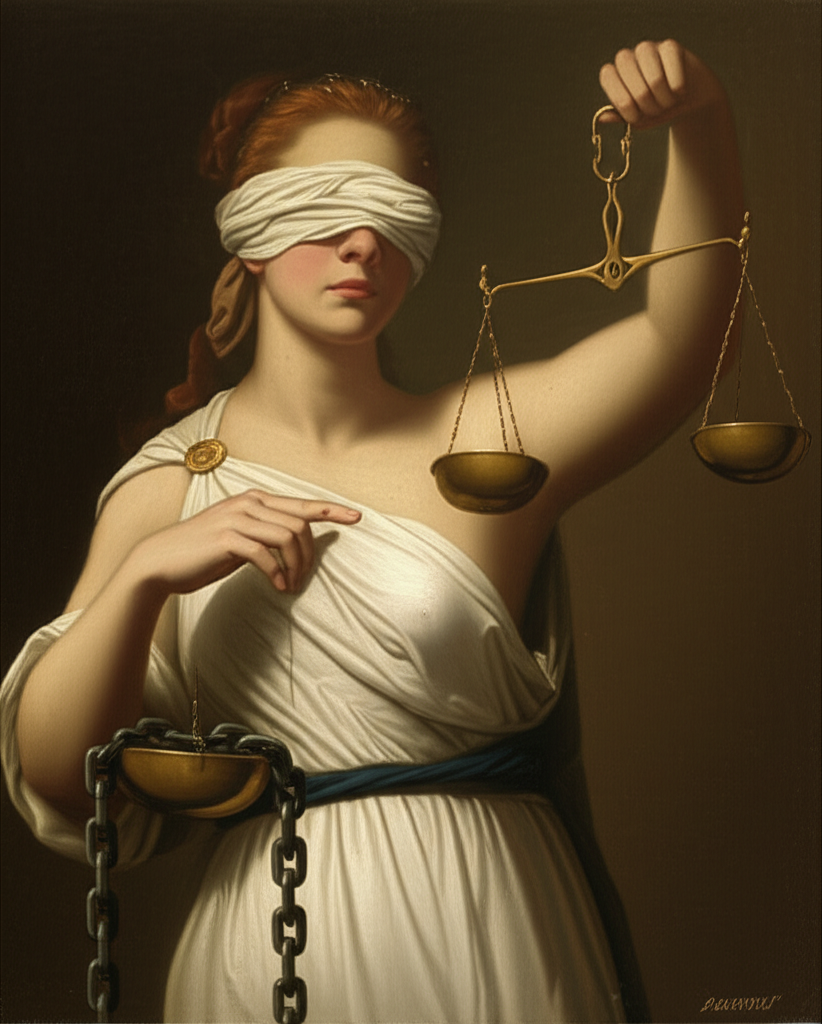
Perspectives from the Great Books
The enduring nature of this debate is evident in the rich tapestry of philosophical thought found in the Great Books of the Western World. From ancient Greek tragedians exploring the inevitability of destiny to medieval theologians wrestling with divine foreknowledge and human salvation, the tension between Necessity and Contingency has shaped fundamental doctrines.
-
Ancient Greek Philosophy:
- Homer: Often portrays characters whose fates are decreed by the gods, though their actions contribute to their journey.
- Stoics (e.g., Epictetus, Marcus Aurelius): Emphasized accepting what is necessary and focusing on what is within one's control (one's judgments and reactions).
- Aristotle: Distinguished between necessary events, contingent events, and potentiality, suggesting a more nuanced view where some things are determined by their nature, but others are open.
-
Medieval Philosophy:
- Augustine: Grappled with God's omniscient foreknowledge and human free will, concluding that God knows our free choices without causing them, thus preserving human responsibility.
- Aquinas: Built upon Aristotle, distinguishing between different kinds of necessity and affirming human reason's capacity for free choice.
-
Early Modern Philosophy:
- Descartes: Advocated for a dualism of mind and body, where the mind (soul) could exercise free will independently of the mechanistic laws governing the body.
- Spinoza: Argued for a monistic, deterministic universe where everything is a necessary emanation of God (Nature), and free will is an illusion stemming from ignorance of true causes.
- Leibniz: Proposed a "pre-established harmony" where individual substances (monads) act freely according to their own internal programming, yet are perfectly synchronized by God.
-
Enlightenment Philosophy:
- Hume: Acknowledged the regular conjunction of cause and effect, leading to a form of compatibilism where freedom means acting according to one's desires, even if those desires are causally determined.
- Kant: Argued that while in the phenomenal world (of experience), everything is causally determined, in the noumenal world (of things-in-themselves), we must posit free will as a condition for moral responsibility and duty.
The Modern Conundrum: Science and Philosophy
Today, the debate continues, informed by advances in neuroscience, quantum physics, and psychology. While quantum mechanics introduces elements of genuine randomness at the subatomic level, its implications for macroscopic human Will remain hotly debated. Neuroscience, by uncovering the neural correlates of decision-making, sometimes seems to suggest that our choices are made before we are consciously aware of them, challenging our intuitive sense of agency. Yet, the philosophical arguments for Free Will and Contingency persist, reminding us that the human experience of choice, responsibility, and moral action is a profound reality that cannot be easily dismissed by a purely deterministic worldview.
Conclusion
The tension between Fate and Free Will, between Necessity and Contingency, and the pervasive role of Cause in shaping our understanding, remains one of philosophy's most enduring and fertile grounds for inquiry. There is no simple answer, no definitive victory for one side over the other. Instead, perhaps the profound wisdom lies in appreciating the intricate interplay: acknowledging the forces of necessity and causality that shape our world, while simultaneously upholding the profound human capacity for choice, for moral deliberation, and for introducing genuine contingency into the unfolding narrative of existence. It is in this dynamic tension that we find the very essence of what it means to be human.
📹 Related Video: What is Philosophy?
Video by: The School of Life
💡 Want different videos? Search YouTube for: ""Free Will vs Determinism Crash Course Philosophy #24""
📹 Related Video: ARISTOTLE ON: The Nicomachean Ethics
Video by: The School of Life
💡 Want different videos? Search YouTube for: ""The Problem of Free Will: Fate, Determinism, and Agency""