

Fate vs. Free Will: Necessity and Contingency
The age-old philosophical conundrum of Fate vs. Free Will delves into the very essence of human agency and the nature of reality. At its core, this debate explores whether our lives are predetermined by an unalterable Fate or if we possess genuine Will to make choices that shape our destiny. Central to this discussion are the concepts of Necessity – events that must occur due to prior Cause – and Contingency – events that might or might not happen, depending on various factors, including our choices. This article will navigate these intricate ideas, drawing insights from the rich tapestry of Western philosophical thought, to illuminate the enduring tension between a world governed by ironclad necessity and one open to the unpredictable currents of human freedom.
Unraveling the Core Concepts: Fate, Will, Necessity, and Contingency
To truly grapple with this profound debate, we must first establish a clear understanding of its foundational terms.
Fate: The Unalterable Path
Fate refers to the idea that all events, including human actions and choices, are predetermined and inevitable. It suggests a cosmic blueprint, a pre-ordained sequence of events that cannot be altered, regardless of human effort. In many ancient traditions, Fate was often personified by deities or abstract forces that dictated the course of lives, from birth to death. The concept implies that our future is already written, and our journey is merely the unfolding of a pre-scripted narrative.
Free Will: The Power of Choice
Free Will, conversely, is the capacity of agents to make genuine choices that are not solely dictated by antecedent conditions. It posits that individuals possess the power to choose between different courses of action and that these choices are genuinely up to them. This concept is fundamental to our understanding of moral responsibility, personal identity, and the very idea of human agency. Without Will, our actions might be seen as mere reflexes or programmed responses, stripping away the essence of what it means to be a conscious, deciding being.
Necessity: What Must Be
In philosophical terms, Necessity describes something that cannot be otherwise; it is an event or truth that is unavoidable. Often linked to the principle of universal Cause and effect, Necessity suggests that every event is the inevitable outcome of prior causes. If the universe operates under strict causal laws, then every state of affairs, including our decisions, is necessarily determined by the preceding state, leaving no room for true contingency.
Contingency: What Might Be
Contingency stands in direct opposition to Necessity. A contingent event is one that could have been otherwise; its occurrence is not absolutely determined by prior causes. It introduces the element of possibility and chance into the fabric of reality. For proponents of Free Will, human choices are prime examples of contingent events, as they are believed to be genuinely open, not solely necessitated by external or internal factors.
The Interplay of Cause and Effect: A Philosophical Labyrinth
The relationship between Cause and effect is central to the entire Fate vs. Free Will debate. If every effect has a Cause, and every Cause is itself an effect of a prior Cause, then the universe could be seen as a vast, unbroken chain of necessary events.
- Determinism: This philosophical position asserts that all events, including human choices, are entirely determined by previously existing causes. A strict determinist would argue that, given the initial conditions of the universe and the laws of nature, only one future is possible – a future dictated by Necessity. In this view, Free Will is an illusion, and Fate is the ultimate reality.
- Indeterminism: Conversely, indeterminism suggests that not all events are causally determined. There might be genuine randomness at play, or human Will could act as an uncaused cause, introducing true Contingency into the world.
- Compatibilism: A fascinating attempt to bridge the gap, compatibilism argues that Free Will and determinism are not mutually exclusive. A person can be said to act freely if their actions are caused by their own desires, beliefs, and intentions, even if those desires and intentions are themselves ultimately determined. Freedom, in this view, is freedom from coercion, not freedom from causation.
Echoes from the Great Books of the Western World
The tension between Fate and Free Will, Necessity and Contingency, has resonated through the halls of philosophy for millennia, finding expression in the foundational texts of Western civilization.
Ancient Greek Perspectives
The ancient Greeks grappled profoundly with the concept of Fate.
- Homer's Epics: In works like The Iliad and The Odyssey, the gods often intervene, and characters' destinies seem largely pre-ordained, though heroes still make choices that contribute to their glorification or downfall. Fate is a powerful, inescapable force, even for the gods themselves.
- Greek Tragedy (e.g., Sophocles' Oedipus Rex): Perhaps the most stark portrayal of inescapable Fate comes from Greek tragedy. Oedipus's efforts to avoid the prophecy that he would kill his father and marry his mother only serve to bring it about. His Will to escape his destiny tragically leads him directly into it, illustrating a cruel Necessity.
- Plato: While acknowledging a cosmic order and the influence of the soul's choices before birth, Plato's philosophy also emphasizes the power of rational Will to choose the good. The soul's ascent to knowledge and virtue is a matter of free choice and self-mastery, though influenced by its past.
- Aristotle: Aristotle provided a more nuanced view. He discussed the importance of deliberation and choice (prohairesis) in ethical action, affirming a genuine human Will. However, he also recognized natural Necessity in the physical world and the role of chance, or tyche, which introduces Contingency into human affairs.
- The Stoics: For philosophers like Epictetus and Marcus Aurelius, the universe is governed by a divine reason or logos, making everything that happens necessary. True freedom lies not in changing external events, which are fated, but in controlling one's internal reactions and attitudes. Accepting Fate and living in accordance with nature is the path to tranquility.
Medieval Christian Thought
The advent of monotheistic religions added a new layer of complexity: how does God's omniscience and omnipotence reconcile with human Free Will?
- St. Augustine of Hippo: Augustine wrestled with the problem of divine foreknowledge and human Will. If God knows everything that will happen, including our choices, are our choices truly free? Augustine argued that God's foreknowledge does not cause our choices; rather, God simply knows what we will freely choose. He emphasized the Will's capacity for good and evil, and the Necessity of divine grace for salvation.
- St. Thomas Aquinas: Aquinas, building on Aristotle, affirmed human Free Will as essential for moral responsibility. He distinguished between God's primary Cause of all existence and secondary causes, including human choices. Divine providence guides the world, but not in a way that eliminates human Contingency or the freedom to choose.
Early Modern Philosophy
The scientific revolution and new philosophical systems brought fresh perspectives.
- Baruch Spinoza: A radical determinist, Spinoza argued that everything in the universe, including human thoughts and actions, follows necessarily from the nature of God (or Nature). Free Will, in the traditional sense, is an illusion. Freedom comes from understanding the Necessity of all things and acting in accordance with one's true nature, which is part of the divine whole.
- John Locke & David Hume: These empiricists explored the nature of Cause and effect. Hume, in particular, famously questioned the Necessity of causal connections, viewing them as habits of mind rather than inherent properties of reality. While not denying Will, their analyses of causation posed challenges to traditional notions of uncaused free choice, leaning towards a compatibilist view where freedom is acting according to one's desires, even if those desires are determined.
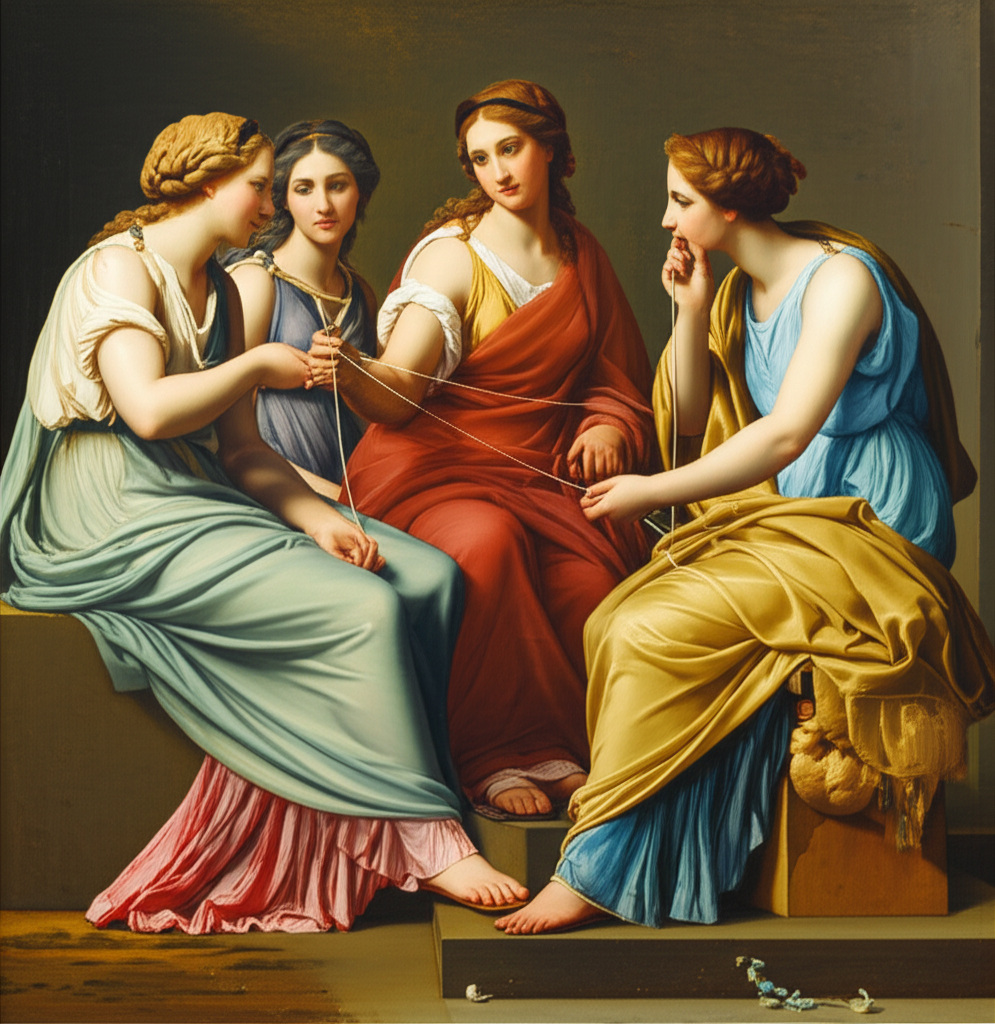 spinning, measuring, and cutting the thread of human life, contrasting with a solitary figure reaching out to make a choice, symbolizing the struggle between destiny and individual agency.)
Modern Debates: Compatibilism, Incompatibilism, and the Search for Meaning
The contemporary philosophical landscape continues to be shaped by these historical debates.
- Incompatibilism: This view holds that Free Will and determinism are fundamentally irreconcilable.
- Metaphysical Libertarianism: Argues that Free Will is real and thus determinism is false. It posits that human agents possess a special kind of causal power that allows them to initiate actions without being fully determined by prior causes, thus introducing genuine Contingency.
- Hard Determinism: Affirms determinism and denies Free Will. If everything is determined by Necessity, then true choice is impossible.
- Compatibilism: As discussed, this position attempts to reconcile Free Will with determinism by redefining what "free" means, often as freedom from coercion or constraint, rather than freedom from causation.
The persistent exploration of Fate vs. Free Will is not merely an academic exercise. It profoundly impacts our understanding of:
- Moral Responsibility: Can we hold individuals accountable for their actions if those actions are fated or necessitated?
- Justice Systems: How should legal systems operate if criminal acts are determined?
- Personal Identity and Purpose: If our lives are predetermined, what does it mean to strive, to hope, to regret?
Conclusion: The Enduring Mystery
The debate between Fate and Free Will, interwoven with the concepts of Necessity and Contingency, remains one of philosophy's most compelling and elusive challenges. From the ancient Greek tragedians to modern neuroscientists, thinkers have grappled with whether our lives are an unfolding of an unalterable Fate or a canvas upon which our Will paints a unique, contingent masterpiece. While the Great Books offer profound insights and diverse perspectives, a definitive resolution continues to elude us. Perhaps the enduring value of this debate lies not in finding a single answer, but in the continuous act of questioning, which compels us to reflect on our choices, our responsibilities, and the very nature of our existence in a universe both causally intricate and profoundly mysterious.
YouTube Video Suggestions:
-
📹 Related Video: What is Philosophy?
Video by: The School of Life
💡 Want different videos? Search YouTube for: ""Fate Free Will Philosophy Explained""
-
📹 Related Video: What is Philosophy?
Video by: The School of Life
💡 Want different videos? Search YouTube for: ""Determinism vs Free Will Crash Course Philosophy""