

Family Structure and Social Custom: The Bedrock of Civilization
The intricate dance between the family, the crucible of our earliest experiences, and the overarching tapestry of custom and convention shapes not only individual lives but also the very fabric of the State. This supporting article explores how the fundamental structure of family units, often rooted in ancient traditions and philosophical discourse found in the Great Books of the Western World, serves as the primary incubator for the values, behaviors, and loyalties that ultimately define the citizen and underpin the stability and character of society.
The Family: Humanity's First Polis
From the earliest philosophical inquiries, the family has been recognized as the foundational unit of human society. Aristotle, in his Politics, posits the household (oikos) as the primary association, preceding the village and the state. It is within this sphere that basic needs are met, and the first principles of governance, albeit domestic, are learned.
- Biological Imperative: The family ensures procreation and the nurturing of offspring, a fundamental requirement for the continuation of any species.
- Economic Unit: Historically, families functioned as self-sufficient economic entities, pooling resources and labor for survival.
- Socialization Agent: More profoundly, the family is where individuals acquire language, moral precepts, and an understanding of social roles.
It is here, in the intimate confines of the family, that the raw material of humanity begins its transformation into a social being, a process guided by nascent customs.
Custom and Convention: The Unwritten Laws
Long before written laws or formal constitutions, societies were governed by custom and convention. These are the unwritten rules, inherited practices, and shared understandings that dictate appropriate behavior, social interactions, and expectations. Within the family, these manifest as rituals, traditions, and the daily routines that instill a sense of order and belonging.
How Custom Shapes the Individual:
- Moral Education: Children learn right from wrong, honesty, respect for elders, and the importance of obligations through family customs and parental example. This informal education is often more potent than formal schooling.
- Identity Formation: Family customs, whether religious observances, holiday traditions, or even dining etiquette, contribute significantly to an individual's sense of identity and connection to their heritage.
- Social Cohesion: Shared customs within a community foster a sense of solidarity and mutual understanding, reducing friction and promoting cooperation. As Edmund Burke might argue, these inherited conventions represent the accumulated wisdom of generations.
Consider the simple act of sharing a meal; the customs surrounding it—who sits where, who serves whom, the topics of conversation—are all small conventions that teach hierarchy, respect, and communal participation.
From Family Member to Citizen: The Bridge to the State
The journey from being merely a member of a family to becoming a fully engaged citizen of a State is mediated by the gradual internalization of broader social customs and the understanding of one's role in a larger political body. Plato, in his Republic, grappled with the ideal family structure necessary to produce the most virtuous citizens, even suggesting radical communal child-rearing to ensure primary loyalty to the state.
However, in most historical and contemporary contexts, the family serves as the primary training ground for citizenship by:
- Teaching Responsibility: Family chores, caring for siblings, and contributing to household well-being teach individuals about shared responsibility.
- Instilling Loyalty: The loyalty first given to family members expands to encompass neighbors, community, and ultimately, the State.
- Modeling Authority and Obedience: Children learn to respect authority figures and understand the necessity of rules, preparing them for adherence to state laws.
- Cultivating Civic Virtues: Virtues like justice, temperance, and courage, often first cultivated in a familial context, are essential for a thriving polity.
The State, in turn, often recognizes and protects the family unit, understanding its vital role in maintaining social order and transmitting cultural values. Laws concerning marriage, inheritance, and child welfare reflect the State's interest in the health and stability of family structures.
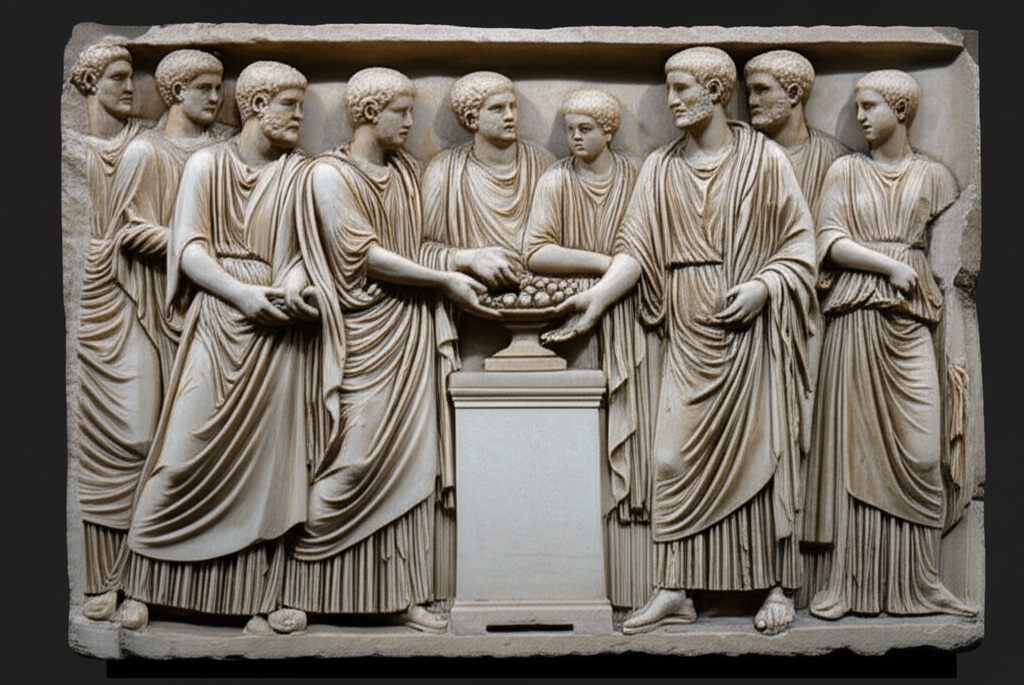
The Evolving Landscape of Family and Custom
While the core principles remain, family structures and social customs are not static. They evolve in response to economic changes, technological advancements, and shifts in philosophical thought. The Great Books offer a lens through which to examine these transformations, from the patriarchal structures of ancient Greece and Rome to the more diverse family models recognized today. Yet, the fundamental philosophical question persists: How do these evolving structures continue to fulfill their essential role in shaping the individual for citizenship and sustaining the social contract?
The tension between individual autonomy and societal expectations, often played out within the family, remains a fertile ground for philosophical inquiry into the nature of freedom, obligation, and the good life.
Conclusion: The Enduring Interdependence
The deep connection between family structure and social custom is undeniable. The family, nurtured by custom, shapes the individual into a citizen capable of participating meaningfully in the State. This intricate web of relationships, explored through centuries of philosophical thought, underscores a fundamental truth: the strength and character of any society are ultimately a reflection of the strength and values cultivated within its most intimate and enduring institution – the family.
📹 Related Video: ARISTOTLE ON: The Nicomachean Ethics
Video by: The School of Life
💡 Want different videos? Search YouTube for: ""Aristotle Politics family household citizenship""
📹 Related Video: PLATO ON: The Allegory of the Cave
Video by: The School of Life
💡 Want different videos? Search YouTube for: ""Social contract theory custom convention Locke Rousseau""