

Experience and the Formation of Opinion: A Philosophical Inquiry
Our understanding of the world, and indeed our very selves, is inextricably linked to the sum of our experiences. From the simplest sense perceptions to the most complex moral dilemmas, experience acts as the fundamental crucible in which our opinions are forged. This article delves into the profound philosophical journey from raw sensory input to the intricate tapestry of our beliefs, examining how judgment mediates this process and shapes the convictions we hold. Drawing from the rich heritage of the Great Books of the Western World, we explore how thinkers across millennia have grappled with the origins and evolution of human understanding.
The Genesis of Belief: From Sense Data to Structured Thought
At the heart of any opinion lies a foundation of experience. Before we can articulate a complex thought or endorse a particular viewpoint, we must first encounter the world through our senses. This initial interaction, often taken for granted, is the bedrock of all subsequent intellectual activity.
-
The Primacy of Sense Experience: Philosophers like Aristotle, with his emphasis on observation and empirical study, laid the groundwork for understanding how knowledge begins with the particular. Later, John Locke, in his Essay Concerning Human Understanding, famously posited the mind as a tabula rasa – a blank slate upon which experience writes. He argued that all our ideas, and consequently our opinions, derive either from sensation (external sense experience) or reflection (internal experience of our own mental operations). Without the raw data provided by our senses, the mind would have no material to work with.
- From Raw Data to Perception: Imagine a child encountering fire for the first time. The visual sense of the flickering flame, the tactile sense of its heat, the auditory sense of its crackle – these discrete inputs are not immediately an "opinion" about fire. They are the building blocks, the foundational experience that will eventually lead to a more complex understanding and, perhaps, an opinion about its danger or utility. This initial sensory engagement is universal, yet its interpretation is deeply personal.
The Crucible of Judgment: Shaping Experience into Opinion
While sense experience provides the raw material, it is the faculty of judgment that transforms these disparate inputs into coherent opinions. Judgment is the mind's active process of evaluating, comparing, synthesizing, and interpreting the data of experience. It is here that raw sensation begins to coalesce into meaningful understanding.
-
Synthesizing Sensation and Intellect: Immanuel Kant, in his Critique of Pure Reason, offered a profound insight into this process, arguing that experience is not merely passive reception but an active construction. Our minds come equipped with innate categories of understanding (like causality, unity, plurality) that structure and organize sensory input. Without these categories, our sense experience would be a chaotic, unintelligible flux. Judgment, therefore, is the bridge between the empirical world and our conceptual framework. It allows us to move beyond simply seeing a red apple to forming the opinion that "this apple is ripe and sweet."
- Stages of Judgment in Opinion Formation:
- Apprehension: The initial recognition of sensory input. (e.g., seeing a shape, hearing a sound).
- Comparison: Relating new experiences to past ones. (e.g., "This tastes like something I've had before.")
- Analysis: Breaking down complex experiences into simpler components. (e.g., dissecting the arguments within a philosophical text).
- Synthesis: Combining different pieces of information to form a new understanding or conclusion. (e.g., integrating various data points to form an opinion about a political candidate).
- Evaluation: Assigning value or meaning to the experience, leading directly to the formation of an opinion. (e.g., "Based on my experience and judgment, this policy is beneficial.")
- Stages of Judgment in Opinion Formation:
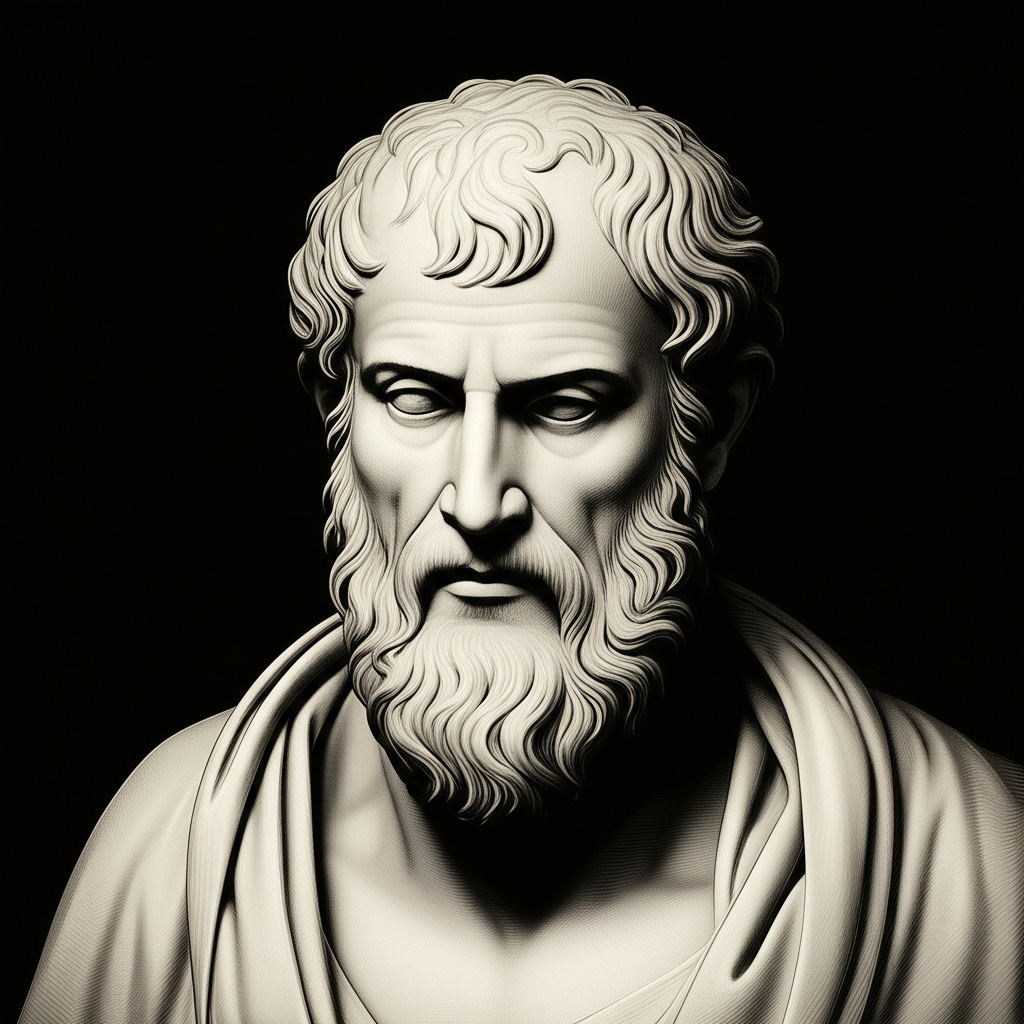 seated at a desk, surrounded by scrolls and observational instruments (like an armillary sphere). One hand is resting on a book, while the other is gesturing towards a scene outside a window, where people are engaged in daily activities, symbolizing the interplay between abstract thought and concrete experience.)
The Evolution of Beliefs: Experience as the Refiner
Opinion is rarely static. It is a dynamic entity, constantly being challenged, reinforced, or altered by new experience and refined judgment. What begins as a nascent idea, perhaps even a prejudice, can evolve into a deeply held conviction or be entirely discarded as subsequent experience provides counter-evidence.
-
The Evolution of Beliefs: Consider Plato's Allegory of the Cave. The prisoners initially form their "opinions" based solely on the shadows they experience. It is only through the arduous experience of ascending from the cave and seeing the true forms that their judgment can be corrected, leading to a more accurate understanding of reality. This metaphorical journey underscores the transformative power of broader, more enlightened experience. Similarly, in our daily lives, repeated experience of an individual's character or a particular social phenomenon allows us to refine our initial impressions and form more nuanced opinions.
Philosophical Perspective Emphasis on Experience Role in Opinion Formation Empiricism (Locke, Hume) Primary source of all knowledge. Direct sensory input forms basic ideas, which are then combined and associated to create complex opinions. Judgment is often seen as the faculty for associating ideas based on experience. Rationalism (Plato, Descartes) Secondary or potentially misleading. Experience provides raw data, but true knowledge and sound opinions derive from innate reason or intellectual intuition. Judgment uses reason to discern truth beyond mere sense perception. Critical Philosophy (Kant) Essential but structured. Experience is necessary, but the mind actively structures it through innate categories of understanding. Judgment applies these categories to sense data, synthesizing them into coherent opinions and knowledge. Aristotelianism Inductive reasoning from observation. Repeated experience leads to general principles and practical wisdom (phronesis). Judgment is honed through habituation and observation of particulars to form sound ethical and practical opinions.
The Interplay of Subjectivity and Objectivity
Our opinions are inherently subjective, filtered through our unique personal histories and perspectives. Yet, philosophy, since its inception, has sought objective truths. The tension between these two poles is central to understanding the formation of opinion. While my experience of a particular piece of art might lead me to the opinion that it is beautiful, another's experience might lead to a different judgment. The challenge lies in discerning which opinions are merely idiosyncratic and which hold broader, perhaps universal, validity. This often requires a critical examination of the experience itself, the judgment applied, and the underlying assumptions.
Challenges and Nuances: The Limits of Experience and Judgment
Not all opinions are created equal. Limited or biased experience can lead to prejudice, while flawed judgment can perpetuate error. The Great Books consistently remind us of the need for rigorous self-examination and intellectual humility.
- Bias and Limited Experience: Our personal experience is necessarily finite. Relying solely on a narrow range of sense data or a limited set of interactions can lead to distorted opinions. For instance, a person who has only experienced one culture might form a prejudiced opinion about others.
- The Difference Between Opinion and Knowledge: As Plato explored, mere opinion (doxa) is distinct from true knowledge (episteme). While opinion can be based on experience and judgment, it often lacks the rigorous justification and certainty that characterizes knowledge. The pursuit of wisdom involves moving beyond mere opinion towards more robustly supported beliefs.
Conclusion: The Enduring Quest for Informed Opinion
The journey from raw sense experience to the articulation of a complex opinion is a testament to the intricate workings of the human mind. It is a process mediated by constant judgment, refined by ongoing experience, and challenged by the pursuit of deeper understanding. As Daniel Sanderson, I encourage you to continually scrutinize the origins of your own opinions, to question the experience that shaped them, and to sharpen the judgment you apply. For in this ongoing philosophical inquiry lies the path to a more thoughtful, nuanced, and truly informed perspective on the world.
YouTube Video Suggestions:
-
📹 Related Video: KANT ON: What is Enlightenment?
Video by: The School of Life
💡 Want different videos? Search YouTube for: "John Locke Empiricism Explained"
-
📹 Related Video: KANT ON: What is Enlightenment?
Video by: The School of Life
💡 Want different videos? Search YouTube for: "Kant's Critique of Pure Reason Explained"