

Experience and the Formation of Opinion: A Philosophical Inquiry
Our understanding of the world, and indeed our very selves, is fundamentally shaped by the intricate interplay between what we encounter and how we process it. This article explores how direct experience, filtered through our senses and refined by our intellectual judgment, coalesces into the opinions we hold. Drawing insights from the rich tapestry of thought found within the Great Books of the Western World, we delve into the mechanisms that transform raw perception into considered belief, highlighting the dynamic and often complex journey from observation to conviction.
The Primacy of Experience: The Foundation of Knowledge
At the heart of human understanding lies experience. It is the bedrock upon which all subsequent thought and belief are built, the raw material from which we construct our reality. From the earliest philosophical inquiries, thinkers have grappled with the notion that our direct engagement with the world provides the initial data points for knowledge.
Aristotle, for instance, in his Metaphysics and Posterior Analytics, emphasized that all knowledge begins with sensation and experience. He posited that repeated experiences lead to memory, and from many memories, we derive general principles – a form of practical wisdom. This empirical thrust suggests that without the tangible, sensory input of the world, our minds would remain a blank slate.
- Direct Engagement: We touch, see, hear, taste, and smell – these are the fundamental conduits of experience.
- Accumulation: Over time, these individual instances accumulate, forming patterns and informing our expectations.
- Foundation: This accumulated experience serves as the essential groundwork for any subsequent intellectual activity or formation of opinion.
From Sense Data to Preliminary Opinion: The Role of Our Senses
The gateway to experience is our senses. They are the primary instruments through which we gather information about our environment, translating external phenomena into internal representations. However, the data provided by our senses is not always straightforward; it is often fragmented, subject to interpretation, and can sometimes be deceptive.
Consider Plato's Allegory of the Cave, a profound narrative from his Republic, which illustrates how our initial perceptions can be mere shadows of a greater reality. The prisoners, bound and forced to face a wall, interpret the flickering shadows as reality itself, unaware of the true forms casting them behind them. This highlights a crucial philosophical challenge: while sense data is indispensable, it requires further processing to evolve beyond mere sensation into a more robust opinion.
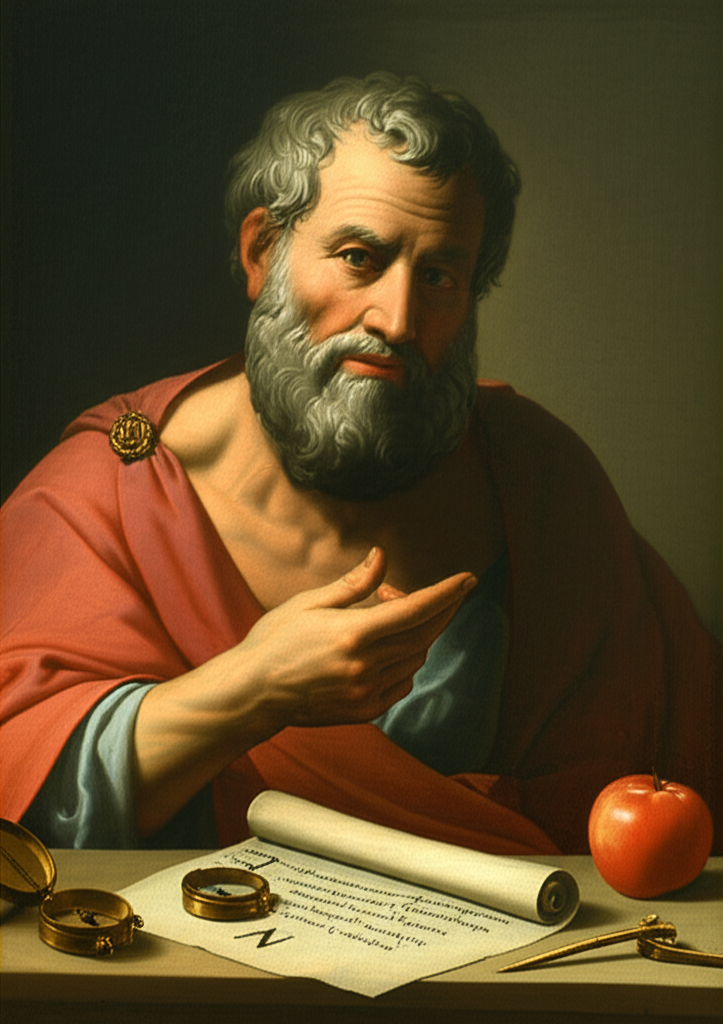
Our senses provide us with:
- Raw Stimuli: Light waves, sound vibrations, chemical compounds – these are the initial inputs.
- Perceptual Organization: The mind immediately begins to organize these stimuli into coherent objects and events.
- Immediate Impressions: These impressions form our initial, often uncritical, opinions about what is happening around us.
The Crucial Act of Judgment: Refining Experience into Opinion
While experience provides the raw material and senses deliver it, it is the faculty of judgment that truly transforms this input into coherent opinion. Judgment is the intellectual process by which we evaluate, compare, synthesize, and ultimately conclude based on the information presented to us. It moves beyond mere passive reception to active interpretation and assessment.
Descartes, in his Meditations, meticulously dissects the process of doubt and certainty, demonstrating how judgment is essential to distinguish between what is truly known and what is merely perceived or imagined. He argues that our senses can deceive us, and only through rigorous intellectual judgment can we arrive at clear and distinct ideas, forming well-founded opinions.
The process of judgment involves several critical steps:
| Aspect of Judgment | Description | Philosophical Relevance |
|---|---|---|
| Analysis | Breaking down complex experiences into simpler components. | Cartesian doubt, Socratic method of questioning. |
| Comparison | Relating current experience to past experiences and existing knowledge. | Aristotle's concept of practical wisdom (phronesis), Hume's association of ideas. |
| Synthesis | Combining disparate pieces of information to form a unified understanding. | Kant's synthetic judgments a priori, forming coherent worldviews. |
| Evaluation | Assessing the validity, reliability, and significance of the experience. | The search for truth, distinguishing fact from fallacy. |
| Conclusion/Belief | Arriving at a settled opinion or conviction based on the evaluation. | Formation of ethical principles, scientific theories, or personal beliefs. |
Without conscious judgment, our opinions would remain superficial, prone to error, and easily swayed. It is through this intellectual rigor that we move from simple belief to reasoned conviction.
The Dynamic Nature of Opinion: An Evolving Landscape
It is vital to recognize that opinion is not a static entity. It is a dynamic and evolving construct, constantly subject to revision in light of new experience and refined judgment. A hallmark of philosophical inquiry, as exemplified by figures like Socrates, is the relentless questioning of established opinions to test their veracity and robustness.
Our opinions are shaped not just by individual experience but also by the collective experience of humanity, transmitted through culture, education, and dialogue. The Great Books of the Western World themselves stand as a testament to this ongoing conversation, where philosophers build upon, challenge, and refine the opinions of their predecessors.
Key factors that influence the evolution of opinion include:
- Novel Experiences: Encountering new information or situations that challenge existing beliefs.
- Critical Reflection: Deliberately scrutinizing one's own judgments and those of others.
- Dialogue and Debate: Engaging with diverse perspectives, forcing a re-evaluation of one's own stance.
- Education: Acquiring new knowledge and frameworks for understanding the world.
- Moral and Ethical Development: Maturing in one's understanding of right and wrong, influencing judgments on societal issues.
Conclusion: The Perennial Dance of Experience, Sense, and Judgment
The journey from raw experience to settled opinion is a profound and intricate process, central to what it means to be human. It begins with the undeniable input of our senses, which provide the initial data from the world. This sensory input, however, is merely the starting point. It requires the active and discerning faculty of judgment to process, evaluate, and synthesize, transforming fleeting perceptions into coherent beliefs and opinions.
As the philosophers throughout the Great Books of the Western World have consistently shown, the quality of our opinions is directly proportional to the depth of our experience and the rigor of our judgment. To cultivate well-formed opinions is to engage actively with the world, to reflect critically on our perceptions, and to remain open to the continuous refinement that new experiences and deeper insights afford. It is an ongoing philosophical endeavor, shaping not just our individual realities but the collective understanding of humanity.
**## 📹 Related Video: What is Philosophy?
Video by: The School of Life
💡 Want different videos? Search YouTube for: "Philosophy of Empiricism vs Rationalism"**
**## 📹 Related Video: PLATO ON: The Allegory of the Cave
Video by: The School of Life
💡 Want different videos? Search YouTube for: "Plato's Cave Explained in Detail"**