

Experience and the Formation of Opinion
Our beliefs, convictions, and perspectives—what we broadly term opinions—are not divinely inspired or spontaneously generated. Rather, they are meticulously, often unconsciously, forged in the crucible of our experience. From the raw data gathered by our senses to the complex cognitive processes of judgment that interpret this data, every facet of our interaction with the world contributes to the unique tapestry of our individual viewpoints. Understanding this fundamental relationship is key to appreciating the depth and often the fragility of human understanding.
The Crucible of Consciousness: Where Beliefs Begin
We are, as conscious beings, constantly interacting with the world. Every sight, sound, touch, taste, and smell is a piece of information, a thread in the vast loom of our existence. These individual threads, however, do not remain isolated. Our minds actively weave them into patterns, narratives, and understandings. This weaving process is where opinion begins to take shape, and it is inextricably linked to the sum total of our experience.
Consider for a moment how a child comes to understand the world. Their initial experience of a hot stove leads to a judgment about its danger, which then forms an opinion about avoiding it. This simple act reflects a profound philosophical truth: our reality is, in large part, constructed from the ground up, brick by brick, by what we encounter.
From Raw Sense to Formed Opinion: A Philosophical Journey
The journey from a fleeting sensation to a deeply held opinion is a complex philosophical dance, explored by thinkers across the Great Books of the Western World.
The Primacy of Sense: The First Touch of Reality
Before we can form any opinion, we must first perceive. Our senses are the primary conduits through which the external world enters our consciousness. As John Locke might suggest, our minds are initially like a "tabula rasa"—a blank slate—upon which experience etches its marks. Without sensory input, there would be no content for our minds to process. The color of the sky, the warmth of the sun, the sound of a distant bell—these are the elemental bits of data that begin to populate our internal world.
The Architect of Judgment: Interpreting the Data
Mere sensory input, however, is not enough. A collection of raw data does not automatically equate to an opinion. This is where the faculty of judgment enters the scene. Our minds don't just passively receive; they actively organize, categorize, compare, and interpret. Aristotle, with his emphasis on empirical observation and logical deduction, understood the crucial role of judgment in moving from particular experiences to general principles.
For instance, seeing multiple instances of objects falling when released leads to the judgment that gravity exists, which then informs our opinion about how the physical world operates. This process involves:
- Perception: Gathering sensory data.
- Comparison: Relating new data to past experiences.
- Categorization: Grouping similar experiences.
- Inference: Drawing conclusions or making predictions.
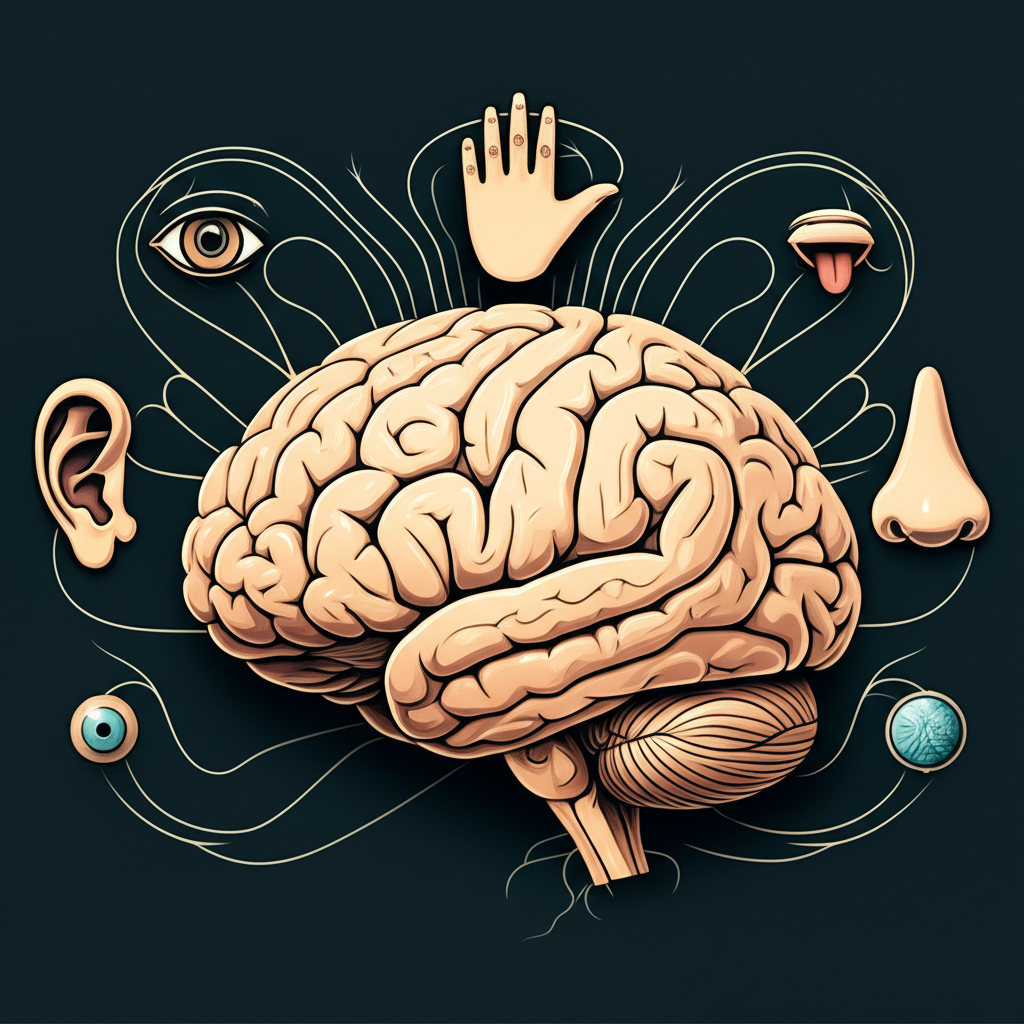 , all converging on a central 'thought bubble' containing abstract symbols of ideas and judgments.)
The Nature of Opinion: Provisional Truths
Plato, in his Republic, famously distinguished between doxa (opinion) and episteme (knowledge). For Plato, opinion was often fleeting, based on appearances, and susceptible to change, whereas true knowledge was immutable and grasped through reason. While modern philosophy might nuance this distinction, the core idea remains: our opinions are often provisional, shaped by the scope and quality of our experience and the rigor of our judgment. They are our best current understanding, subject to revision as new experiences unfold.
The Interplay of Experience, Memory, and Reflection
It's not just immediate experience that molds our opinions. Our accumulated life experience, stored in memory, plays a profound role. Every past encounter, every lesson learned, every mistake made—these form a vast reservoir that influences how we interpret new information.
- Memory as a Filter: Our memories act as a filter, shaping what we pay attention to and how we interpret it. A negative past experience might predispose us to a skeptical opinion about a similar situation.
- Reflection as a Refiner: Through reflection, we revisit our experiences, re-evaluate our initial judgments, and refine our opinions. This is where we transcend mere reaction and engage in deeper understanding, often challenging our own preconceived notions. As philosophers from Descartes to Kant have shown, critical self-reflection is vital for intellectual growth.
Challenges to the Purity of Experience
While experience is foundational, it is not always a perfect guide. Several factors can distort the formation of sound opinion:
- Limited Experience: Our individual experience is inherently finite. If our experience is narrow or biased, our opinions can become narrow and biased too.
- Prejudice and Bias: Pre-existing opinions, often formed early or through social conditioning, can color how we perceive new experiences, leading us to confirm what we already believe rather than truly evaluate.
- Emotional Influence: Strong emotions can hijack our judgment, leading to opinions that are based on feeling rather than reasoned experience.
- The Influence of Others: Our opinions are also shaped by the experiences and judgments of others—our families, communities, and the broader cultural narratives we inhabit.
David Hume's skepticism reminds us that even when our experience seems consistent, we cannot logically guarantee that the future will resemble the past. This injects a healthy dose of humility into our reliance on experience for forming certain opinions.
Cultivating Informed Opinion: A Path Forward
Given the complexities, how do we strive for more informed and robust opinions?
- Seek Diverse Experiences: Actively expose yourself to different perspectives, cultures, and environments. Broadening your experience base enriches your understanding and challenges your assumptions.
- Practice Critical Judgment: Don't accept things at face value. Question, analyze, and evaluate the evidence presented by your senses and your experience. Engage in rigorous self-reflection.
- Engage with Counter-Arguments: Actively seek out opinions that differ from your own. Understanding the reasoning behind opposing viewpoints strengthens your own judgment or reveals areas for revision.
- Embrace Intellectual Humility: Recognize that all opinions are, to some extent, provisional. Be open to revising your judgments in light of new experience or more compelling arguments.
Conclusion: The Evolving Landscape of Belief
The intricate dance between experience, sense, judgment, and the resulting opinion defines much of our intellectual and personal journey. Far from being static decrees, our opinions are living, evolving constructs, constantly being refined and reshaped by every moment of our existence. To truly understand ourselves and the world around us, we must remain perpetual students, ever open to the lessons that experience offers, and ever vigilant in the exercise of our critical judgment.
📹 Related Video: KANT ON: What is Enlightenment?
Video by: The School of Life
💡 Want different videos? Search YouTube for: "John Locke Empiricism Explained"
📹 Related Video: PLATO ON: The Allegory of the Cave
Video by: The School of Life
💡 Want different videos? Search YouTube for: "Plato's Theory of Forms and the Cave Allegory"