

Evolution and the Origin of Species: A Philosophical Inquiry into Nature's Grand Tapestry
From the earliest stirrings of philosophical thought, humanity has grappled with fundamental questions: How did we come to be? What is our place in the cosmos? And what accounts for the astonishing diversity and complexity of life around us? While modern science offers compelling answers through the theory of Evolution, the philosophical implications of this grand narrative continue to resonate, challenging our preconceptions about Nature, our own Animal existence, and the very essence of Change. This pillar page delves into the profound philosophical journey from ancient contemplations of species to Darwin's revolutionary insights, exploring how our understanding of life's origins has perpetually reshaped our worldview.
I. The Ancient Contemplation of Forms and Flux: Pre-Darwinian Glimpses of Change
Before Charles Darwin meticulously documented his observations and proposed the mechanism of natural selection, philosophers had long pondered the stability and fluidity of the natural world. The concept of Change was central to early Greek philosophy, from Heraclitus's assertion that "everything flows" to Parmenides's argument for an unchanging reality.
Within the Great Books of the Western World, we find foundational discussions that, while not anticipating evolutionary theory, laid crucial groundwork for understanding species and nature:
- Plato's Forms: In works like Phaedo and Republic, Plato posited a realm of perfect, eternal Forms, of which individual earthly beings are imperfect copies. This view emphasized the stability of ideal types, suggesting that a "species" had an unchanging essence. The observed variations in animals were mere shadows of a perfect, immutable blueprint.
- Aristotle's Scala Naturae and Empirical Observation: A titan of ancient thought, Aristotle, in his History of Animals and Parts of Animals, undertook an unparalleled empirical study of the natural world. He observed, classified, and described hundreds of species, noting their similarities and differences. His concept of the scala naturae, or "Great Chain of Being," arranged life forms in a hierarchical order from simple to complex, with humans at the apex. While not an evolutionary ladder, it represented a systematic attempt to understand the relationships between different kinds of animals and plants, hinting at a deep interconnectedness within Nature. Aristotle's focus on the telos (purpose or end) of organisms also deeply influenced Western thought, suggesting an inherent directionality to life.
These early philosophical endeavors, though steeped in different cosmologies, highlight a persistent human desire to categorize, understand, and explain the bewildering array of life, setting the stage for later, more dynamic explanations of Change.
II. Darwin's Revolutionary Insight: Natural Selection and the Unfolding of Species
The 19th century witnessed a radical paradigm shift with Charles Darwin's On the Origin of Species. While not directly a part of the Great Books collection, its impact on Western thought is undeniable, forcing a re-evaluation of many philosophical tenets found within them. Darwin didn't just propose that species change; he offered a compelling, mechanistic explanation for how this Change occurs: Evolution through natural selection.
- Descent with Modification: Darwin argued that all life shares a common ancestor and has diversified over vast stretches of time. This challenged the notion of fixed, independently created species.
- Natural Selection: The cornerstone of his theory, natural selection posits that individuals with traits better suited to their environment are more likely to survive and reproduce, passing those advantageous traits to their offspring. Over generations, this leads to gradual, cumulative Change and the emergence of new species.
- The Role of Nature: In Darwin's view, Nature is not a benevolent designer but an indifferent arena where the struggle for existence plays out. The environment "selects" organisms, not with a conscious goal, but through the differential survival and reproduction of variants.
This scientific revolution had profound philosophical implications, particularly concerning the concept of telos (purpose) that permeated much of ancient and medieval philosophy. If life arises through undirected natural processes, does it imply a universe without inherent purpose?
III. Philosophical Aftershocks: Redefining Humanity and Our Place in Nature
Darwin's theory fundamentally altered humanity's self-perception, sparking intense debates that continue to this day. Our understanding of Animal life, and our relationship to it, underwent a radical transformation.
A. The Challenge to Anthropocentrism
For centuries, Western thought, often influenced by religious traditions and philosophical anthropocentrism, placed humans at the pinnacle of creation, distinct from and superior to all other animals. Darwin's theory suggested a continuity, placing humans firmly within the Animal kingdom, sharing common ancestors with other primates and, indeed, all life. This was a profound philosophical Change, forcing a re-evaluation of:
- Human Exceptionalism: Are we truly unique, or merely a highly evolved animal?
- Moral Obligations: If we are part of the same biological tapestry, what are our ethical responsibilities towards other species and the environment?
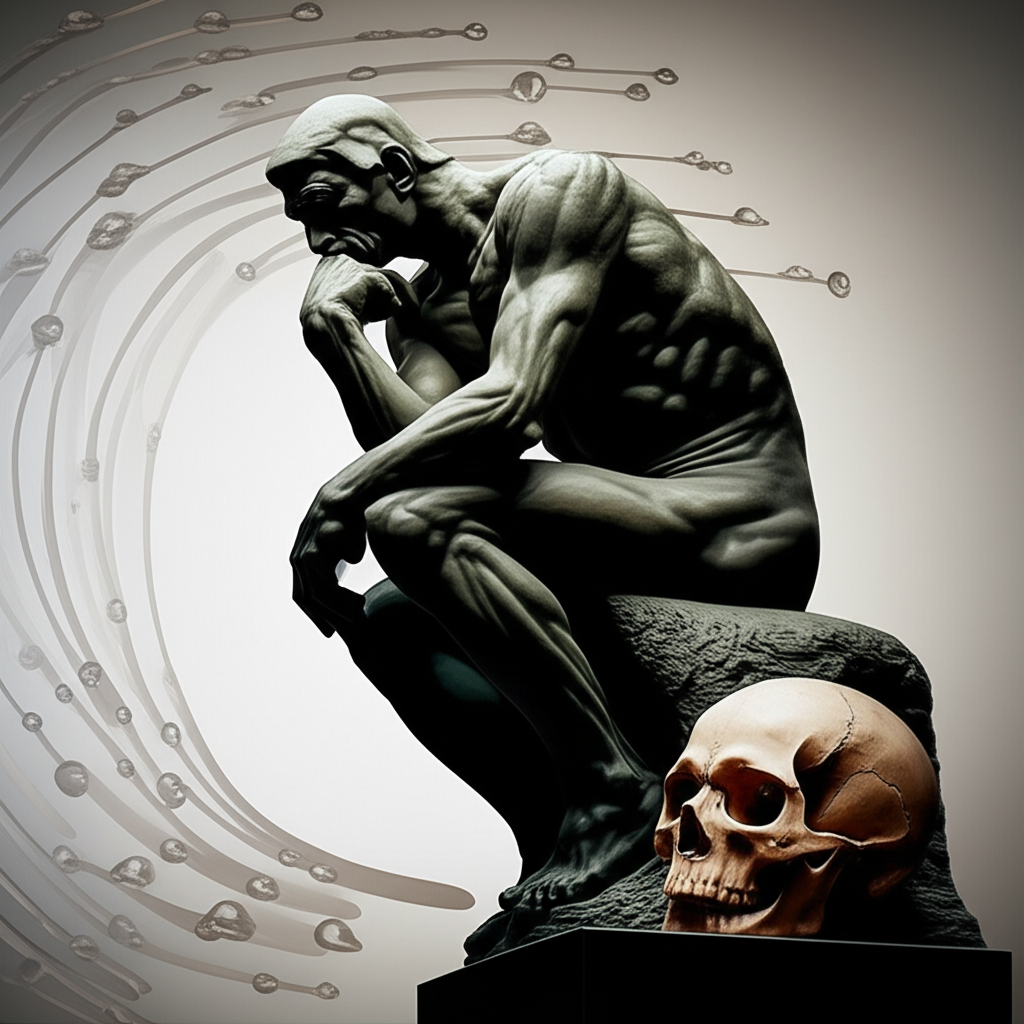
B. Nature's Indifference and the Problem of Evil
If Evolution proceeds through natural selection, driven by struggle and often brutal competition, what does this say about the character of Nature? The pre-Darwinian view often saw nature as a harmonious, divinely ordered system. Post-Darwin, nature could appear indifferent, even cruel, challenging traditional theological and philosophical arguments for a benevolent creator.
This led to renewed philosophical grappling with:
- The Problem of Evil: How can suffering and imperfection exist in a world created by an all-good, all-powerful deity, if species arise through struggle?
- The Meaning of Design: Is the intricate design of organisms evidence of a designer, or simply the cumulative outcome of eons of natural selection?
IV. Evolution and the Search for Meaning: Purpose, Chance, and Human Flourishing
The philosophical ripples of evolutionary theory extend beyond biology, touching upon fundamental questions of meaning, ethics, and epistemology.
A. Teleology vs. Chance
One of the most enduring philosophical tensions ignited by Evolution is the debate between teleology (purpose-driven development) and chance.
| Philosophical Stance | Description | Implications for Meaning |
|---|---|---|
| Teleological Views | Argue that there is an inherent purpose or goal in nature and life's development, often rooted in divine creation or an intrinsic drive towards perfection (e.g., Aristotle's telos). | Meaning is often pre-ordained or discovered through understanding one's natural function or divine plan. Human purpose might be to fulfill a specific role in a grand cosmic design. |
| Mechanistic/Chance Views | Assert that biological processes, including Evolution, are the result of undirected natural laws and random variation, without an overarching purpose or foresight. | Meaning must be created or found within human experience, rather than being inherent in the universe itself. This can lead to existentialist perspectives where individuals are responsible for forging their own values and purposes in a fundamentally indifferent cosmos. The Change is not directed. |
This dichotomy forces philosophers to confront whether meaning is discovered or constructed, and how our understanding of life's origins shapes our ethical frameworks.
B. The Evolution of Morality and Knowledge
If humans are products of Evolution, then our cognitive faculties, our emotions, and even our moral intuitions may also have evolutionary roots. This raises critical questions:
- Evolutionary Ethics: Are our moral codes merely adaptive strategies for social cohesion and survival? Does this diminish their objective validity, or provide a naturalistic foundation for them?
- Evolutionary Epistemology: Do our ways of knowing and perceiving the world reflect an accurate reality, or are they simply tools that proved useful for survival in specific environments? This challenges traditional philosophical inquiries into the nature of truth and knowledge.
V. Conclusion: The Enduring Philosophical Journey of Change
The theory of Evolution and the origin of species stands as one of humanity's most profound intellectual achievements, fundamentally altering our scientific understanding of life. Yet, its philosophical implications remain a vibrant field of inquiry, compelling us to continually re-examine our most cherished beliefs about Nature, the Animal kingdom, our own identity, and the relentless process of Change. From the ancient Great Books to contemporary debates, the quest to understand life's origins continues to shape our understanding of existence itself, urging us to embrace both the scientific rigor and the deep philosophical questions it provokes.
Further Philosophical Exploration:
-
📹 Related Video: ARISTOTLE ON: The Nicomachean Ethics
Video by: The School of Life
-
📹 Related Video: What is Philosophy?
Video by: The School of Life