

The Unfolding Tapestry: Evolution, Species, and the Philosophical Gaze
The publication of Charles Darwin's On the Origin of Species in 1859 stands as a pivotal moment, not merely in the annals of science but in the grand narrative of human thought itself. This pillar page delves into the profound implications of Darwinian evolution, exploring how this revolutionary concept irrevocably changed our understanding of Nature, the animal kingdom, and ultimately, our place within it. Far from being a purely biological treatise, Darwin's work ignited a philosophical firestorm, challenging millennia of established beliefs about fixed forms, divine design, and the very essence of species. We will journey through the philosophical landscape before Darwin, examine the seismic shift his ideas introduced, and ponder the enduring questions that evolutionary theory continues to pose for metaphysics, ethics, and epistemology.
Before Darwin: A World of Fixed Forms and Divine Order
For centuries prior to Darwin, the prevailing philosophical and scientific consensus, heavily influenced by the Great Books of the Western World, posited a universe characterized by order, design, and a fundamental immutability of species. This worldview, often rooted in classical Greek thought and later interwoven with Abrahamic theology, offered a comforting stability to the natural world.
- Plato's Forms: In Plato's philosophy, as explored in works like The Republic, the visible world is but a shadow of a perfect, eternal realm of Forms. Each earthly species was seen as an imperfect copy of an ideal, unchanging Form. The idea of change within a species was largely antithetical to this concept of eternal archetypes.
- Aristotle's Scala Naturae: Aristotle, in his biological treatises and Metaphysics, meticulously classified Nature, creating a "Great Chain of Being" or scala naturae. This hierarchy placed minerals at the bottom, ascending through plants, animals, and finally to humans, with a clear, fixed order. While Aristotle observed variation, the fundamental categories of animal and plant life were considered stable and distinct. His concept of telos, or inherent purpose, suggested that each organism was designed for a specific end, making undirected evolution difficult to reconcile.
- Creationism and Natural Theology: With the rise of monotheistic religions, the fixed nature of species was largely attributed to divine creation. Natural theology sought to understand God's attributes through the intricate design evident in Nature. Every organ, every animal, every species was seen as perfectly adapted, testifying to a benevolent and intelligent creator. The idea of change leading to new species through natural processes was seen as an affront to this divine artistry.
This pre-Darwinian understanding of Nature provided a coherent, if ultimately limited, framework for understanding the diversity of life. It emphasized permanence, purpose, and a hierarchical structure that mirrored societal and cosmic order.
Darwin's Revolution: The Mechanics of Unintended Change
Charles Darwin's On the Origin of Species by Means of Natural Selection, or the Preservation of Favoured Races in the Struggle for Life (1859) fundamentally shattered this static view. Drawing on years of observation, particularly during his voyage on the HMS Beagle, Darwin presented a compelling mechanism for the change and diversification of life: natural selection.
Darwin's core insights can be summarized as follows:
- Variation: Individuals within a species exhibit natural variations. No two animals are exactly alike.
- Inheritance: Many of these variations are heritable, passed from parents to offspring.
- Overproduction: Organisms produce more offspring than can possibly survive.
- Struggle for Existence: Due to limited resources, there is a constant competition for survival.
- Differential Survival and Reproduction: Individuals with variations better suited to their environment are more likely to survive and reproduce, passing on those advantageous traits.
This process, repeated over vast stretches of time, leads to the gradual accumulation of change, resulting in the formation of new species from existing ones – a concept Darwin termed "descent with modification." The profound implication was that Nature itself, through blind, undirected processes, was the architect of life's diversity, not a benevolent designer. The animal kingdom, rather than being a collection of distinct, immutable kinds, became a vast, interconnected tree of life.
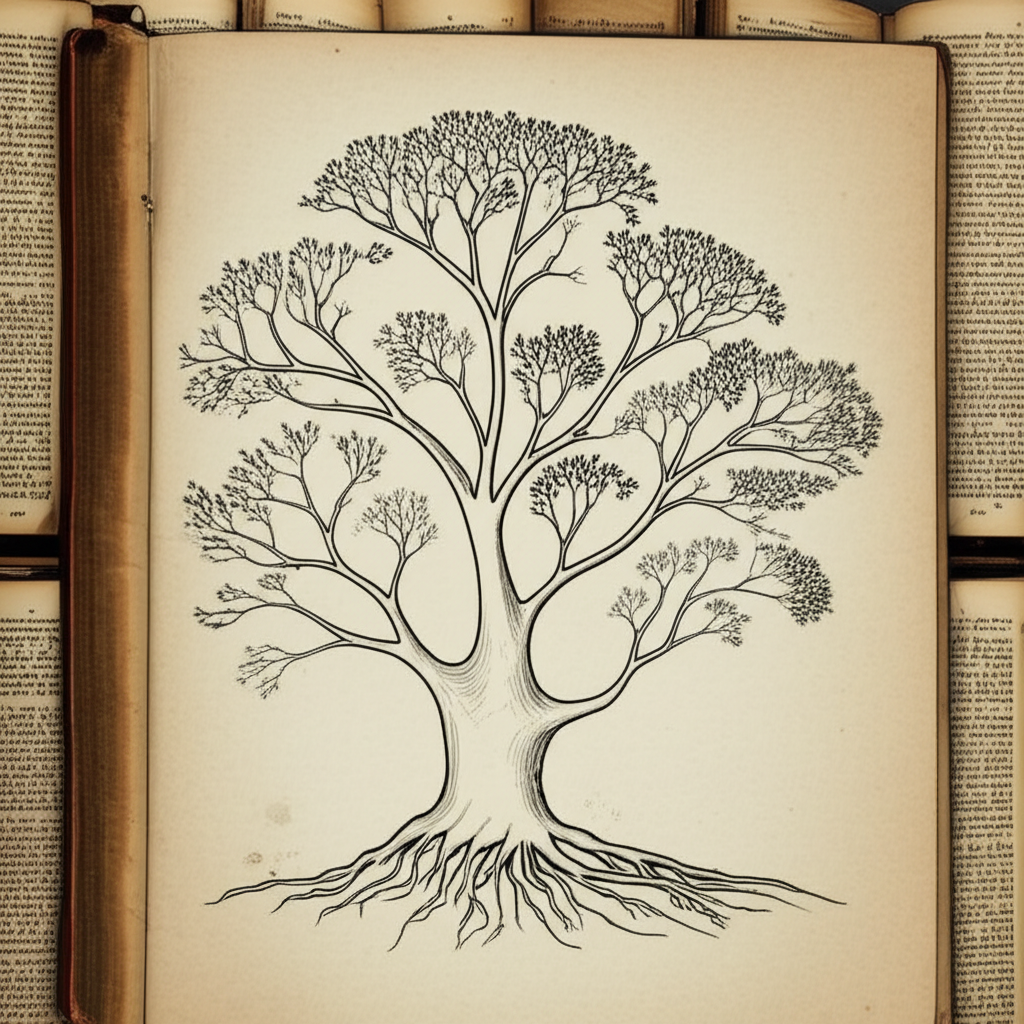
The concept of evolution introduced a dynamic, ever-changing Nature, where adaptation was a continuous process, and the lines between species were not rigid but fluid, blurring across geological timescales. This challenged the very notion of what a "species" truly was, moving it from a fixed essence to a temporary stage in an ongoing process of change.
Philosophical Tremors: Meaning, Morality, and Human Identity
The philosophical implications of Darwinian evolution were, and continue to be, immense, sparking debates that echo through contemporary thought.
- The Problem of Teleology: Darwin's theory offered a powerful, mechanistic explanation for apparent design in Nature without invoking a designer. This challenged the long-held teleological view that purpose ( telos) was inherent in organisms. If evolution is blind and undirected, what then is the "purpose" of life, or of humanity? This fundamental change in perspective forced philosophy to re-evaluate the very concept of meaning in a world shaped by natural processes.
- Humanity's Place in Nature: Perhaps the most unsettling implication for many was the realization that humans were not specially created, but rather another animal species, subject to the same evolutionary forces as all others. This challenged anthropocentric views and forced a re-evaluation of human exceptionalism. Are we merely sophisticated animals? What does this mean for our dignity, our moral status, and our unique consciousness?
- Ethics and Morality: If morality is not divinely ordained or based on a fixed human essence, can it be understood through an evolutionary lens? Some philosophers explored the evolutionary origins of altruism and social behavior, suggesting that certain moral inclinations might have conferred survival advantages. This opened new avenues for ethical inquiry, though it also raised concerns about reducing morality to mere biological drives.
- The Nature of Knowledge: Darwin's work underscored the power of empirical observation and scientific methodology. It demonstrated how deeply ingrained assumptions, even those supported by millennia of philosophical and religious thought, could be overturned by rigorous investigation into Nature. This reinforced a scientific epistemology, emphasizing the dynamic and revisable nature of knowledge.
The philosophical questions sparked by evolution are not easily answered but continue to drive inquiry.
| Philosophical Domain | Pre-Darwinian View (Often Fixed) | Post-Darwinian View (Dynamic/Challenged) |
|---|---|---|
| Metaphysics | Fixed forms, inherent purpose (teleology), divine design | Dynamic species, emergent properties, mechanistic processes, challenge to teleology |
| Epistemology | Knowledge from revelation, reason, fixed categories | Knowledge from empirical observation, scientific method, provisional truths |
| Ethics | Morality from divine law, fixed human nature | Morality with potential evolutionary roots, re-evaluation of human exceptionalism |
| Human Identity | Special creation, distinct from animal kingdom | Part of the animal kingdom, product of evolutionary change |
The Continuous Dance: Evolution Beyond Biology
The impact of evolutionary thought has extended far beyond the realm of biology. The concept of gradual change, adaptation, and selection has been applied metaphorically and sometimes literally to various fields, further underscoring its philosophical reach.
- Cultural Evolution: Ideas, technologies, and social norms can be seen as "evolving," with successful innovations being selected and propagated, while less effective ones fade away. This parallel draws on the mechanism of change inherent in Darwinian thought.
- Evolutionary Psychology: This field attempts to explain human psychological traits and behaviors as adaptations developed over our evolutionary history, shaped by the selective pressures faced by our ancestors.
- The Evolution of Philosophy Itself: Philosophical ideas, too, undergo a process of change, refinement, and sometimes radical overthrow, much like species in Nature. New scientific discoveries, like evolution, force philosophy to adapt, re-evaluate, and formulate new questions.
This demonstrates how Darwin's profound insight into the change of life forms provided a new lens through which to view almost any system that undergoes adaptation and development over time.
Modern Relevance and Enduring Questions
More than 160 years after its publication, Darwin's theory of evolution remains one of the most robust and foundational scientific theories. Yet, its philosophical echoes resonate as powerfully as ever. Understanding evolution is not merely about grasping biological facts; it is about confronting a fundamental change in our understanding of Nature, our own origins, and the very fabric of reality.
The ongoing dialogue between science and philosophy, ignited by Darwin, continues to explore:
- The nature of consciousness in an evolutionary world.
- The implications of genetic engineering and directed evolution.
- Our ethical responsibilities towards other species and the planet, given our shared evolutionary heritage.
- The search for meaning and purpose in a universe that appears indifferent to our existence.
Evolution challenges us to embrace change as a constant, to see ourselves as part of an intricate, dynamic Nature, and to continually re-examine our most cherished assumptions about life, the universe, and everything. The animal kingdom, in its vast diversity, stands as a testament to this ceaseless process, inviting us to ponder its philosophical depths.
📹 Related Video: ARISTOTLE ON: The Nicomachean Ethics
Video by: The School of Life
💡 Want different videos? Search YouTube for: ""Philosophical implications of Darwin's theory of evolution" or "Evolution and ethics philosophy""
📹 Related Video: What is Philosophy?
Video by: The School of Life
💡 Want different videos? Search YouTube for: ""Great Chain of Being philosophy before Darwin""