

The Serpent's Whisper: Unpacking Desire as the Genesis of Sin
Summary: Desire's Role in Moral Transgression
This article explores the profound philosophical assertion that desire, when unchecked or misdirected, serves as the fundamental cause of sin. Drawing upon the rich intellectual heritage of the Great Books of the Western World, we delve into how the human will, swayed by appetites and passions, often deviates from reason and virtue, leading to actions deemed sinful. Understanding this causal link is crucial for navigating the complexities of human morality and the perennial struggle for self-governance.
Introduction: The Unseen Architect of Our Downfall
From the earliest myths to the most intricate theological treatises, humanity has grappled with the origins of evil and the nature of our moral failings. Why do we act against our better judgment? Why do we succumb to impulses we know are detrimental? For many of the towering intellects whose works comprise the Great Books of the Western World, the answer lies not in some external malevolent force, but within the very fabric of our being: our desires. It is the insidious whisper of unbridled desire, often masquerading as an innocent urge, that philosophical tradition frequently identifies as the primary cause of sin.
The Many Faces of Desire: An Introspective Gaze
What, precisely, is desire? It is more than a simple want; it is a fundamental orientation of the soul towards something perceived as good or pleasurable. Plato, in his Republic, speaks of the appetitive part of the soul, distinct from reason and spirit, constantly seeking gratification. Aristotle, too, examines the various passions and appetites that stir within us. These desires range from the most basic biological needs – hunger, thirst, procreation – to complex social aspirations like wealth, fame, or power.
The problem arises not from the existence of desire itself, for a life devoid of all desire would be inert, but from its unregulated expression. When desire becomes untethered from reason and moral discernment, it gains the potential to corrupt.
- Basic Appetites: Innate urges for survival and comfort (e.g., hunger, thirst, sexual urges).
- Emotional Passions: Complex feelings that drive us (e.g., love, hate, anger, fear, joy, sorrow).
- Intellectual Longings: The pursuit of knowledge, truth, beauty, and understanding.
The Will's Crucial Role: From Impulse to Action
Herein lies the pivotal role of the will. The human will is the faculty that chooses, assents, or resists. It stands as the crucial intermediary between a burgeoning desire and a resultant action. Saint Augustine, a monumental figure in the Great Books, meticulously explored the concept of the will in works like Confessions and City of God. For Augustine, sin is fundamentally a disorder of the will – a turning away from the higher, divine good towards a lesser, temporal good.
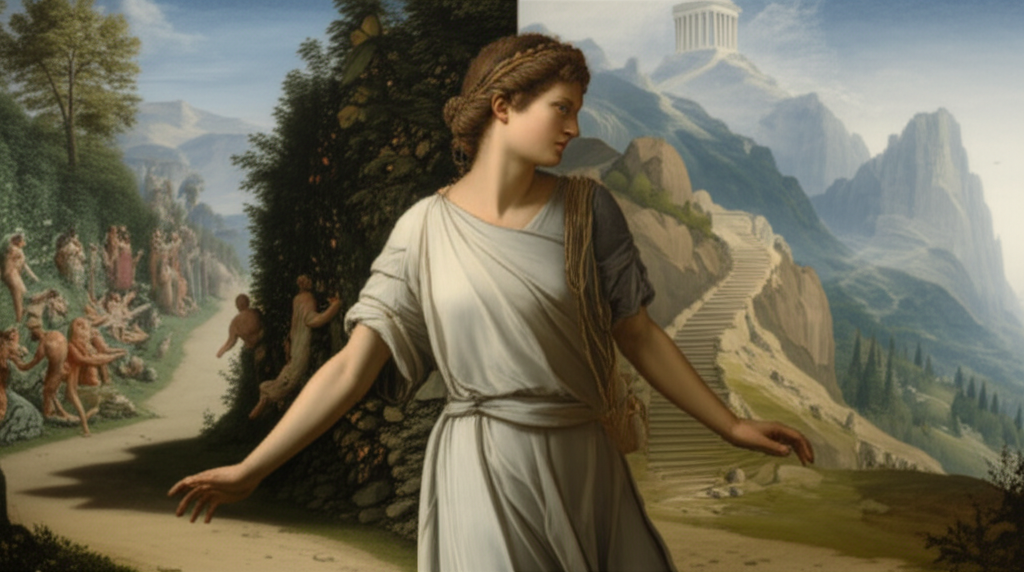
When an illicit desire presents itself, the will faces a choice: to yield or to resist. Sin occurs when the will, rather than being guided by reason and a virtuous understanding of the good, is instead enslaved by a disordered desire. It is not merely wanting something forbidden, but the will's assent to that wanting, translating it into intention and action, that constitutes the cause of sin.
The Causal Chain: Desire, Will, and the Genesis of Sin
Let us delineate this causal chain, which illuminates how an internal state escalates into moral transgression:
- Emergence of Desire: An internal or external stimulus awakens an appetite or passion within the individual.
- Lack of Rational Scrutiny: The desire is not immediately subjected to the rigorous scrutiny of reason or moral judgment, which would assess its alignment with true good.
- Weakness of Will: The will fails to assert its proper authority over the desire. This can be due to habit, ignorance, a momentary lapse in self-control, or a prior corruption of the will itself.
- Assent to Disorder: The will chooses to embrace the disordered desire, elevating a lesser, temporal good above a greater, more enduring good. This is the critical moment of moral failure.
- Manifestation as Sin: The chosen desire translates into a thought, word, or deed that transgresses moral or divine law, completing the act of sin.
Consider the temptation to steal. The desire for wealth or a specific object might arise. If the will is weak, or if reason is clouded by the intensity of the desire, the will assents to the thought of acquiring the item by illicit means. The act of stealing then becomes the consequence, the sin born directly from that misdirected desire and a compliant will.
| Element | Role in Sin's Genesis | Philosophical Perspective |
|---|---|---|
| Desire | The initial impulse, the attraction to a perceived good (often temporal or sensual). | Plato's appetitive soul, Aristotle's passions, the concupiscible appetite. |
| Reason | The faculty meant to discern true good from apparent good, and to guide the will. | Stoic emphasis on logos, Aquinas's natural law, the guiding intellect. |
| Will | The faculty of choice; the decision-maker that either assents to or resists desire. | Augustine's free will (liberum arbitrium), Aquinas's rational appetite. |
| Sin | The act or state resulting from the will's assent to a disordered desire, turning away from true good. | Augustine's aversio a Deo, Aristotle's vice, the transgression of moral law. |
Navigating the Labyrinth of Self-Control
The philosophical tradition, particularly within the Great Books, offers not just a diagnosis but also pathways to mitigate the cause of sin. Virtue, in essence, is the habituated control of desire by reason and a strong will. For Aristotle, virtue lies in the mean, in finding the appropriate balance for our passions, neither too much nor too little. For the Stoics, true freedom comes from aligning one's will with reason and accepting what is beyond one's control, thereby mastering internal desires.
The ongoing struggle against sin is, therefore, an internal battle for the soul's proper order. It demands constant vigilance, self-examination, and the cultivation of a will that is robust enough to direct desire towards genuine good, rather than being enslaved by fleeting pleasures or misguided ambitions. This profound insight, passed down through millennia, remains as pertinent today as it was when first articulated by the intellectual titans of Western thought.
Conclusion: A Timeless Truth
The assertion that desire is the fundamental cause of sin is a cornerstone of much Western philosophy and theology. It highlights the internal struggle inherent in the human condition, where the will must constantly arbitrate between the clamor of appetites and the quiet counsel of reason. By understanding this intricate relationship – how desire informs the will, and how a misdirected will culminates in sin – we gain invaluable insight into the perennial challenge of living a virtuous life. It is a timeless truth that compels us to look inward, to master our inner landscape, and to cultivate a will strong enough to guide our desires towards their noblest ends.
YouTube Video Suggestions:
-
📹 Related Video: PLATO ON: The Allegory of the Cave
Video by: The School of Life
💡 Want different videos? Search YouTube for: "Augustine on Free Will and Evil"
-
📹 Related Video: ARISTOTLE ON: The Nicomachean Ethics
Video by: The School of Life
💡 Want different videos? Search YouTube for: "Aristotle Ethics Desire Virtue"